
The sand dollar, a small, flattened sea creature, is often regarded as one of the ocean’s most intriguing residents. These marine animals belong to the class Echinoidea, the same group as sea urchins and starfish, but they possess unique characteristics that set them apart from their relatives.
Table of Contents
ToggleSand dollars are named for their flat, disk-like shape and their resemblance to an old silver dollar coin. They are found in oceans all around the world, primarily in sandy or muddy substrates where they can burrow. The sand dollar is more than just a shell; it has an intricate internal structure and fascinating biology that contribute to its role in the marine ecosystem.
This comprehensive guide explores the sand dollar’s anatomy, habitat, behavior, reproduction, ecological importance, and cultural significance, providing insight into why these fascinating sea creatures have captivated human interest for centuries.
Physical Description and Anatomy
| Characteristic | Description |
|---|---|
| Common Name | Sand Dollar |
| Scientific Name | Various species, e.g., Dendraster excentricus (Pacific Sand Dollar), Clypeaster reticulatus (Common Sand Dollar) |
| Class | Echinoidea |
| Phylum | Echinodermata |
| Order | Clypeasteroida |
| Family | Varies by species (e.g., Dendrasteridae, Clypeasteridae) |
| Habitat | Shallow coastal waters; sandy or muddy ocean floors |
| Geographic Distribution | Worldwide, especially along the coasts of North and South America, Southeast Asia, and Australia |
| Size | Typically 2-4 inches (5-10 cm) in diameter, some species can grow larger |
| Color (Living) | Purple, brown, greenish; varies by species |
| Color (Skeleton/Test) | White or off-white (after death) |
| Diet | Deposit feeders; consume microscopic algae, detritus, and small crustaceans |
| Reproduction | Broadcast spawning; external fertilization |
| Lifespan | 6-10 years |
| Movement | Slow; using spines and tube feet for burrowing and locomotion |
| Unique Features | Flattened, disk-like body; star-shaped pattern on the upper surface; tiny spines and tube feet for movement and feeding |
| Conservation Status | Not generally endangered, but some local populations may be threatened by habitat destruction and human activities |
| Symbolism | Peace, transformation, spirituality; various cultural myths and legends associated |
| Role in Ecosystem | Deposit feeders; contribute to nutrient cycling and sediment aeration |
| Interesting Fact | The mouth contains a structure called “Aristotle’s lantern,” used for grinding food particles. |
This chart covers the essential characteristics and biological information related to sand dollars.
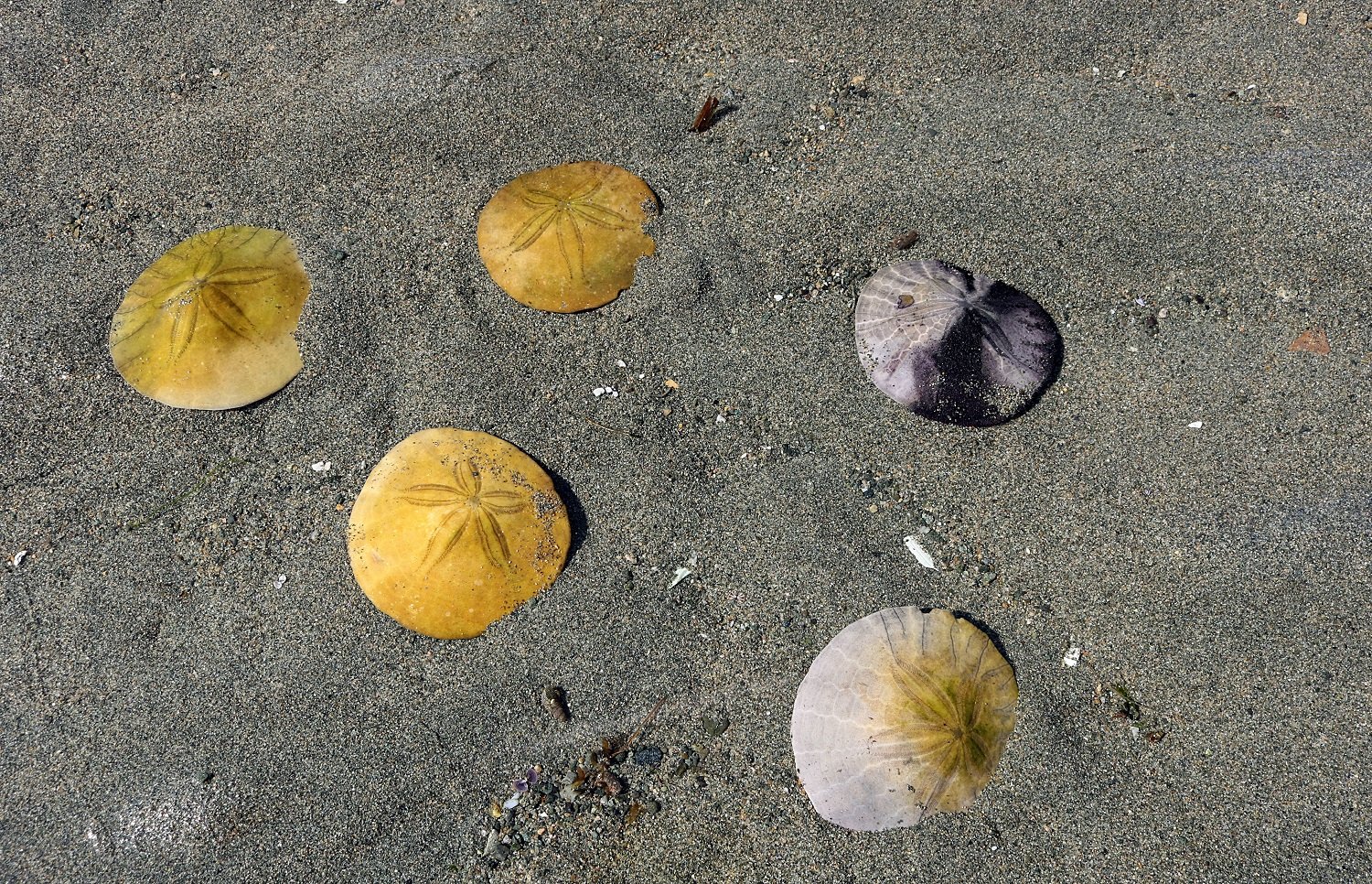
Sand dollars have a distinct appearance that makes them easy to identify. Their bodies are flattened and circular, usually ranging in size from 2 to 4 inches in diameter, though some species can grow larger. The top (aboral) surface of a sand dollar is typically marked by a star-shaped pattern that resembles flower petals. This pattern is formed by the ambulacral grooves through which tube feet extend, helping the animal with movement and respiration.
The exterior of a living sand dollar is covered with tiny, velvety spines and cilia, which help the animal move along the ocean floor and capture food particles. The spines are often purple, brown, or greenish in color, depending on the species. When a sand dollar dies, the spines fall off, and the animal’s skeleton, known as a test, remains. The test is usually white or off-white, with a smooth surface and five-rayed star pattern still visible.
Internally, sand dollars possess a complex arrangement of plates and a water vascular system similar to that of other echinoderms. The water vascular system controls the animal’s tube feet, allowing for locomotion, feeding, and respiration. In the center of the underside (oral surface) lies the mouth, equipped with a jaw-like structure called Aristotle’s lantern. This structure contains five tooth-like sections used for grinding up food particles.
Habitat and Distribution
Sand dollars are found in oceans worldwide, typically residing in shallow coastal waters where sunlight reaches the ocean floor. They prefer sandy or muddy substrates, which provide the ideal environment for burrowing and foraging. Some of the most well-known sand dollar habitats include the Pacific Ocean coasts of North and South America, especially the coastal waters of California and Mexico.
Sand dollars are highly adapted to life on the ocean floor. They use their spines and tube feet to bury themselves just below the surface, usually at an angle. This behavior provides protection from predators and reduces the risk of being swept away by currents. Their flattened bodies and burrowing habits also allow them to thrive in areas with strong tidal action.
Feeding and Diet
As deposit feeders, sand dollars consume tiny particles of organic matter found in the sand and sediment. They rely on their spines and tube feet to capture food particles, which are then transported to the mouth via cilia-lined channels. Their diet mainly consists of microscopic algae, detritus, and small crustaceans.
The mouth of a sand dollar, equipped with Aristotle’s lantern, is designed to process small food particles efficiently. The teeth-like structures grind up the particles, which are then digested as the food moves through the animal’s digestive system. Sand dollars’ slow metabolism and specialized feeding habits allow them to thrive in environments where food is scarce or spread out across the seafloor.
Behavior and Movement
Sand dollars are relatively slow-moving creatures. Their movement relies on the coordinated action of their spines and tube feet. The tube feet, which extend through the tiny holes (lunules) on the sand dollar’s surface, help them to maneuver and dig into the sand. They use their spines to propel themselves forward, adjusting their position to align with water currents and to optimize feeding.
These animals are well-adapted to their environment and display fascinating behaviors. For example, when sand dollars are threatened, they can burrow quickly into the sand to avoid predators. Additionally, they may form clusters with other sand dollars, likely a behavior that provides some level of protection and improves their chances of survival.
Reproduction and Life Cycle
Sand dollars reproduce through a process called broadcast spawning, which involves the release of eggs and sperm into the water column. This usually occurs in response to specific environmental cues, such as changes in water temperature or tidal cycles. Fertilization happens externally, with the developing larvae floating in the planktonic zone of the ocean.
Once the eggs hatch, the larvae undergo several stages of development before settling on the ocean floor and transforming into juvenile sand dollars. This metamorphosis involves a drastic change in body structure, from a free-swimming larval form to the flattened, disk-like shape characteristic of adult sand dollars.
The lifespan of a sand dollar varies depending on the species, but they typically live between 6 to 10 years. Scientists can estimate the age of a sand dollar by counting the growth rings on the plates of its test, similar to how tree rings indicate age.
Ecological Importance
Sand dollars play a significant role in the marine ecosystem. As deposit feeders, they help to break down organic matter and recycle nutrients within the sediment. This activity promotes the health of benthic environments and supports the food web by providing sustenance for other marine organisms.
Their burrowing behavior also has ecological implications. By disturbing the sediment, sand dollars contribute to the aeration and mixing of the ocean floor, which can benefit other marine life, such as worms, crustaceans, and small invertebrates. Additionally, sand dollars serve as prey for a variety of predators, including fish, sea stars, and crabs, making them an important link in the marine food chain.
Cultural and Symbolic Significance
Throughout history, sand dollars have held symbolic meaning in various cultures, often seen as treasures washed ashore. Many people view them as a symbol of peace, love, and transformation. Their delicate, star-shaped pattern is sometimes interpreted as a representation of a flower or star, leading to numerous myths and legends surrounding their origin.
In Christian symbolism, the sand dollar is often associated with the story of Christ’s birth and resurrection. The star pattern on its surface is thought to represent the Star of Bethlehem, while the five keyhole-shaped openings are seen as symbolic of the crucifixion wounds. The legend goes on to say that when a sand dollar is broken open, it reveals tiny, white structures resembling doves, which are considered symbols of peace and goodwill.
Conservation and Environmental Concerns
Like many marine creatures, sand dollars face threats from human activities and environmental changes. Coastal development, pollution, and ocean acidification can negatively impact sand dollar populations. Additionally, over-collection by beachcombers and souvenir hunters can reduce their numbers, particularly in areas where they are already vulnerable.
Conservation efforts are crucial to maintaining healthy sand dollar populations and preserving the marine ecosystems they inhabit. Protecting their natural habitats through marine reserves, reducing pollution, and raising awareness about the ecological importance of sand dollars can help ensure their survival for future generations.
Myths and Fascination Surrounding Sand Dollars
The allure of sand dollars extends beyond their biological and ecological significance. Throughout history, they have been the subject of folklore and myth. Some stories suggest that sand dollars are the coins of mermaids or lost treasures from ancient shipwrecks. Others describe them as symbols of spiritual transformation, representing the idea that beauty can emerge from simplicity.
Collecting sand dollar tests has long been a favorite pastime for beachgoers. However, it is important to remember that living sand dollars should be left undisturbed in their natural environment. The bleached, white tests found on the shore are usually the remains of deceased sand dollars and can be collected without harming the ecosystem.
FAQS
What is a sand dollar?
A sand dollar is a type of marine animal belonging to the class Echinoidea, related to sea urchins and starfish. They have a flat, disk-like body covered with tiny spines, which they use for movement and feeding. The skeleton, or “test,” of a sand dollar is often found washed up on beaches.
Why are they called sand dollars?
Sand dollars are named for their flat, circular shape and resemblance to old silver coins, often referred to as “dollars.” When their skeletons wash ashore and bleach in the sun, they resemble large coins, hence the name.
Are sand dollars alive when they are on the beach?
Sand dollars found washed up on the beach are typically dead. Living sand dollars are covered with tiny, velvety spines and are usually a darker color, such as purple, brown, or greenish. Dead sand dollars lose their spines and are typically white or off-white.
How do sand dollars move?
Sand dollars use their tiny spines and tube feet to move slowly along the ocean floor. They can also burrow into the sand for protection or to find food.
What do sand dollars eat?
These are deposit feeders, consuming tiny particles of organic matter, such as microscopic algae, detritus, and small crustaceans. They use their tube feet and spines to capture food particles and transport them to their mouth, located on the underside of their body.
How do sand dollars reproduce?
These reproduce through a process called broadcast spawning, where they release eggs and sperm into the water column. Fertilization occurs externally, and the larvae float in the plankton until they settle on the ocean floor and develop into juvenile sand dollars.
How can you tell how old a sand dollar is?
Scientists can estimate the age of a sand dollar by counting the growth rings on its test (skeleton). The number of rings correlates with the number of years the sand dollar has lived, with a typical lifespan ranging from 6 to 10 years.
Why do sand dollars have a star pattern?
The star-shaped pattern on a sand dollar’s upper surface is formed by the arrangement of its ambulacral grooves, which extend the tube feet. These tube feet assist with feeding and respiration, and the pattern is a characteristic feature of sand dollar anatomy.
Can I collect sand dollars from the beach?
While collecting sand dollar tests (skeletons) that have washed ashore is generally fine, it is crucial to ensure that they are not alive. Living sand dollars play an important role in the marine ecosystem, so they should be left undisturbed. Always check local regulations, as some areas may have restrictions on collecting marine life.
What role do sand dollars play in the ecosystem?
These are deposit feeders, helping to break down organic matter and recycle nutrients in the sediment. Their burrowing activity also aerates the ocean floor, promoting a healthier benthic environment. Additionally, they serve as prey for various marine animals, contributing to the food web.
Conclusion
The sand dollar is an extraordinary creature that captures the imagination with its intricate structure, unique lifestyle, and symbolic associations. As members of the echinoderm family, sand dollars share commonalities with sea stars and sea urchins but exhibit a set of adaptations that make them well-suited for life on the sandy ocean floor. Their role as deposit feeders and their contribution to the marine ecosystem underscore their ecological importance.
Despite their seemingly simple existence, sand dollars lead a complex life influenced by the ebb and flow of ocean currents, the availability of food, and the presence of predators. They have inspired myths, artistic representations, and even spiritual interpretations, revealing the deep connection humans have with the natural world.
As we continue to explore and understand the oceans, the sand dollar remains a reminder of the beauty and intricacy of marine life. Conservation efforts and responsible behavior while beachcombing are essential to preserving these delicate creatures for future generations to appreciate and learn from. In doing so, we honor not just the sand dollar itself, but the vibrant and interconnected web of life it represents within the vast oceanic realm.