
The hammerhead shark is one of the most distinctive and intriguing creatures in the ocean. With its unique “hammer-shaped” head, or cephalofoil, this shark has fascinated scientists, divers, and ocean lovers for decades. There are several species of hammerhead sharks, each with its own characteristics, habits, and habitats. This article will explore their anatomy, behavior, diet, reproduction, and their role in the ecosystem. We’ll also discuss the threats they face and efforts to protect these incredible creatures.
| Feature | Description |
|---|---|
| Scientific Name | Sphyrnidae (Family) |
| Class | Chondrichthyes (Cartilaginous Fishes) |
| Order | Carcharhiniformes |
| Number of Species | 9 known species, including Great (Sphyrna mokarran), Scalloped (Sphyrna lewini), Smooth (Sphyrna zygaena), and Bonnethead (Sphyrna tiburo) |
| Habitat | Tropical, temperate, coastal, and deep waters worldwide |
| Distinctive Feature | Hammer-shaped head, known as a cephalofoil |
| Size Range | 3 to 20 feet, depending on the species |
| Diet | Carnivorous; primarily feeds on fish, squid, octopus, crustaceans, and rays |
| Reproduction | Viviparous; gives birth to live young (pups) |
| Gestation Period | Approximately 9 to 12 months, varies by species |
| Lifespan | Typically 20-30 years in the wild |
| Social Behavior | Some species are solitary; others, like scalloped hammerheads, form schools |
| IUCN Conservation Status | Vulnerable to Endangered, depending on the species |
| Major Threats | Overfishing, bycatch, shark finning, habitat degradation, and pollution |
| Conservation Efforts | Protected marine areas, fishing regulations, species monitoring, public awareness |
The Unique Shape of the Hammerhead Shark
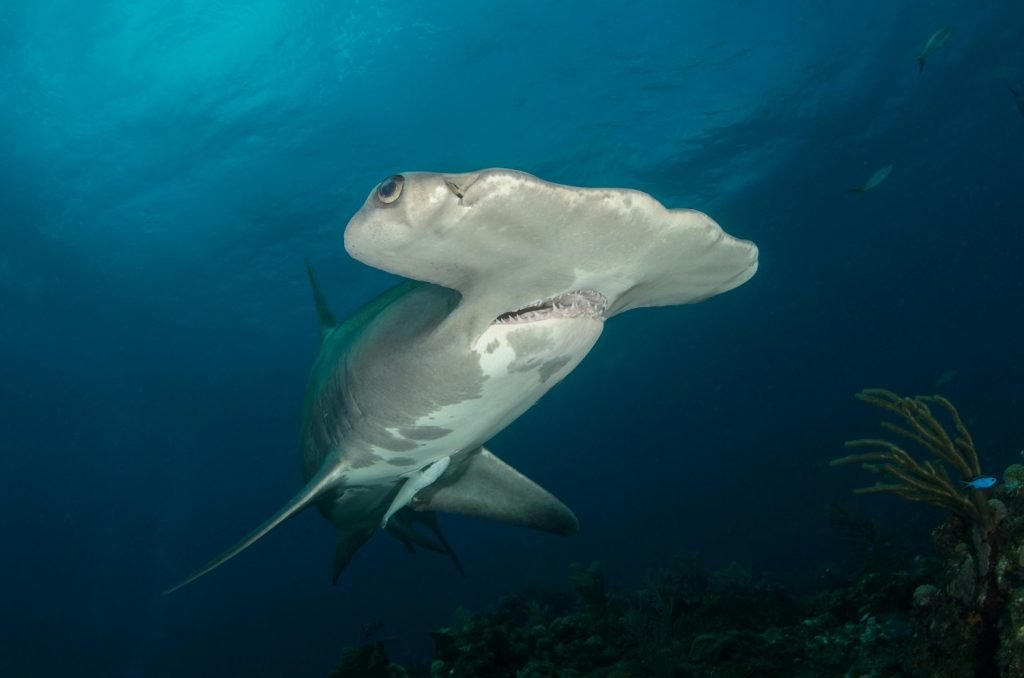
Hammerhead sharks are best known for their unusual head shape, which resembles a hammer or a “T.” This shape, called a cephalofoil, sets them apart from other sharks and gives them unique advantages.
Enhanced Vision: The eyes of the hammerhead are positioned on the sides of its wide head, allowing it to see 360 degrees vertically. This means they can see above, below, and all around them. This vision advantage helps them spot prey and avoid threats.
Improved Sense of Smell: Like other sharks, hammerheads have an acute sense of smell, but their widened head structure allows them to smell in a larger area around them. This is particularly useful in murky waters where visibility is low.
Electroreception: Sharks have specialized organs called ampullae of Lorenzini, which detect electric fields produced by other animals. Hammerheads, with a larger head surface area, have a more extensive network of these organs. This allows them to detect prey buried under the sand or hidden in crevices on the ocean floor.
Maneuverability: The hammerhead’s head shape provides balance and stability, making them agile hunters. They can make sharp turns and follow prey with precision.
Different Types of Hammerhead Sharks
There are nine known species of hammerhead sharks, each with its own unique features. The most well-known species include:
Great Hammerhead (Sphyrna mokarran): The largest of the hammerhead species, reaching up to 20 feet in length. Great hammerheads have a tall, curved dorsal fin and are usually solitary.
Scalloped Hammerhead (Sphyrna lewini): Known for its distinctive scalloped edges on the front of its head, this species often travels in schools, especially during the day.
Smooth Hammerhead (Sphyrna zygaena): These sharks have a smooth-edged head and are found in both coastal and offshore waters.
Bonnethead Shark (Sphyrna tiburo): The smallest hammerhead, growing to about 3-5 feet long. Bonnetheads have a more rounded head shape and are known for their omnivorous diet.
Each species has slight differences in head shape, size, and behavior. These variations help them adapt to different environments and prey.
Habitat and Distribution
Hammerhead sharks are found in warm, tropical, and temperate waters worldwide. They inhabit coastal areas, coral reefs, bays, and even deep waters. Some species, like the great hammerhead, prefer deeper waters, while others, like the bonnethead, stay close to shore. Many hammerheads are also known to migrate over long distances, often moving to cooler waters during warmer months.
Exploring Blue Whales’ Living Spaces: Insights into Their Oceanic Residences
Diet and Hunting Behavior
Hammerhead sharks are carnivorous and feed primarily on fish, squid, octopus, crustaceans, and other sharks. Their unique head shape gives them an advantage when hunting.
Hunting Techniques: Hammerheads use their head to pin down stingrays, one of their favorite meals, against the seafloor. This allows them to hold the ray in place and take a bite. Their electroreceptive organs also help them detect hidden prey in the sand.
Schooling Behavior: Unlike many sharks, certain hammerhead species, like the scalloped hammerhead, are known to gather in schools during the day. This social behavior may help them locate prey more effectively.
Diverse Diets: Different species of hammerhead sharks have varying diets. For example, bonnethead sharks are known to eat seagrass along with their regular diet of fish and crustaceans, making them one of the few omnivorous shark species.
Reproduction and Lifespan
Hammerhead sharks reproduce through internal fertilization, where the male transfers sperm to the female using specialized organs called claspers. These sharks are viviparous, meaning that the young develop inside the mother and are born live.
Gestation Period: The gestation period varies depending on the species but generally lasts between 9 to 12 months.
Pups: Hammerhead sharks give birth to a litter of young sharks, known as pups. The number of pups can range from a few to over 50, depending on the species. The pups are born fully developed and must fend for themselves immediately after birth.
Growth and Lifespan: Hammerhead sharks grow quickly, reaching maturity in 5-10 years. Their lifespan in the wild is typically around 20-30 years, though some may live longer in protected environments.
Hammerhead Sharks and the Ecosystem
Hammerhead sharks play an essential role in maintaining the balance of the marine ecosystem. As apex predators, they help control the population of prey species, which in turn affects the overall health of the ocean.
Maintaining Fish Populations: By preying on various fish species, hammerheads prevent any single species from becoming too dominant. This helps maintain biodiversity and a healthy marine environment.
Controlling Ray Populations: Since hammerheads often feed on rays, they help keep ray populations in check. Without sharks, ray populations could grow unchecked, leading to potential imbalances.
Indicator Species: Sharks are often indicators of the health of the ocean. A decline in shark populations can signal problems in marine ecosystems, such as overfishing or pollution.
Threats to Hammerhead Sharks
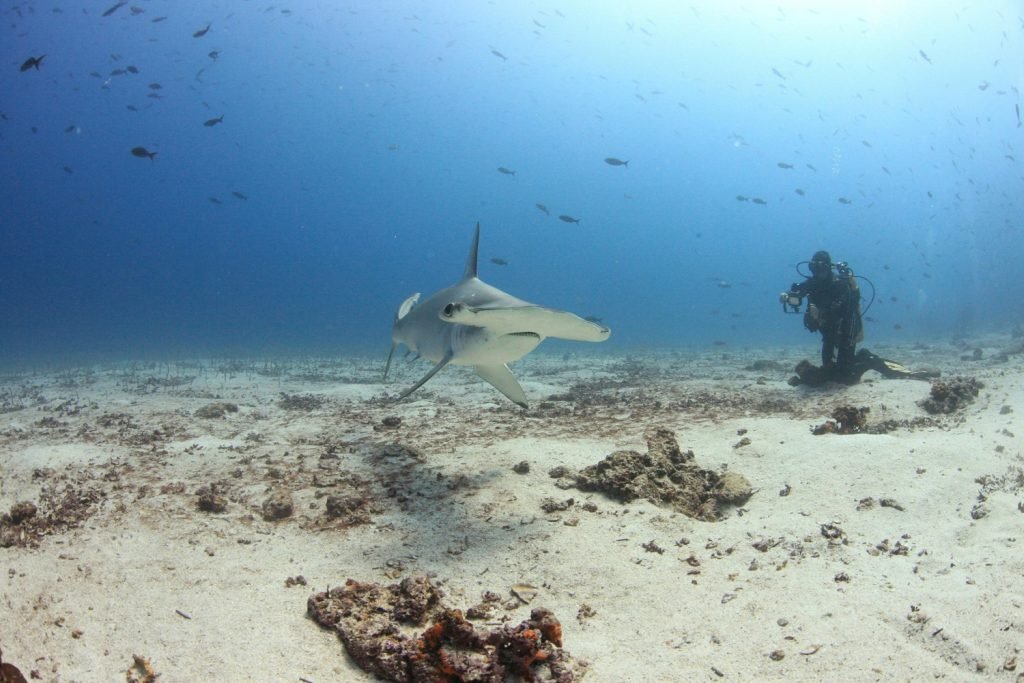
Despite their importance, hammerhead sharks face numerous threats from human activities. Their populations have declined significantly in recent years due to:
Overfishing: Hammerheads are often caught for their fins, which are highly valued in the shark fin trade. The practice of finning, where the shark’s fins are removed and the body is discarded, has led to drastic population declines.
Bycatch: Hammerheads are also caught as bycatch in commercial fishing operations. Many of these sharks are unintentionally captured and killed by fishing gear intended for other species.
Habitat Loss: Coastal development, pollution, and climate change are impacting the habitats that hammerhead sharks rely on. Coral reefs, mangroves, and other coastal areas are being damaged or destroyed, affecting shark populations.
Pollution: Pollution, particularly plastic pollution, is another significant threat. Sharks can ingest plastic, which can block their digestive systems and lead to death. Chemical pollution can also accumulate in sharks’ bodies, causing health issues.
Interesting Facts About Hammerhead Sharks
Hammerhead sharks can “tan.” Unlike most fish, hammerheads can tan if they spend a lot of time in shallow waters. They produce more pigment in response to sunlight exposure, similar to how humans tan.
They have a “sixth sense.” Hammerheads can sense electric fields produced by living organisms, which helps them locate hidden prey.
Great hammerheads are solitary hunters. Unlike other species that gather in schools, great hammerheads are typically solitary and prefer to hunt alone.
Some hammerheads migrate long distances. Scalloped hammerheads, for example, travel great distances to warmer waters during colder months.
They don’t chew their food. Hammerheads use their sharp teeth to grab and tear their prey into smaller pieces, which they then swallow whole.
FAQS
Why do hammerhead sharks have a hammer-shaped head?
Their hammer-shaped head, or cephalofoil, improves their vision, sense of smell, and electroreception, allowing them to detect prey more easily and make quick turns while hunting.
How many species of hammerhead sharks are there?
There are nine known species of hammerhead sharks, including the great hammerhead, scalloped hammerhead, smooth hammerhead, and bonnethead.
Where can hammerhead sharks be found?
Hammerhead sharks are found in warm, tropical, and temperate waters worldwide, often near coastlines, coral reefs, and sometimes in deeper waters.
What do hammerhead sharks eat?
They primarily eat fish, squid, octopus, crustaceans, and rays. Some species, like the bonnethead, also eat seagrass, making them one of the few omnivorous sharks.
Are hammerhead sharks dangerous to humans?
Hammerheads are generally not dangerous to humans. They are curious by nature but rarely show aggression toward people.
How long do hammerhead sharks live?
Hammerheads typically live between 20-30 years in the wild, depending on the species.
Why are hammerhead sharks considered endangered?
Hammerheads face threats from overfishing, bycatch, shark finning, habitat loss, and pollution. These pressures have led to declining populations, with some species listed as endangered.
How do hammerhead sharks reproduce?
They are viviparous, meaning they give birth to live young after a gestation period of 9-12 months. Litter sizes vary widely by species, ranging from a few pups to over 50.
What conservation efforts are in place for hammerhead sharks?
Conservation efforts include establishing marine protected areas, enforcing fishing regulations, banning shark finning, and conducting research on shark populations to promote better protection and awareness.