
The Ulysses butterfly, also known as the Blue Mountain butterfly, is one of nature’s most stunning creations. With its vibrant blue wings and elegant flight, this butterfly has captured the hearts of nature lovers worldwide. Found primarily in Australia and nearby tropical regions, the Ulysses butterfly is a visual delight and an important part of the ecosystem.
In this article, we will explore everything about the Ulysses butterfly. From its appearance and habitat to its life cycle and behavior, you will learn what makes this butterfly special.
What is the Ulysses Butterfly?
| Feature | Description |
|---|
| Scientific Name | Papilio ulysses |
| Common Name | Ulysses Butterfly, Blue Mountain Butterfly |
| Class | Insecta |
| Order | Lepidoptera |
| Family | Papilionidae (Swallowtail butterflies) |
| Wingspan | 10–14 cm (4–5.5 inches) |
| Coloration | Iridescent blue (upper side of wings) and dark brown (underside) |
| Habitat | Tropical rainforests, coastal forests, and gardens |
| Geographical Range | Australia (especially Queensland), Papua New Guinea, Indonesia |
| Diet (Adults) | Nectar from flowers like hibiscus and lantana |
| Diet (Caterpillars) | Leaves of host plants such as Euodia trees |
| Reproduction | Oviparous (lays eggs on host plants) |
| Lifespan | Adults live for about 1–2 weeks |
| Conservation Status | Not officially endangered but threatened by habitat loss |
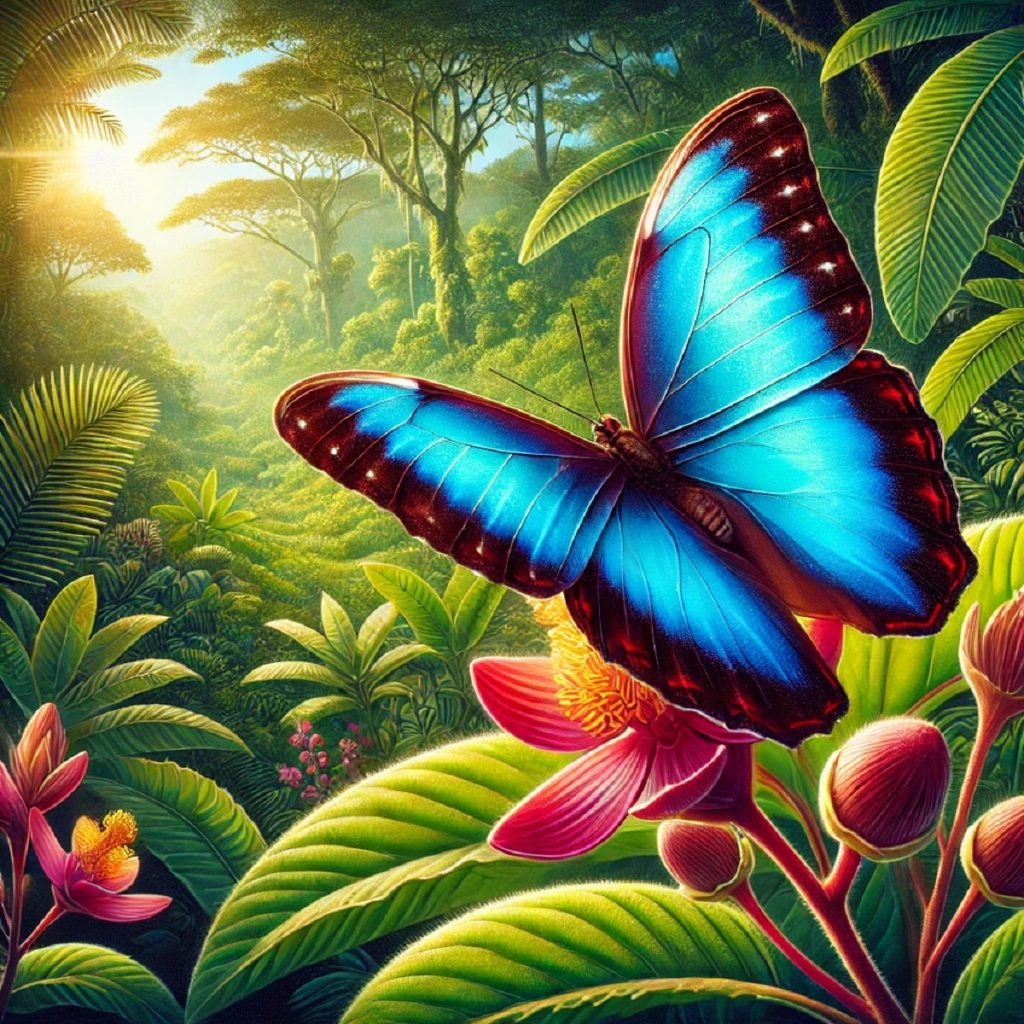
The Ulysses butterfly (Papilio ulysses) is a species of swallowtail butterfly. It is named after Ulysses, the legendary hero of Greek mythology. Its bright blue wings shimmer in sunlight, creating a magical effect. This butterfly is native to the tropical rainforests of Australia, Papua New Guinea, and nearby islands.
Physical Characteristics
The Ulysses butterfly is known for its striking appearance. Here are its key features:
Coloration
The upper side of the wings is an iridescent electric blue.
The underside is dark brown or black with subtle markings, helping it blend into its surroundings when resting.
Wing Size
The wingspan of an adult Ulysses butterfly ranges from 10 to 14 centimeters, making it a medium-to-large butterfly.
Body
The body is slender and dark, helping it stay aerodynamic during flight.
Sexual Dimorphism
Males are more vibrant than females, as their brilliant blue color is used to attract mates.
Habitat and Distribution
The Ulysses butterfly is a tropical species. Its habitat and range are closely tied to warm, humid climates.
Primary Habitat
Tropical rainforests, particularly in Queensland, Australia.
Coastal forests and gardens where host plants are available.
Global Range
Found in Australia, Papua New Guinea, Indonesia, and the Solomon Islands.
Preferred Environment
This butterfly thrives in environments with dense vegetation and plenty of sunlight.
It is also commonly seen in parks and gardens with flowering plants that provide nectar.
The Life Cycle of the Ulysses Butterfly
Like all butterflies, the Ulysses butterfly goes through four stages in its life cycle: egg, larva (caterpillar), pupa (chrysalis), and adult.
Egg Stage
Females lay their eggs on specific host plants, such as the Euodia tree.
The eggs are tiny, spherical, and pale in color.
Larva Stage (Caterpillar)
Once the eggs hatch, caterpillars emerge and begin feeding on the leaves of the host plant.
Ulysses caterpillars are green with small markings, helping them camouflage among the foliage.
This stage lasts for several weeks, during which the caterpillar grows and molts multiple times.
Pupa Stage (Chrysalis)
The caterpillar forms a chrysalis, a protective shell where it undergoes metamorphosis.
The chrysalis is usually brown or green, blending with the surroundings.
This stage can last anywhere from 10 days to several weeks, depending on environmental conditions.
Adult Stage
Once fully developed, the butterfly emerges from the chrysalis.
It takes a few hours for its wings to expand and harden before it takes its first flight.
Fun Facts About the Ulysses Butterfly
Brightest Blue
The blue color of Ulysses butterfly wings is not due to pigment but the way light reflects off microscopic scales on the wings.
National Symbol
The Ulysses butterfly is an iconic symbol of Queensland, Australia.
Speedy Fliers
Ulysses butterflies can fly at remarkable speeds, making them challenging to catch.
Short Lifespan
The adult butterfly lives for only a few weeks, focusing on feeding and reproduction during this time.
Territorial Nature
Male butterflies are highly territorial and chase away intruders, even if they are larger animals like birds.
Conclusion
The Ulysses butterfly is a dazzling gem of the tropics, showcasing nature’s creativity and beauty. With its vivid blue wings, graceful flight, and ecological importance, it is a true marvel of the natural world. However, this butterfly also reminds us of the fragility of our environment. By protecting its habitat and promoting sustainable practices, we can ensure that future generations continue to enjoy the magic of the Ulysses butterfly.