
Throughout history, Earth has been home to extraordinary animals that dwarf many of the species alive today. Among these giants is the enigmatic, colossal ancient horse that once roamed the planet an animal so massive it weighed an estimated 3,000 pounds and stood taller than modern draft horses. This prehistoric equine, known as Equus giganteus, provides a fascinating glimpse into the evolutionary history of horses and the ecosystems they once dominated.
In this article, we explore the characteristics, habitat, and significance of this gigantic ancient horse, examining what it tells us about evolution, extinction, and the natural world’s past.
What Was Equus giganteus?
| Feature | Description |
|---|
| Scientific Name | Equus giganteus |
| Common Name | Giant Ancient Horse |
| Class | Mammalia |
| Order | Perissodactyla (odd-toed ungulates) |
| Family | Equidae (horse family) |
| Estimated Height | Over 8 feet (2.4 meters) at the shoulder |
| Estimated Weight | Around 3,000 pounds (1,360 kilograms) |
| Diet | Herbivore; primarily grass, shrubs, and fibrous plants |
| Habitat | Grasslands, woodlands, and open plains |
| Geographical Range | North America |
| Time Period | Pleistocene Epoch (2.6 million to 10,000 years ago) |
| Key Adaptations | Strong legs for long-distance travel, robust teeth for grinding vegetation |
| Lifespan (Estimated) | Likely 20–30 years, similar to modern horses |
| Conservation Status | Extinct |
Equus giganteus is a species of prehistoric horse that lived during the Pleistocene Epoch, around 2.6 million to 10,000 years ago. It is considered one of the largest horses to have ever existed. Fossil evidence reveals that it was a massive creature, weighing up to 3,000 pounds and standing over 8 feet tall at the shoulder, significantly larger than even the tallest modern draft horses, like the Shire or Clydesdale.
Physical Characteristics
Size
The most striking feature of Equus giganteus was its size. With a shoulder height of over 8 feet, this ancient horse towered above any equine alive today.
Its weight, estimated at around 3,000 pounds, made it comparable in mass to some of the largest land mammals.
Build
Unlike today’s sleek and agile horses, Equus giganteus had a robust and sturdy frame. This adaptation likely helped it survive in harsh environments and fend off predators.
Head and Neck
Fossils suggest that it had a proportionally large head and strong neck muscles, useful for grazing on tough vegetation.
Legs and Hooves
Its long, powerful legs and durable hooves allowed it to traverse a variety of terrains, from open plains to forested regions.
Habitat and Distribution
Equus giganteus primarily roamed North America, where it thrived in diverse habitats ranging from grasslands to woodlands. During the Pleistocene, North America was a patchwork of ecosystems, including vast prairies, cold tundras, and temperate forests. This diversity provided ample grazing opportunities for such a large herbivore.
Fossil evidence suggests that Equus giganteus may have migrated across different regions, adapting to various climates. It shared its environment with other megafauna, such as mammoths, giant ground sloths, and saber-toothed cats, creating a dynamic and competitive ecosystem.
Diet and Feeding Habits
As a herbivore, Equus giganteus fed primarily on grasses and other vegetation. Its massive size required an equally substantial intake of food to sustain its energy needs.
Grazing:
Like modern horses, Equus giganteus was a grazer. Its teeth were adapted for grinding tough grasses and fibrous plants, making it well-suited for life on the Pleistocene prairies.
Adaptability:
Its diet likely included shrubs, leaves, and bark during times when grass was scarce, showcasing its ability to adapt to changing environmental conditions.
Relatives of Equus giganteus
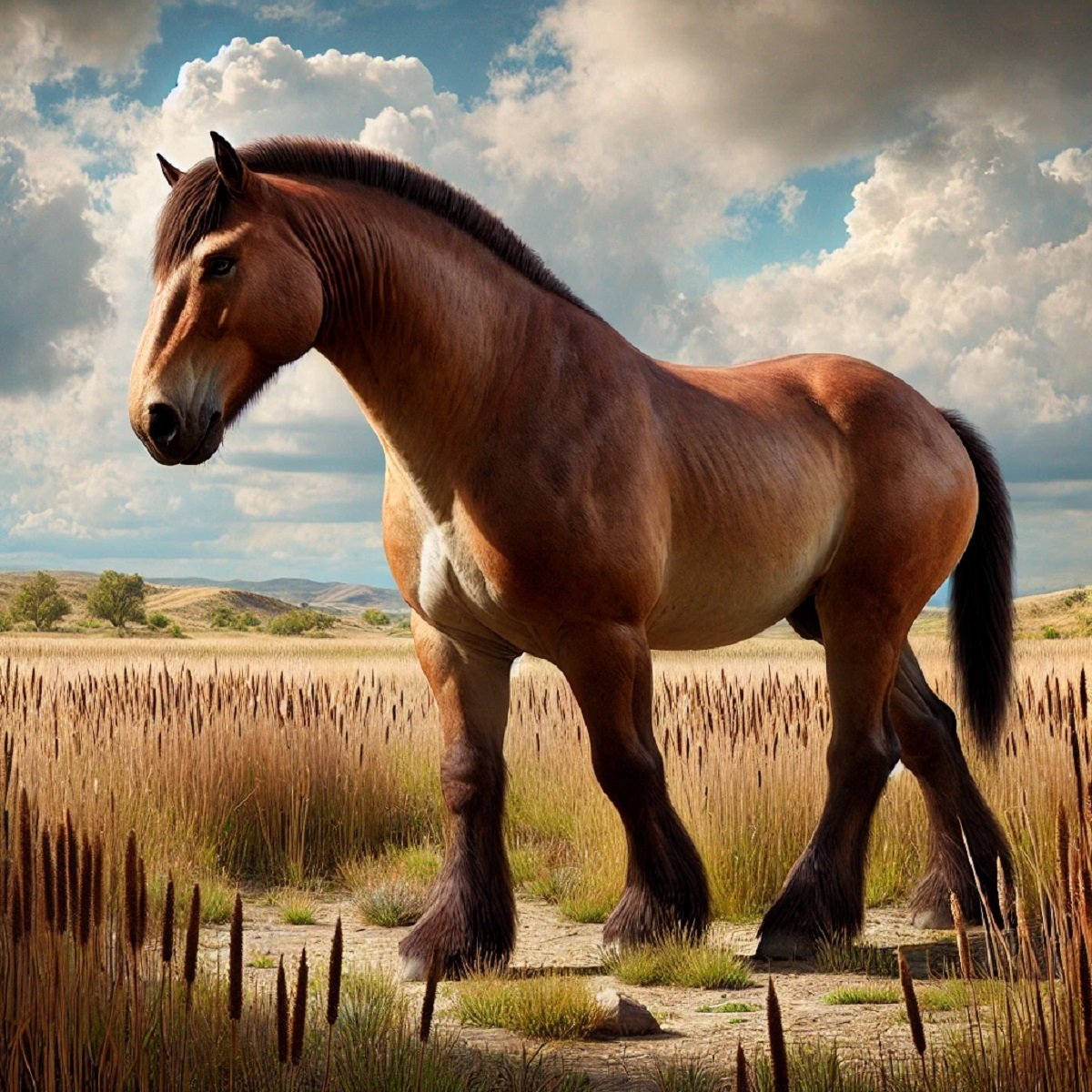
Equus giganteus belongs to the genus Equus, which includes all modern horses, zebras, and donkeys. Its closest living relatives are the modern equines we see today, but none approach its size or mass.
Comparison to Modern Draft Horses
Draft horses like the Shire and Percheron are known for their size and strength, but even these powerful breeds pale in comparison to Equus giganteus While Shires can weigh up to 2,200 pounds, Equus giganteus was significantly heavier and taller.
Evolutionary Lineage
Fossil evidence suggests that Equus giganteus evolved from smaller ancestral horses that adapted to the open grasslands of North America during the Miocene and Pliocene epochs.
Why Did Equus giganteus Go Extinct?
Like many other megafauna of the Pleistocene, Equus giganteus became extinct approximately 10,000 years ago. Several factors likely contributed to its disappearance:
Climate Change
The end of the Ice Age brought significant climate shifts, altering the landscapes and food sources that Equus giganteus depended on.
Human Activity
Early humans arrived in North America around the time Equus giganteus went extinct. They may have hunted these massive horses for food, contributing to their decline.
Habitat Loss
As glaciers retreated and ecosystems changed, the habitats suitable for Equus giganteus may have shrunk, leading to population declines.
Competition
Competition with other herbivores, including smaller horses and other megafauna, might have made survival more challenging.
What Makes Equus giganteus Fascinating?
The sheer size and scale of Equus make it a fascinating subject of study. Its existence challenges our understanding of what horses are capable of and how they adapt to their environments. Studying this ancient horse gives scientists insights into the dynamics of prehistoric ecosystems and the factors that drive evolution and extinction.
A Window into the Past
Fossils of Equus provide valuable information about the Pleistocene epoch, helping us reconstruct ancient environments.
Understanding Horse Evolution
By comparing Equus to its modern relatives, researchers can trace the evolutionary history of horses and how they adapted to changing conditions over millions of years.
Inspiration for Modern Conservation
The extinction of Equus giganteus highlights the vulnerability of large animals to environmental changes and human activity, underscoring the importance of conserving modern species.
The Legacy of Equus giganteus
Although Equus giganteus no longer walks the Earth, its legacy lives on in its modern relatives and the ecosystems it once shaped. The story of this ancient horse reminds us of the incredible diversity of life that has existed on our planet and the need to protect the species we have today.
Through continued research and exploration, we may uncover even more secrets about this giant of the past, deepening our understanding of the natural world and our place within it. Equus giganteus is a symbol of nature’s ability to create creatures of remarkable size and majesty, leaving behind a legacy that inspires awe and curiosity.