
The golden eagle is one of the most fascinating birds in the world. With its powerful wings, sharp talons, and piercing eyes, it is truly a symbol of strength and freedom. Found in many parts of the world, this magnificent bird has captured humans’ imaginations for centuries. In this article, we will explore the golden eagle’s life, habits, and characteristics in simple, easy-to-read language.
Breed Overview
| Feature | Description |
|---|---|
| Scientific Name | Aquila chrysaetos |
| Class | Aves |
| Order | Accipitriformes |
| Family | Accipitridae |
| Wingspan | Up to 7 feet (about 2.1 meters) |
| Weight | 6 to 15 pounds (2.7 to 6.8 kilograms) |
| Habitat | Grasslands, deserts, tundras, and mountains |
| Diet | Carnivorous (small mammals, birds, carrion) |
| Lifespan | Up to 30 years in the wild |
What is a Golden Eagle?
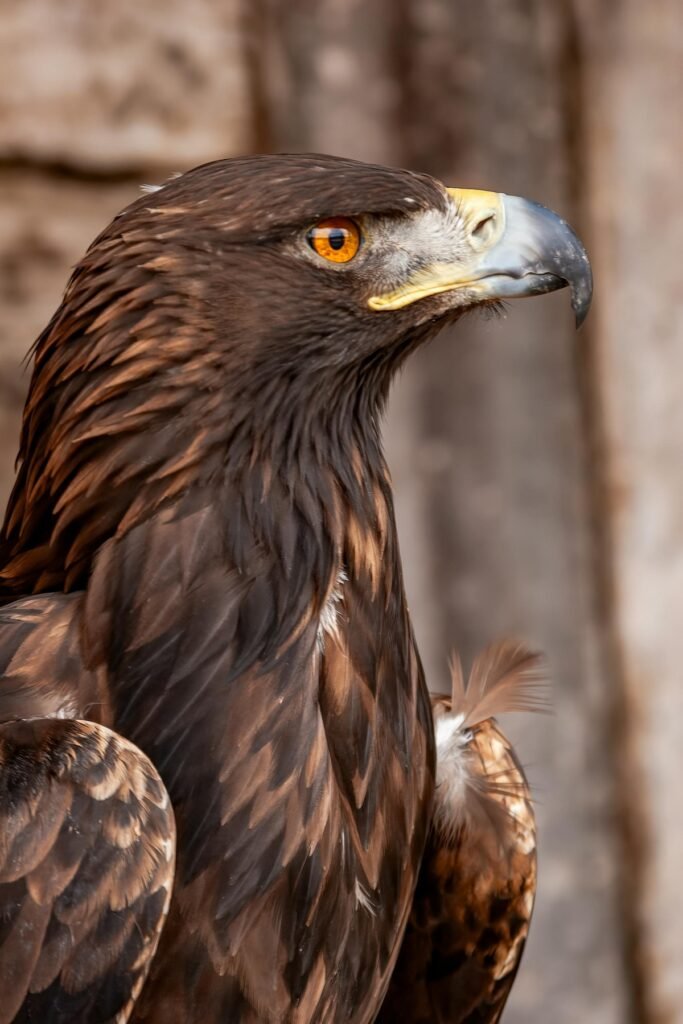
The golden eagle is a large bird of prey. It belongs to the family Accipitridae, which includes hawks, kites, and other eagles. Its scientific name is Aquila Chrysaetos. The bird gets its name from the golden-brown feathers on its head and neck, which shimmer in the sunlight.
Golden eagles are known for their impressive size. They have long, broad wings and a powerful body. An adult golden eagle can have a wingspan of up to 7 feet (about 2.1 meters) and weigh between 6 to 15 pounds (2.7 to 6.8 kilograms). Females are usually larger than males, which is common among birds of prey.
Where Do Golden Eagles Live?
Golden eagles are found in many parts of the world. They live in North America, Europe, Asia, and North Africa. These birds prefer open spaces and mountainous regions. They thrive in habitats like grasslands, deserts, and tundras. Golden eagles avoid dense forests because they need open areas to hunt and fly freely.
Golden eagles are commonly seen in the western United States, Canada, and Alaska in North America. They are found in countries like Scotland, Norway, and Spain in Europe. In Asia, they live in regions such as Siberia, Mongolia, and parts of China. These birds adapt well to different environments but need a steady supply of food and safe places to nest.
What Do Golden Eagles Eat?
Golden eagles are carnivorous. They are the top predators in their ecosystem. Their diet mainly consists of small to medium-sized mammals. Some common prey include rabbits, hares, squirrels, and marmots. They also hunt birds like grouse and waterfowl.
In some cases, golden eagles can take down larger animals. They have been known to hunt young deer, foxes, and even mountain goats. These birds are skilled hunters. They use their sharp talons and strong beaks to catch and kill their prey. Golden eagles are also opportunistic feeders. This means they will eat carrion (dead animals) if they find it.
Golden eagles have excellent eyesight. They can spot prey from great distances, sometimes as far as two miles away. Once they locate their target, they dive at incredible speeds, reaching up to 150 miles per hour (241 kilometers per hour). This swift attack gives their prey little chance to escape.
How Do Golden Eagles Live?
Golden eagles are solitary birds. They are territorial and do not tolerate other eagles in their hunting area. A single pair of golden eagles may claim a territory that spans over 60 square miles (155 square kilometers).
These birds mate for life. Once they find a partner, they stay together and raise their young as a team. Golden eagles build large nests called eyries. These nests are often located on cliffs or in tall trees. The eyries are made of sticks and lined with softer materials like grass and moss. Some nests are used for many years and can grow to be several feet wide.
The female lays one to four eggs, but usually, only one or two chicks survive. Both parents take turns incubating the eggs and hunting for food. After about 45 days, the eggs hatch. The chicks are covered in white down feathers and are completely dependent on their parents. The young eagles stay in the nest for about 10 to 12 weeks before they are ready to fly.
Golden Eagles in Culture and History
The golden eagle has been admired by humans for centuries. It appears in many cultures and legends. In ancient Rome, the eagle was a symbol of power and victory. It was used as the emblem of the Roman legions. Native American tribes also hold the golden eagle in high regard. They view it as a sacred bird and believe it carries prayers to the heavens.
In Scotland, the golden eagle is a national symbol. It represents strength and wild beauty. Many countries, including Mexico and Kazakhstan, feature the golden eagle on their flags and coats of arms.
Threats
Although golden eagles are powerful, they face many threats. Habitat loss is one of the biggest problems. As humans build cities and roads, the open spaces that golden eagles need are disappearing. Climate change also affects their habitats and prey availability.
Another threat is human activity. In the past, farmers and ranchers often killed golden eagles because they believed the birds were a danger to livestock. Today, laws protect these birds, but illegal hunting and poisoning still occur.
Wind turbines pose another risk. Golden eagles can collide with these structures while flying. Efforts are being made to design wind farms that are safer for birds.
Despite these challenges, conservation programs are helping golden eagles. Wildlife organizations are working to protect their habitats and educate people about the importance of these majestic birds.
The Ultimate Guide to Pomsky Dogs Everything You Need to Know
Interesting Facts
Golden eagles are incredibly fast. They can reach speeds of up to 150 miles per hour when diving for prey.
They have amazing vision. Their eyesight is about eight times sharper than that of humans.
Golden eagles are long-lived. In the wild, they can live up to 30 years, and in captivity, some have lived for more than 50 years.
They are skilled hunters. Golden eagles can hunt in pairs, working together to capture large prey.
Golden eagles are strong. They can carry prey that weighs as much as they do.
Conclusion
The golden eagle is a true wonder of nature. Its strength, speed, and beauty make it one of the most remarkable birds in the world. By understanding and protecting these majestic creatures, we can ensure they continue to soar in our skies for generations to come. Whether you see one in the wild or learn about them from afar, the golden eagle is a reminder of the incredible diversity of life on Earth.