
The African Bush Elephant is one of the most iconic animals on Earth. It is the largest land animal in the world. These majestic creatures are known for their size, intelligence, and social behavior. They play a vital role in their ecosystems. In this article, we will explore the life of the African Bush Elephant, its habitat, behavior, and the challenges it faces.
What is an African Bush Elephant?
| Category | Details |
|---|---|
| Common Name | African Bush Elephant |
| Scientific Name | Loxodonta africana |
| Class | Mammalia (Mammals) |
| Order | Proboscidea (Elephants and Relatives) |
| Family | Elephantidae (Elephants) |
| Size | Up to 13 feet (4 meters) tall at the shoulder |
| Weight | 5–6 tons (10,000–12,000 pounds) |
| Lifespan | 60–70 years in the wild (up to 80+ years in captivity) |
| Habitat | Savannas, grasslands, forests, and wetlands |
| Range | Sub-Saharan Africa (Kenya, Tanzania, Botswana, South Africa, etc.) |
| Diet | Herbivorous (grasses, leaves, bark, fruits, and roots) |
| Behavior | Social lives in herds; highly intelligent and emotional |
| Reproduction | 22-month pregnancy; 1 calf per birth; calves stay with mother for years |
| Communication | Uses sounds (trumpets, rumbles), body language, and touch |
| Predators | Lions, hyenas, and crocodiles (for calves); humans (poaching, habitat loss) |
| Conservation Status | Endangered (population declining due to poaching and habitat loss) |
| Unique Features | Large ears, long trunk, curved tusks; matriarchal herd structure |
The African Bush Elephant is a massive animal. It can weigh up to 6 tons. That is as heavy as a large truck. It can stand up to 13 feet tall at the shoulder. Its large ears, long trunk, and curved tusks make it easy to recognize.
The trunk is one of the most important parts of an elephant. It is used for many things. Elephants use their trunks to breathe, smell, drink, and grab food. They also use it to communicate with each other. The tusks are made of ivory. They are used for digging, fighting, and stripping bark from trees.
Where Do African Bush Elephants Live?
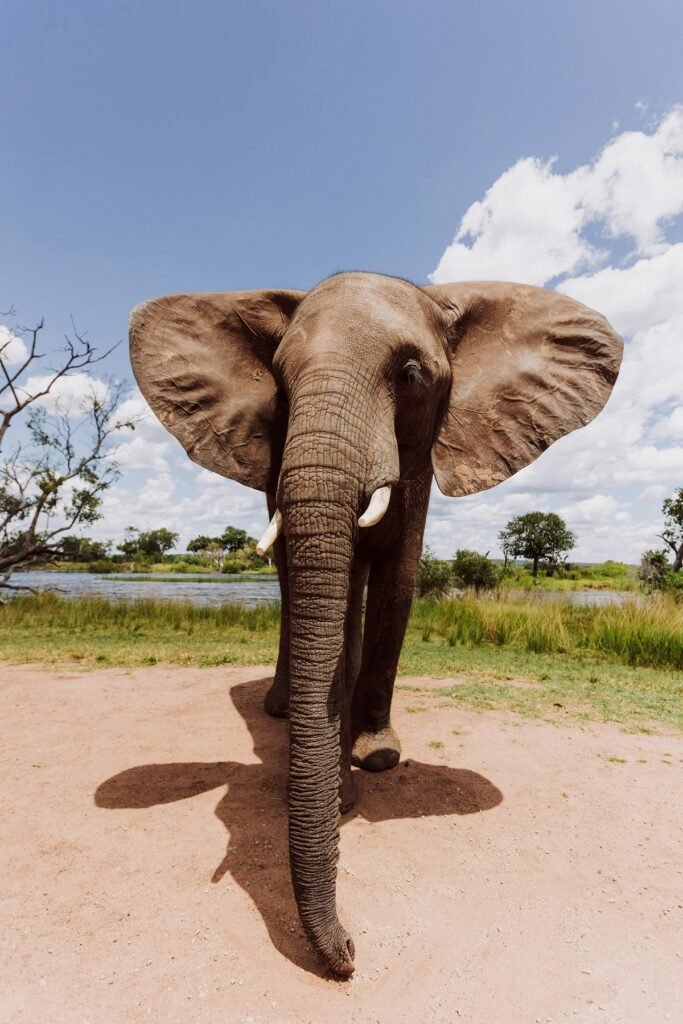
African Bush Elephants live in sub-Saharan Africa. They are found in Kenya, Tanzania, Botswana, and South Africa. They prefer savannas, grasslands, and forests. These areas provide them with food and water.
Elephants need a lot of space to roam. They travel long distances to find food and water. They are also known to migrate during the dry season. This is when water and food are scarce. During the wet season, they stay in one area where food is plentiful.
What Do African Bush Elephants Eat?
African Bush Elephants are herbivores. This means they eat only plants. They eat a variety of plants, including grasses, leaves, bark, and fruits. An adult elephant can eat up to 300 pounds of food in a single day. They also drink up to 50 gallons of water daily.
Elephants use their trunks to pull leaves and grass from the ground. They also use their tusks to strip bark from trees. Elephants play an important role in their environment. They help to shape the landscape by knocking down trees and creating paths.
African Bush Elephant Behavior
African Bush Elephants are very social animals. They live in groups called herds. A herd is usually made up of females and their young. The oldest female, called the matriarch, leads the herd. She is responsible for finding food and water.
Male elephants usually live alone or in small groups. They leave the herd when they are about 12 years old. They only join herds during the mating season.
Elephants are very intelligent animals. They have good memories and can solve problems. They are also very emotional. They show signs of joy, anger, and sadness. Elephants are known to mourn their dead. They will stay with a dead elephant for days.
African Bush Elephant Communication
Elephants communicate in many ways. They use sounds, body language, and touch. They make a variety of sounds, including trumpets, rumbles, and roars. These sounds can be heard from miles away.
Elephants also use their trunks to communicate. They touch each other with their trunks to show affection. They also use their trunks to greet each other. Body language is also important. Elephants use their ears, tails, and trunks to show how they feel.
African Bush Elephant Mating and Reproduction
African Bush Elephants usually mate during the rainy season. This is when food and water are plentiful. Males compete for females by fighting with their tusks. The strongest male gets to mate with the female.
After mating, the female is pregnant for about 22 months, the longest pregnancy of any animal. She gives birth to a single calf, which weighs about 200 pounds at birth and can stand and walk within an hour of being born.
The calf stays close to its mother for several years. It has been drinking her milk for about two years. The mother and other females in the herd protect the calf from predators. The calf learns important skills from the herd, like finding food and water.
African Bush Elephant Intelligence
African Bush Elephants are very intelligent animals. They have large brains and are capable of complex behaviors. They can solve problems and use tools. For example, elephants use branches to swat flies or scratch themselves.
Elephants also have good memories. They can remember the locations of water sources and food. This is important for their survival in the wild. Elephants are also known to recognize individual humans and other elephants.
African Bush Elephant Migration
African Bush Elephants are known to migrate. They travel long distances to find food and water. Migration is especially important during the dry season. This is when water and food are scarce.
Elephants follow traditional migration routes, which are passed down from generation to generation. The matriarch leads the herd along these routes. Migration is dangerous for elephants, who face many challenges, such as predators and human activities.
Conclusion
The African Bush Elephant is a remarkable animal known for its size, intelligence, and social behavior. It plays an important role in its ecosystem, helping to shape the landscape and create habitats for other animals.
However, the African Bush Elephant is facing many challenges. Poaching and habitat loss are major threats. Conservation efforts are needed to protect this magnificent animal.
Discover the Woolly Mammoth: Facts, Diet, and Secrets of the Ice Age Giant