
Albino deer are one of nature’s rarest and most fascinating creatures. Their pure white coats and pink eyes make them stand out in the wild. They are often seen as magical or spiritual symbols. But what makes these deer so special? Let’s explore the world of albino deer, their unique traits, their challenges, and the myths surrounding them.
What is an Albino Deer?
| Category | Details |
|---|---|
| Common Name | Albino Deer |
| Scientific Name | Odocoileus virginianus (White-tailed Deer) or Odocoileus hemionus (Mule Deer) |
| Class | Mammalia |
| Order | Artiodactyla |
| Family | Cervidae |
| Genus | Odocoileus |
| Species | O. virginianus (White-tailed Deer) or O. hemionus (Mule Deer) |
| Type | Mammal |
| Habitat | Forests, grasslands, wetlands, and suburban areas (depending on species) |
| Range | North America, Central America, and parts of South America |
| Diet | Herbivore (leaves, twigs, fruits, nuts, grass, and crops) |
| Lifespan | 4–6 years in the wild (shorter for albino deer due to challenges) |
| Size | Height: 2.5–3.5 feet at the shoulder; Length: 4–7 feet |
| Weight | 100–300 pounds (varies by species and gender) |
| Coat Color | Pure white (due to albinism) |
| Eye Color | Pink or red (lack of melanin causes blood vessels to show through) |
| Unique Trait | Lack of melanin due to albinism, resulting in white fur and pink eyes |
| Predators | Wolves, coyotes, mountain lions, bears, and humans |
| Conservation Status | Not a separate species; protected in some regions due to rarity |
| Special Notes | Albino deer are extremely rare (1 in 30,000 deer). They face challenges like poor eyesight, sensitivity to sunlight, and higher visibility to predators. |
An albino deer is a deer with a genetic condition called albinism. Albinism affects the production of melanin, the pigment that gives color to skin, hair, and eyes. Because of this, albino deer have white fur, pink eyes, and pale hooves. Their eyes are pink because the lack of pigment allows blood vessels to show through.
Albino deer are different from leucistic deer. Leucistic deer also have white fur, but they have normal-colored eyes, usually brown or blue. True albino deer are much rarer than leucistic ones.
How Rare Are Albino Deer?
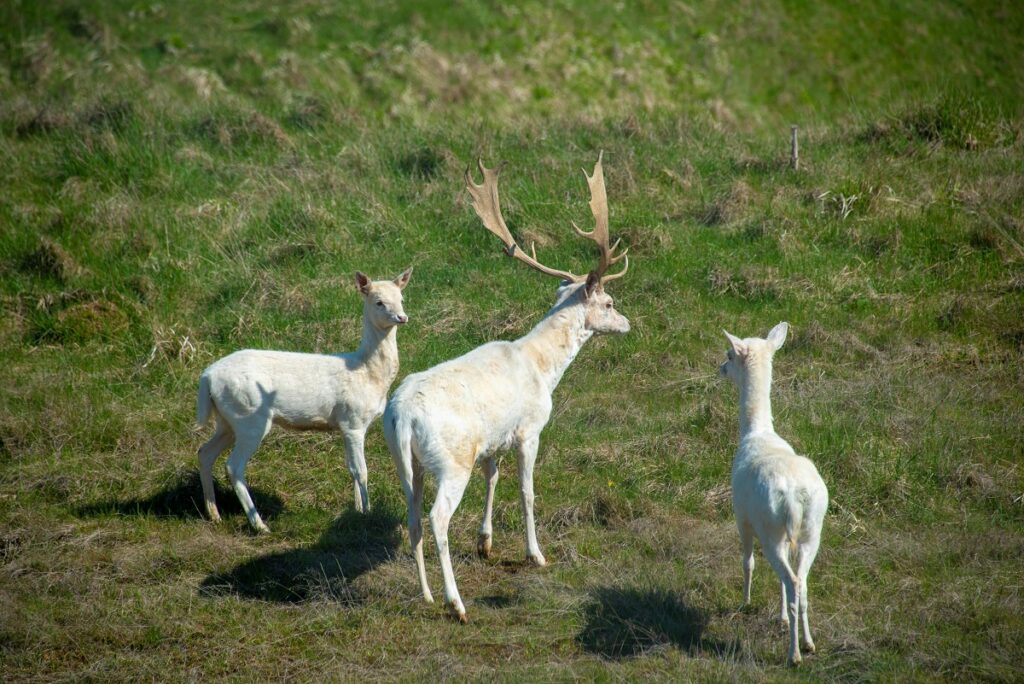
Albino deer are extremely rare. Some experts say that only 1 in 30,000 deer is born albino. This rarity makes them a special sight for anyone lucky enough to see one. In some places, albino deer are protected by law because they are so uncommon.
The Challenges of Being an Albino Deer
Life is not easy for an albino deer. Their white fur makes it hard for them to hide from predators. In the wild, deer rely on their brown coats to blend into the forest. This camouflage helps them stay safe from animals like wolves, coyotes, and mountain lions. Albino deer, with their bright white fur, stand out in the forest. This makes them an easy target.
Albino deer also face health problems. Their lack of pigment makes them more sensitive to sunlight. They can get sunburned easily, and their eyes are often weak. Many albino deer have poor eyesight, which makes it harder for them to spot danger or find food.
The Seneca White Deer
The Seneca white deer are a famous group of leucistic deer living in the former Seneca Army Depot. The depot was fenced off during World War II, and the deer inside were isolated from the outside world. Over time, a genetic mutation caused some of the deer to be born white. Today, the depot is open to the public, and visitors can take tours to see these unique deer.
The Seneca white deer are not true albinos. They are leucistic, meaning they have white fur but normal-colored eyes. Still, they are a rare and beautiful sight. Their story shows how isolation and genetics can create something truly special.
Albino Deer in the Wild
In the wild, albino deer are a rare sight. Most do not survive long because of their visibility to predators. However, some albino deer have been known to live for several years, especially in areas with fewer predators or where humans protect them.
Albino deer are often seen as a sign of a healthy ecosystem. Their presence shows that the environment is balanced and can support rare genetic traits. However, their survival depends on the protection of their habitat and the kindness of humans.
The Beauty of Albino Deer
Albino deer are a reminder of the beauty and mystery of nature. Their white coats and pink eyes make them look like something out of a fairy tale. Seeing an albino deer in the wild is a rare and magical experience.
Their beauty also comes with challenges. Albino deer face many struggles in the wild, from predators to health problems. But their rarity and uniqueness make them a symbol of hope and wonder.
Myths and Misconceptions
There are many myths about albino deer. Some people believe they are ghosts or spirits. Others think they bring bad luck. These myths often come from a lack of understanding about albinism.
In reality, albino deer are just like other deer, except for their color. They eat the same food, live in the same habitats, and face the same challenges. The only difference is their lack of pigment, which makes them stand out.
The Science Behind Albinism
Albinism is a genetic condition that affects many animals, not just deer. It occurs when both parents carry a recessive gene for albinism. When two carriers have a baby, there is a chance the baby will be albino.
Albinism affects the production of melanin, the pigment that gives color to skin, hair, and eyes. Without melanin, the body cannot produce color. This is why albino animals have white fur and pink eyes.
Albino Deer in Captivity
Some albino deer live in captivity, where they are protected from predators and given special care. Zoos and wildlife parks sometimes have albino deer as part of their exhibits. These deer help educate the public about albinism and the importance of protecting rare animals.
In captivity, albino deer can live longer lives than in the wild. They are given proper food, medical care, and protection from the sun. However, they still face challenges, like weak eyesight and sensitivity to light.
Albino Deer vs Leucistic Deer
| Feature | Albino Deer | Leucistic Deer |
|---|---|---|
| Definition | A deer with albinism, a genetic condition causing a complete lack of melanin. | A deer with leucism, a genetic condition causing partial loss of pigmentation. |
| Coat Color | Pure white fur. | White or patchy white fur. |
| Eye Color | Pink or red (due to lack of pigment, allowing blood vessels to show through). | Normal-colored eyes (usually brown or blue). |
| Skin Color | Pink (no pigment). | Normal skin color (pigment is present). |
| Hoof Color | Pale or pink. | Normal (dark or black). |
| Melanin Production | Completely absent. | Partially reduced. |
| Genetic Cause | Recessive gene mutation affecting melanin production. | Genetic mutation affecting pigment cells. |
| Rarity | Extremely rare (1 in 30,000 deer). | Rare, but more common than albino deer. |
| Survival Challenges | Poor eyesight, sensitivity to sunlight, and high visibility to predators. | Fewer challenges than albino deer, but still more visible than normal deer. |
| Health Issues | Often have vision problems and sun sensitivity. | Generally healthier than albino deer. |
| Camouflage | Very poor (bright white fur stands out). | Poor (white fur is still noticeable). |
| Cultural Significance | Often seen as spiritual or magical symbols. | Sometimes seen as unique or special, but less symbolic than albino deer. |
| Examples in the Wild | Rare sightings in North America. | Seneca white deer (leucistic herd in New York). |
| Legal Protection | Protected in some states (e.g., Wisconsin, Illinois). | May or may not be protected, depending on location. |
Key Differences
Eye Color: Albino deer have pink or red eyes, while leucistic deer have normal-colored eyes.
Melanin: Albino deer have no melanin, while leucistic deer have reduced melanin.
Health: Albino deer often face more health challenges, such as poor eyesight and sun sensitivity.
Rarity: Albino deer are rarer than leucistic deer.
Appearance: Albino deer are entirely white with pink features, while leucistic deer may have patchy white fur or normal-colored eyes.
The Future of Albino Deer
The future of albino deer depends on humans. By protecting their habitats and passing laws to keep them safe, we can help ensure their survival. Education and awareness are also key. The more people know about albino deer, the more they will care about protecting them.
Albino deer are a reminder of the beauty and fragility of nature. They show us how rare and special life can be. By working together, we can help these unique animals thrive for generations to come.
Discover the Woolly Mammoth: Facts, Diet, and Secrets of the Ice Age Giant