
The Eurasian lynx is one of the most fascinating and elusive creatures in the wild. With its sharp eyes, tufted ears, and powerful build, this wild cat symbolizes strength and mystery. Found in the forests of Europe, Asia, and Siberia, the Eurasian lynx is the largest lynx species. Despite its wide range, it is rarely seen by humans. In this article, we will explore the life of the Eurasian lynx, including its appearance, habitat, behavior, diet, and more. Let’s step into the world of this majestic wild cat and discover what makes it so special.
Breed Overview
| Category | Details |
|---|---|
| Scientific Name | Lynx lynx |
| Class | Mammalia (Mammals) |
| Order | Carnivora (Carnivores) |
| Family | Felidae (Cat Family) |
| Size | 31 to 51 inches (80 to 130 cm) in length |
| Height | 24 to 30 inches (60 to 75 cm) at the shoulder |
| Weight | 40 to 90 pounds (18 to 40 kg); males are larger than females |
| Lifespan | 10 to 15 years in the wild; up to 20 years in captivity |
| Color | Yellowish-brown or gray fur with dark spots and stripes |
| Distinct Features | Tufted ears, short tail with black tip, powerful legs, and large paws |
| Habitat | Dense forests, mountainous regions, rocky terrain, and boreal forests |
| Range | Europe, Asia, and Siberia; from Scandinavia to the Himalayas |
| Diet | Carnivore: Deer (roe deer), hares, rabbits, rodents, birds, and occasionally livestock |
| Hunting Style | Stealthy ambush predator; hunts at dawn and dusk (crepuscular) |
| Breeding Season | Late winter (January to March) |
| Gestation Period | About 70 days |
| Litter Size | 1 to 4 cubs |
| Weaning Period | 2 months |
| Independence | Cubs become independent at around 10 months |
| Territory | Up to 100 square miles (260 square km), depending on prey availability |
| Vocalizations | Growls, hisses, meows, and screams during the breeding season |
| Predators | Wolves, humans (hunting and poaching), and occasionally bears |
| Conservation Status | Least Concern (population stable but faces habitat loss and hunting threats) |
| Fun Fact | The Eurasian lynx can jump up to 10 feet (3 meters) in the air to catch prey |
What Does a Eurasian Lynx Look Like?
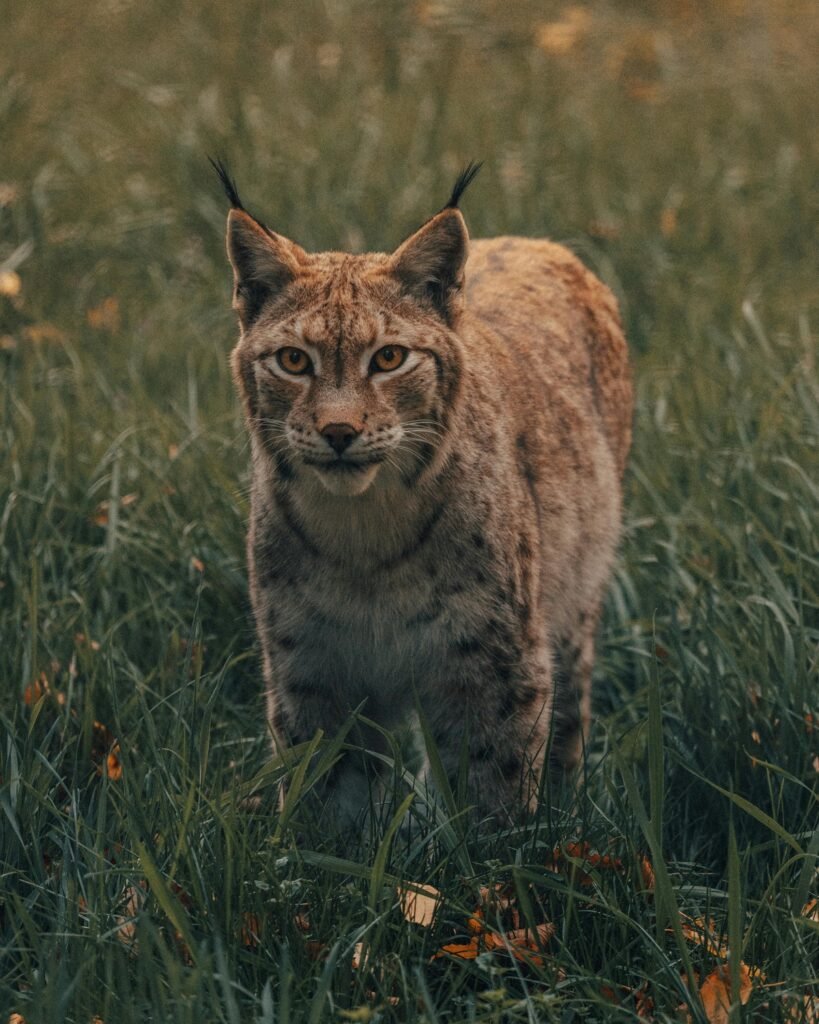
The Eurasian lynx is a medium-sized wild cat with a strong, muscular body. It has short, thick fur that helps it stay warm in cold climates. Its coat is usually yellowish-brown or gray, with dark spots and stripes. These patterns help the lynx blend into its surroundings, making it a skilled hunter.
One of the most striking features of the Eurasian lynx is its face. It has tufts of black hair on the tips of its ears, which improve its hearing. Its eyes are sharp and golden, giving it excellent vision, especially at night. The lynx also has a short, stubby tail with a black tip. This tail is much shorter than those of other wild cats, but it helps with balance.
Adult Eurasian lynxes are about 31 to 51 inches (80 to 130 cm) long and stand 24 to 30 inches (60 to 75 cm) tall at the shoulder. They weigh between 40 to 90 pounds (18 to 40 kg), with males being larger than females. Their powerful legs and large paws are adapted for walking in deep snow and climbing trees.
Where Does the Eurasian Lynx Live?
The Eurasian lynx lives in a variety of habitats, but it prefers dense forests with plenty of cover. It is found in the boreal forests of Siberia, the mountainous regions of Central Asia, and the woodlands of Europe. In some areas, it also lives in rocky terrain or open grasslands.
This wild cat is highly adaptable and can survive in different environments. However, it avoids areas with heavy human activity. The lynx needs large territories to hunt and roam. A single lynx may have a territory of up to 100 square miles (260 square km), depending on the availability of prey.
Behavior and Lifestyle
The Eurasian lynx is a solitary animal. It spends most of its time alone, except during the breeding season. Lynxes are territorial and mark their boundaries with scent markings. They are also excellent climbers and swimmers, which helps them escape predators and catch prey.
Lynxes are mostly active at dawn and dusk, a behavior known as being crepuscular. They rest during the day in hidden spots like dense bushes, caves, or fallen trees. At night, they hunt for food, using their sharp senses to track prey.
Despite their solitary nature, lynxes communicate with each other through vocalizations, body language, and scent markings. They make sounds like growls, hisses, and meows. During the breeding season, males and females call to each other with loud, eerie screams.
What Does the Eurasian Lynx Eat?
The Eurasian lynx is a carnivore, which means it eats meat. Its diet mainly consists of small to medium-sized animals. The lynx is a skilled hunter and relies on stealth and surprise to catch its prey. It often stalks its target silently before pouncing with great speed and strength.
The primary food of the Eurasian lynx is deer, especially roe deer. It also hunts smaller animals like hares, rabbits, rodents, and birds. In areas where deer are scarce, the lynx may eat larger prey like reindeer or even livestock, which can bring it into conflict with humans.
The lynx eats about 2 to 5 pounds (1 to 2 kg) of meat per day. After a successful hunt, it may hide the leftover meat and return to it later. This behavior helps the lynx survive when food is scarce.
Reproduction and Family Life
The breeding season for Eurasian lynxes occurs in late winter, usually between January and March. During this time, males and females come together to mate. After mating, the male leaves, and the female raises the cubs alone.
The female gives birth to 1 to 4 cubs after a gestation period of about 70 days. The cubs are born blind and helpless, weighing only 8 to 12 ounces (200 to 300 grams). They stay in a den, which is often a hidden spot like a cave or dense thicket.
The mother nurses the cubs for about 2 months. After that, she starts bringing them solid food and teaching them how to hunt. The cubs stay with their mother for about 10 months before becoming independent. By the time they are 1 year old, they are ready to live on their own.
The Enchanting World of Ocelots: A Guide to These Majestic Felines
Fun Facts About the Eurasian Lynx
Silent Hunters: Eurasian lynxes are incredibly quiet when they hunt. Their padded paws allow them to move silently through the forest.
Powerful Jumpers: A lynx can jump up to 10 feet (3 meters) in the air to catch birds or other prey.
Long Legs: Their long legs and large paws act like snowshoes, helping them walk on deep snow without sinking.
Night Vision: The lynx has excellent night vision, which makes it a successful hunter in the dark.
Ancient Symbol: In some cultures, the lynx is seen as a symbol of mystery and secrecy because of its elusive nature.