
The animal kingdom is filled with fascinating creatures, and among them, the Cross Fox stands out as one of the most intriguing. With its unusual coloration, captivating behavior, and mysterious allure, the Cross Fox has gained popularity among wildlife enthusiasts, nature photographers, and researchers alike. Despite being a variant of the more common Red Fox, the Cross Fox remains rare and little known, making it an excellent subject for exploration.
In this comprehensive article, we’ll dive deep into the world of the Cross Fox, covering its origin, physical characteristics, behavior, habitat, diet, reproduction, conservation status, and cultural significance. Whether you’re a wildlife lover, SEO researcher, or curious reader, this in-depth guide will provide everything you need to know about the elusive Cross Fox.
What is a Cross Fox?
| Feature | Details |
|---|---|
| Common Name | Cross Fox |
| Scientific Name | Vulpes vulpes (Red Fox species) |
| Color Morph | Cross (intermediate between Red Fox and Silver Fox) |
| Animal Class | Mammalia (Mammals) |
| Order | Carnivora |
| Family | Canidae (Dog family) |
| Genus | Vulpes |
| Species | V. vulpes |
| Origin | North America (Canada, Alaska, northern USA) |
| Habitat | Boreal forests, tundra, mixed woodlands, prairies |
| Fur Color | Reddish-orange with black/silver highlights and a black “cross” marking |
| Tail | Bushy with a white tip |
| Size (Height) | 14–20 inches (at shoulder) |
| Weight | 8–15 pounds (3.6–6.8 kg) |
| Lifespan (Wild) | 3–6 years (up to 14 years in captivity) |
| Diet Type | Omnivore |
| Primary Diet | Rodents, birds, insects, fruits, and berries |
| Activity Pattern | Nocturnal and crepuscular |
| Temperament | Shy, solitary, intelligent |
| Reproduction | Monogamous during the mating season |
| Breeding Season | January to March |
| Litter Size | 4–6 kits on average |
| Conservation Status | Least Concern (species-wide); morph is rare |
| Threats | Habitat loss, hunting, predation |
| Domestication Status | Wild animal (not domesticated) |
| Special Feature | Black “cross” marking across shoulders and back |
| Related Morphs | Red Fox, Silver Fox |
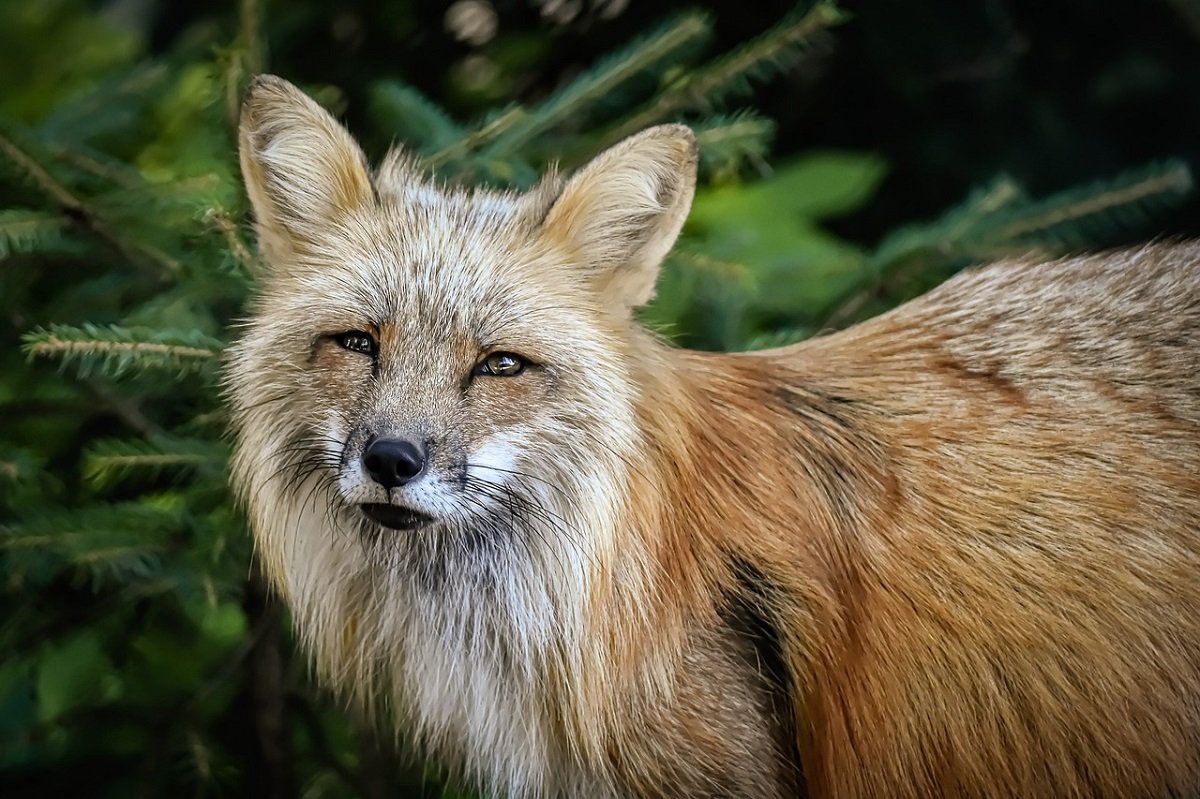
The Cross Fox is not a separate species but a color morph of the Red Fox (Vulpes vulpes), one of the world’s most widespread and adaptable carnivores. A color morph is a genetic variation that causes a change in an animal’s appearance without altering its species or subspecies.
The Cross Fox gets its name from the dark cross-shaped marking stretching across its shoulders and back. This distinctive marking, combined with its unique blend of red, black, and silver fur, gives it a striking and memorable appearance.
Origins and Genetics
The appearance of Cross Foxes is a result of genetic variation in the Red Fox population. Specifically, the variation stems from a genetic trait known as melanism, which causes an excess of black pigmentation. Cross Foxes represent an intermediate stage between the typical red form and the completely black or silver fox morph.
There are three main color variations within the Red Fox species:
Red Fox (typical)
Cross Fox
Silver Fox
The inheritance of these color traits is polygenic, meaning that multiple genes influence the final coat coloration. Two Cross Fox parents can produce offspring in any of the three color morphs, depending on the genetic combinations passed on.
Physical Characteristics
The Cross Fox is immediately recognizable by its sumptuous, multihued coat, which blends the warm russet of a typical Red Fox with deep charcoal and silvery highlights, creating the distinctive “cross” pattern that gives this morph its name. At a glance, the broad, dark stripe running laterally across its shoulders intersects with a similarly hued dorsal stripe descending the spine, forming the telltale cross–shaped marking that contrasts beautifully against the reddish-orange guard hairs. Beneath the topcoat lies a dense, woolly underfur that insulates against harsh northern winters; this underfur varies seasonally, thickening into a plush, muted gray during colder months and shedding to a shorter, lighter coat in spring. Adult Cross Foxes measure roughly 22 to 35 inches in body length (excluding the bushy tail), stand 14 to 20 inches at the shoulder, and weigh between 8 and 15 pounds, with males typically a bit larger and heavier than females—sexual dimorphism that becomes most apparent during the breeding season. Their tails, often referred to as brushes, are thick and luxurious, measuring up to 16 inches long and tipped in crisp white, a signaling flag that contrasts vividly with the darker proximal fur and aids in balance during agile pursuits.
The Cross Fox’s facial features further underscore its hybrid coloration: ears are erect and triangular, edged in black and lined with short fur that muffles wind and conserves heat, while the muzzle is tapered, ending in a keen, black leather nose renowned for its olfactory sensitivity. Eyes range from amber to golden yellow, their elliptical pupils and tapetum lucidum reflecting ambient light to grant superior night vision—an essential adaptation for the crepuscular and nocturnal lifestyle of these nimble predators. Prominent whiskers (vibrissae) extend from the muzzle and above the eyes, detecting minute air currents and vibrations that betray the presence of hidden prey beneath snow or dense vegetation. Limbs are slender yet muscular, with semi-retractable claws that provide traction on ice and enable the Cross Fox to scale uneven terrain; paw pads are covered in fur to cushion steps and prevent frostbite.
Skeletal and dental structures echo the species’ opportunistic diet: strong jaws house a full complement of carnassial teeth designed for shearing flesh, alongside carnivore-typical incisors and canines for grasping prey, all supported by robust zygomatic arches. Despite these carnivorous adaptations, the Cross Fox remains an omnivore, and this dietary flexibility is mirrored in the wear patterns of its molars, which grind both animal and plant matter. The skin pigmentation beneath the fur tends toward a pale gray or pinkish hue, but heavy melanism in hair shafts darkens the pelt’s outer appearance without affecting skin tone.
Juvenile Cross Fox kits sport a less defined cross pattern and duller fur at birth, gradually developing their iconic markings and richer coloration as they undergo successive molts; by their first winter, young foxes display the full, distinctive pelage of adults. Overall, the physical characteristics of the Cross Fox—from its lavish, cross‑patterned coat and agile build to its sensory adaptations and seasonal coat cycles—reflect a finely tuned balance between camouflage, communication, and survival in the often-challenging environments it calls home.
Habitat
The Cross Fox, a striking and rare color morph of the Red Fox (Vulpes vulpes), is primarily found in the colder, northern regions of North America, with a significant concentration in Canada and Alaska. This elusive animal prefers habitats that offer both shelter and access to abundant food sources. Its ideal environment typically includes boreal forests, also known as taiga, which are rich in coniferous trees and underbrush. These forests provide excellent cover from predators and harsh weather conditions, making them a suitable choice for denning and raising young kits. Cross Foxes are also known to inhabit mixed woodlands, where a blend of trees, shrubs, and open areas creates a perfect balance for hunting and hiding. The thick vegetation found in such forests supports a diverse population of small mammals, birds, and insects, which form the core of the Cross Fox’s omnivorous diet.
In addition to forested areas, Cross Foxes are sometimes found in tundra regions, especially during the warmer months. These open landscapes, characterized by minimal tree cover and cold temperatures, are rich in small rodents like lemmings and voles, which are easy prey for the fox. In tundra habitats, Cross Foxes often rely on abandoned burrows or dig their own dens into soft ground for shelter. Though less common, they have also been observed in mountainous areas and alpine forests, where elevation provides cooler temperatures and less human interference. The adaptability of the Cross Fox is a notable trait it can thrive in various ecosystems, provided the environment supports its needs for food, shelter, and protection.
Despite their adaptability, Cross Foxes tend to avoid densely populated human areas. However, with increasing urban expansion, they are occasionally seen on the outskirts of towns and rural developments, especially where natural habitats overlap with agricultural lands. In such fringe areas, they may scavenge for food but remain largely elusive and wary of human activity. Cross Foxes are most active during the twilight hours—at dawn and dusk—when they emerge from their dens to hunt or scavenge. Their preferred denning sites include hillsides, forest edges, and abandoned animal burrows, chosen for safety and seclusion during the vulnerable breeding and kit-rearing seasons.
The impact of human activity on their habitat has grown in recent decades. Logging, deforestation, and climate change have all contributed to habitat fragmentation, pushing Cross Foxes into smaller, more isolated territories. This disruption affects not only their movement and food sources but also the frequency of the cross coloration, as interbreeding with other red fox morphs becomes more common in smaller gene pools. Conservation of forested regions and careful land-use planning are essential to preserving the natural habitats where Cross Foxes continue to thrive. While not a separate species, their unique appearance and limited population make them an important part of northern ecosystems and a fascinating subject for wildlife observation and research.
Behavior and Lifestyle
The Cross Fox displays a fascinating suite of behaviors and lifestyle adaptations that enable it to thrive across the varied landscapes it calls home, from dense boreal forests to open tundra and forest edges. Primarily crepuscular and nocturnal, Cross Foxes leverage the low-light hours of dawn and dusk to hunt, using acute hearing and a keen sense of smell to locate small mammals buried beneath snow or hidden in dense vegetation. During daylight, they often rest in concealed locations—abandoned burrows, hollow logs, or thick underbrush—emerging only under the cover of dense fog or heavy snowfall. Territorial by nature, individual Cross Foxes mark their home ranges with scent deposits from urine and feces, while scrapes and ground scratches serve as visual and olfactory signposts to deter rivals and communicate reproductive status. Although largely solitary outside of the breeding season, Cross Foxes may form loose family units; breeding pairs collaborate to excavate dens, provision kits, and defend prime foraging grounds against intruders.
Their omnivorous diet underpins a flexible foraging strategy: in winter, they focus on rodents and rabbits, often executing the characteristic high “pounce” that drives prey through snow; come spring and summer, their diet expands to include insects, bird eggs, fruits, berries, and even carrion. This dietary breadth not only buffers them against seasonal shortages but also drives nomadic excursions into meadows, riparian corridors, and agricultural margins where human activity creates edge habitats rich in food resources. While scavenging opportunities arise near human settlements, Cross Foxes remain cautious, maintaining a wary distance and quickly retreating at the first sign of disturbance. Their travel routes and daily movement patterns are finely tuned to landscape features: they favor travel along fence lines, stream banks, and game trails, which offer logistical ease and concealment.
Socially, Cross Foxes communicate through an array of vocalizations—barks, screams, chatters, and howls—which vary by context, from mating calls during late winter to territorial alarms when predators approach. Body language complements vocal cues: erect ears signal alertness, a raised tail can denote agitation or dominance, and submissive postures—flattened ears and lowered heads—help defuse potential conflicts. During the breeding season, typically between January and March, males vigorously court receptive females with scent marking, vocal displays, and playful chases; once a pair bond is formed, the male often assists in feeding the female and safeguarding the den site until kits emerge.
Energetic and intelligent, Cross Foxes employ problem-solving skills to exploit new food sources and avoid traps or snares, learning from experience and adapting behaviors accordingly. Young kits exhibit play behaviors—mock stalking, wrestling, and ambushing siblings—that hone hunting techniques and social skills. As kits mature, they practice solitary foraging before dispersing in autumn to establish their territories, a dispersal critical for maintaining genetic diversity and reducing inbreeding.
Despite their resilience, Cross Foxes face lifestyle disruptions from human-induced habitat fragmentation, road networks, and climate-driven shifts in prey availability. These pressures can force behavioral adjustments, such as increased nocturnality near busy roads or altered denning schedules to avoid seasonal flooding. Conservation-minded forestry practices, protected wildlife corridors, and reduced pesticide use can help sustain the ecological mosaic that Cross Foxes depend on. Ultimately, their behavior and lifestyle reflect a delicate balance between wild intuition and adaptive flexibility—traits that have allowed this rare color morph of Vulpes vulpes to persist in some of the planet’s most challenging environments.
Diet and Hunting Habits
Cross Foxes are opportunistic omnivores, which means they eat a variety of foods depending on what’s available. Their diet typically includes:
Animal-Based Foods:
Rodents (mice, voles, rabbits)
Birds and eggs
Insects
Amphibians
Fish (occasionally)
Plant-Based Foods:
Fruits and berries
Roots and tubers
Grains and seeds
They use a combination of keen senses — hearing, smell, and sight — to locate prey. One of their most impressive hunting techniques is the high pounce, which helps them catch small animals in the snow.
Mating and Reproduction
The cross fox, a melanistic variant of the red fox, follows the typical red fox reproductive cycle. Breeding occurs in winter, with timing depending on latitude – for example, red foxes in northern regions enter estrus from late February through April. During this season males establish and defend territories and often fight rival males for access to receptive femalesvtfishandwildlife.com. Pairs are usually socially monogamous, though a male may mate with multiple females when prey is abundantnjaes.rutgers.edu. Females often mate with more than one male during estrus but typically form a single pair bond with one male for raising the littervtfishandwildlife.com. Copulation lasts about 15–20 minutes and is often accompanied by loud vocalizationsanimaldiversity.org.
Gestation and Birth
The female remains in or near the den during late pregnancy and immediately after giving birth vtfishandwildlife.com. Gestation lasts approximately 49–53 days vtfishandwildlife.com. Litter sizes range from 1 to 13 kits, averaging around 4–5 vtfishandwildlife.com. Newborn cross fox kits are blind and deaf and weigh roughly 50–150 g vtfishandwildlife.com. They depend entirely on their mother’s milk and care: their eyes open at about 9–14 days old vtfishandwildlife.com, and pups begin walking and emerge from the den at roughly 3–5 weeks of age vtfishandwildlife.comnjaes.rutgers.edu. All kits are fully weaned by about 8–10 weeks, and the mother and her offspring typically remain together until juveniles reach adult size and sexual maturity (around 10 months old)vtfishandwildlife.com.
Denning and Kit Development
Before whelping, the pair selects or excavates a den site, which may be a burrow dug in loose soil, an existing mammal burrow or hollow log, or even a secluded spot under human structures. Throughout the rearing, the vixen stays in the de,n tending the kits while the dog delivers food to his mate and the pups. Kits grow rapidly. By about 3 weeks old, they can walk, and by ~4–5 weeks, most are exiting the den to explore nearby surroundings vtfishandwildlife.comnjaes.rutgers.edu. By 8–10 weeks, they are fully weaned and begin eating solid food vtfishandwildlife.comnjaes.rutgers.edu. Young foxes reach adult size by late summer or early autumn (6–8 months old) and then disperse to establish their territories before the next breeding season vtfishandwildlife.comnjaes.rutgers.edu.
Parental Care and Survival Strategies
Both parents invest heavily in kit survival. The vixen provides continuous care in the den (nursing, grooming, defending the pups) while the male hunts and brings food back to the family. Field observations show that vixens spend more time at the den providing direct pup care, whereas males allocate more time to vigilance and provisioning. In some cases, non-breeding females (often daughters of the pair) assist the breeding pair in feeding and guarding the young. Foxes also cache surplus prey near the den, which provides an important food reserve for the family during lean periods. These combined behaviors – intensive parental provisioning, food caching, and timely juvenile dispersal – enhance the survival prospects of the offspring.
Sources: Research on red fox reproductive biology and ecology njaes.rutgers.eduanimaldiversity.orgnjaes.rutgers.edu, extended to cross foxes as a color morph of Vulpes vulpes.
Cross Fox vs Red Fox vs Silver Fox
Here’s a quick comparison to help you distinguish between these closely related morphs:
| Feature | Red Fox | Cross Fox | Silver Fox |
|---|---|---|---|
| Coat Color | Reddish-orange | Reddish with a black cross pattern | Nearly black with silver streaks |
| Frequency | Most common | Less common | Rare |
| Behavior | Identical | Identical | Identical |
| Fur Value | Moderate | High | Very High |
All three morphs are part of the same species and can interbreed naturally.