
Introduction
Welcome to the enchanting world of poison dart frogs, where vivid colours meet fascinating survival strategies. These small amphibians, though often no larger than a paperclip, capture our imagination with their striking appearances and unique adaptations.
1. Introduction to Poison Dart Frogs
- What They Are: Poison Dart Frogs are a group of brightly colored frogs belonging to the Dendrobatidae family.
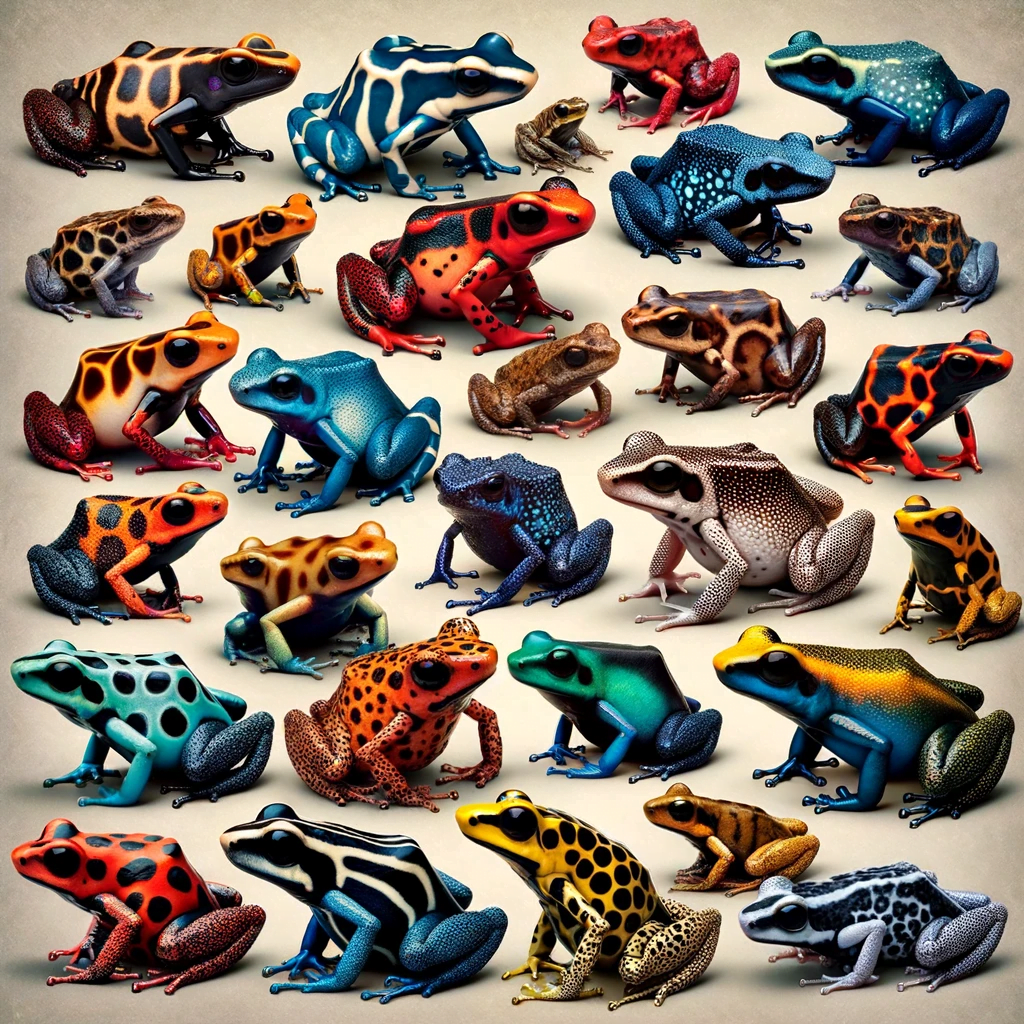
- Size and Appearance: They are generally small, ranging from 1 to 2.5 inches, and known for their vibrant colors, which can be blue, green, yellow, red, or a mix.
- Behavioral Traits: Active during the day (diurnal), they are known for their hopping movements and distinct calls.
2. Species Diversity and Coloration
- Variety of Species: There are over 100 identified species, each with unique patterns and hues.
- Purpose of Bright Colors: These colors serve as a warning to predators about their toxicity.
- Examples of Species: The Blue Poison Dart Frog (Dendrobates azureus), the Strawberry Poison-Dart Frog (Oophaga pumilio), and the Golden Poison Frog (Phyllobates terribilis) are notable.
3. Habitat and Environmental Needs
- Natural Habitats: They are predominantly found in tropical rainforests of Central and South America.
- Specific Environmental Conditions: These frogs thrive in warm, humid environments, often near freshwater sources.
- Microhabitats: They can be found in various microhabitats, such as leaf litter, trees, and near water bodies.
4. Diet and Predation
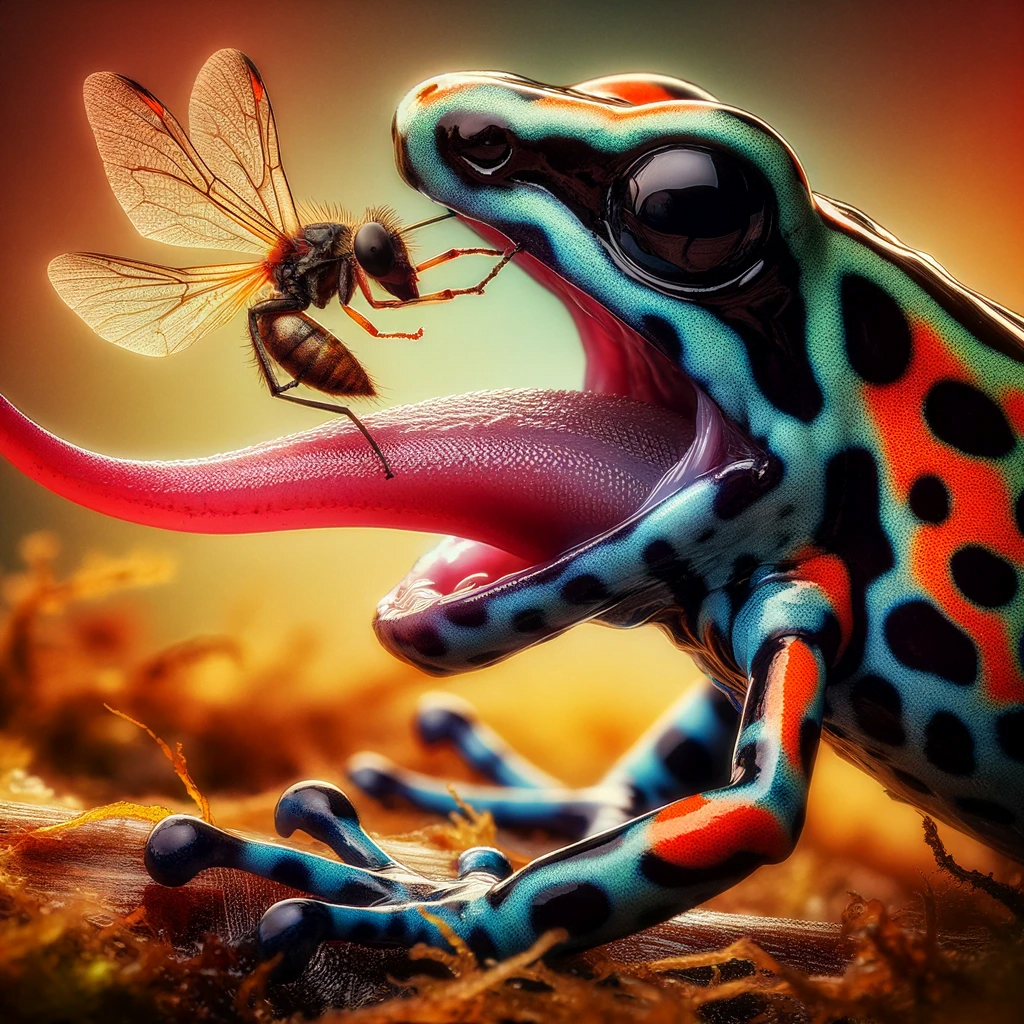
- Feeding Habits: Their diet primarily consists of small insects, including ants, termites, and beetles.
- Method of Hunting: They capture their prey using their sticky, retractable tongues.
- Predator Avoidance: Their toxicity and coloration help them avoid many predators, although some snake species have developed resistance to their poison.
5. The Mystery of Their Toxicity
- Source of Toxins: The toxins are derived from their natural diet, especially from consuming certain types of ants and other insects.
- Variation in Toxicity: Toxicity levels vary greatly among species, with the Golden Poison Frog being the most toxic.
- Use in Indigenous Cultures: Some indigenous tribes have used their poison for hunting, coating the tips of blow darts with their secretions.
6. Reproduction and Development
- Mating Rituals: Males often engage in calls to attract females.
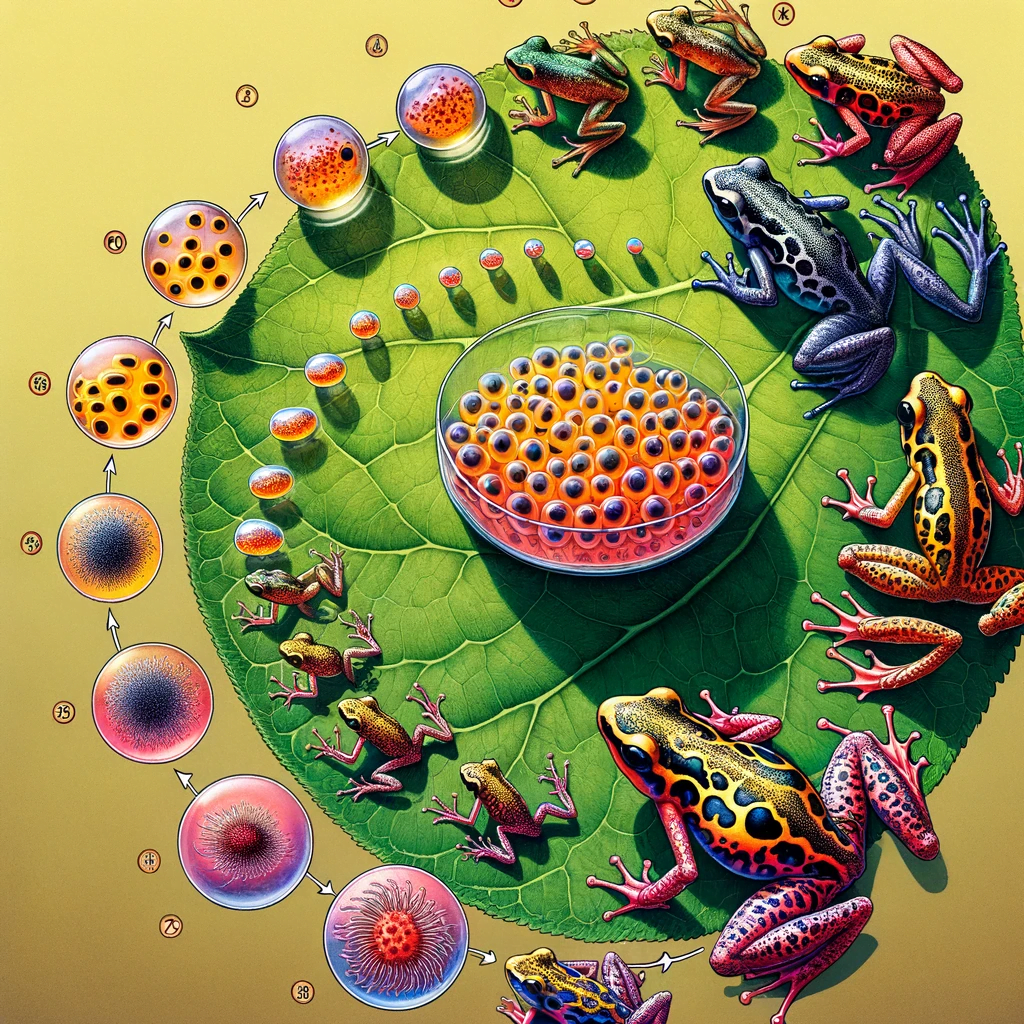
- Egg Laying and Care: Females lay eggs on land, and in some species, males guard the eggs.
- Life Cycle: Tadpoles are carried to water sources where they continue to develop, later emerging as frogs.
7. Conservation Efforts and Challenges
- Threats to Survival: Habitat destruction and climate change are significant threats.
- Conservation Status: Many species are listed as endangered or threatened.
- Efforts for Protection: Conservation programs focus on habitat protection and breeding programs.
8. Fascinating Facts About Dart Frogs
- Longevity: They can live up to 10–15 years in captivity.
- Sound Production: Each species has a unique call used for communication and mating.
- Adaptations: Some species can adjust their color based on environmental factors.
9: FAQs About Poison Dart Frogs
1: Can Poison Dart Frogs harm humans?
Only in the wild. Captive ones aren’t toxic.
2: How big do they get?
Small! Usually around 1-2 inches.
3: Can I handle my dart frog?
It is best to look, not touch. Their skin is delicate.
4: What do they sound like?
They chirp and croak, each species differently.
5: Are they good pets for beginners?
They need specific care, so it is better for experienced frog lovers.
6: How often do they eat?
A few times a week is usually enough.
7: What’s the best terrarium size?
Bigger is better. More space, more fun!
8: Do they need sunlight?
Indirect light, please. Direct sun is a no-no.
9: Can they live with other frogs?
Some species can, but do your research first.
10: How do I set up the perfect habitat?
Mimic their rainforest home—details in our habitat section!
Conclusion
Poison Dart Frogs are not just a testament to the beauty of the natural world but also to its complexity and the delicate balance within ecosystems. By learning about these remarkable creatures, we gain insight into the importance of biodiversity and the need to protect our planet’s many wonders.
References and External Links
-
General Care and Information: Discover essential care tips and interesting facts about poison dart frogs at Dart Frog Connection.
- Habitat Setup and Maintenance: For detailed guides on setting up and maintaining the perfect habitat for your poison dart frog, visit Frog Habitat Pro.
- Diet and Nutrition: Learn about the best diet for your poison dart frog and where to find suitable food sources at Amphibian Diet Solutions.
- Species Identification and Information: Explore the different species of poison dart frogs and their unique characteristics at Dart Frog Species Hub.
- Health and Veterinary Care: Find information on common health issues and how to care for a sick poison dart frog at Amphibian Health Central.
- Conservation and Research: Understand the importance of conservation and learn about ongoing research related to poison dart frogs at Amphibian Conservation Trust.
- Community Forums and Discussions: Join discussions and connect with other poison dart frog enthusiasts at Dart Frog Community.
- Legal Considerations and Regulations: Stay informed about the legal aspects of owning a poison dart frog at Exotic Pet Law.
- Interactive Educational Resources: Engage with interactive and educational content about poison dart frogs, ideal for younger audiences, at Amphibian Kids Corner.
- Supplies and Equipment: For purchasing terrariums, food, and other supplies for poison dart frogs, visit Frog Supplies Online.
These external links and resources provide a comprehensive and informative foundation for anyone interested in learning about and caring for poison dart frogs. Remember to explore Top Pet Breed for more detailed information and guides on various pet breeds!