





🌟 Introduction: Unveiling the Discus Fish
Welcome to Pet Breed Hub, where we explore the enchanting world of pet breeds like never before! Today’s spotlight shines on the vibrant and majestic Discus Fish, a gem of the aquarium world. Get ready to dive deep!
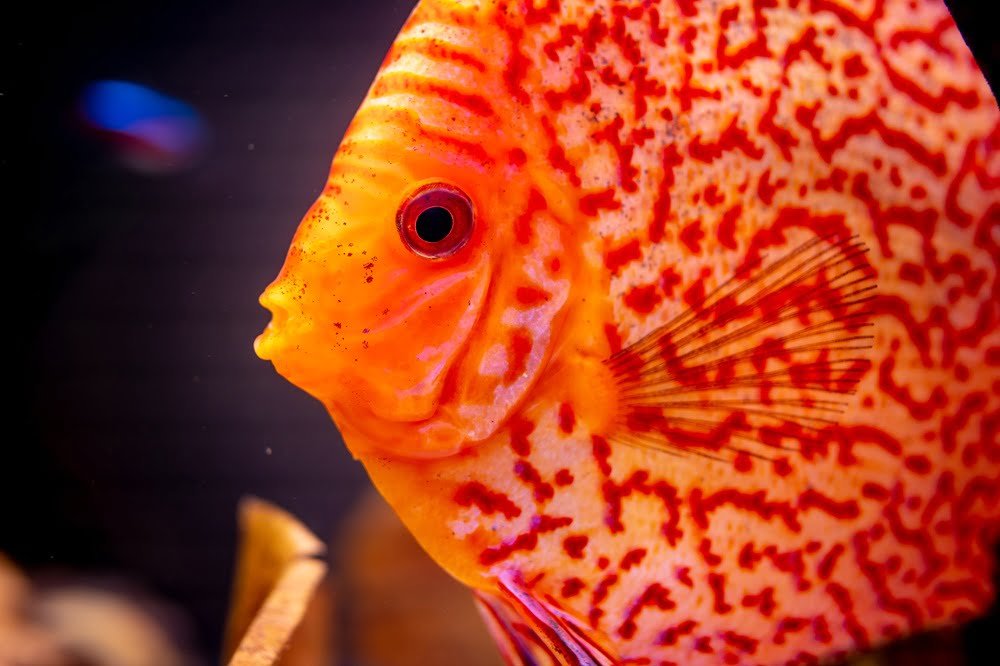
Understanding Discus Fish
Origin: Discus fish originate from the Amazon River basin. They are known for their stunning colors and unique shapes.
Behavior: They are generally peaceful but can be shy and sensitive. They thrive in a calm environment.
Feeding Discus Fish
Diet: They require a high-protein diet. Suitable foods include specially formulated Discus pellets, frozen bloodworms, brine shrimp, and beef heart. Occasional vegetables can be offered.
Feeding Frequency: Feed small amounts 2-3 times a day. Overfeeding can pollute the water.
Health and Maintenance
Regular water changes are essential for maintaining water quality. Change 25–30% of the water weekly.
Monitoring Health: Watch for signs of stress or illness, such as lack of appetite or color fading.
Tank Mates: Discus fish can be kept with other peaceful fish that thrive in similar conditions. Avoid aggressive or overly active fish.
Breeding Discus Fish
Environment: A separate breeding tank with optimal conditions is ideal.
Spawning: Discus fish choose their own partners. They lay eggs on flat surfaces like leaves or breeding cones.
Parental Care: Both parents often care for the eggs and fry.
Common Challenges
Sensitive to Water Quality: Discus fish require pristine water conditions. Regular testing and maintenance are crucial.
Shyness: They can be easily stressed by sudden movements or changes in the environment.
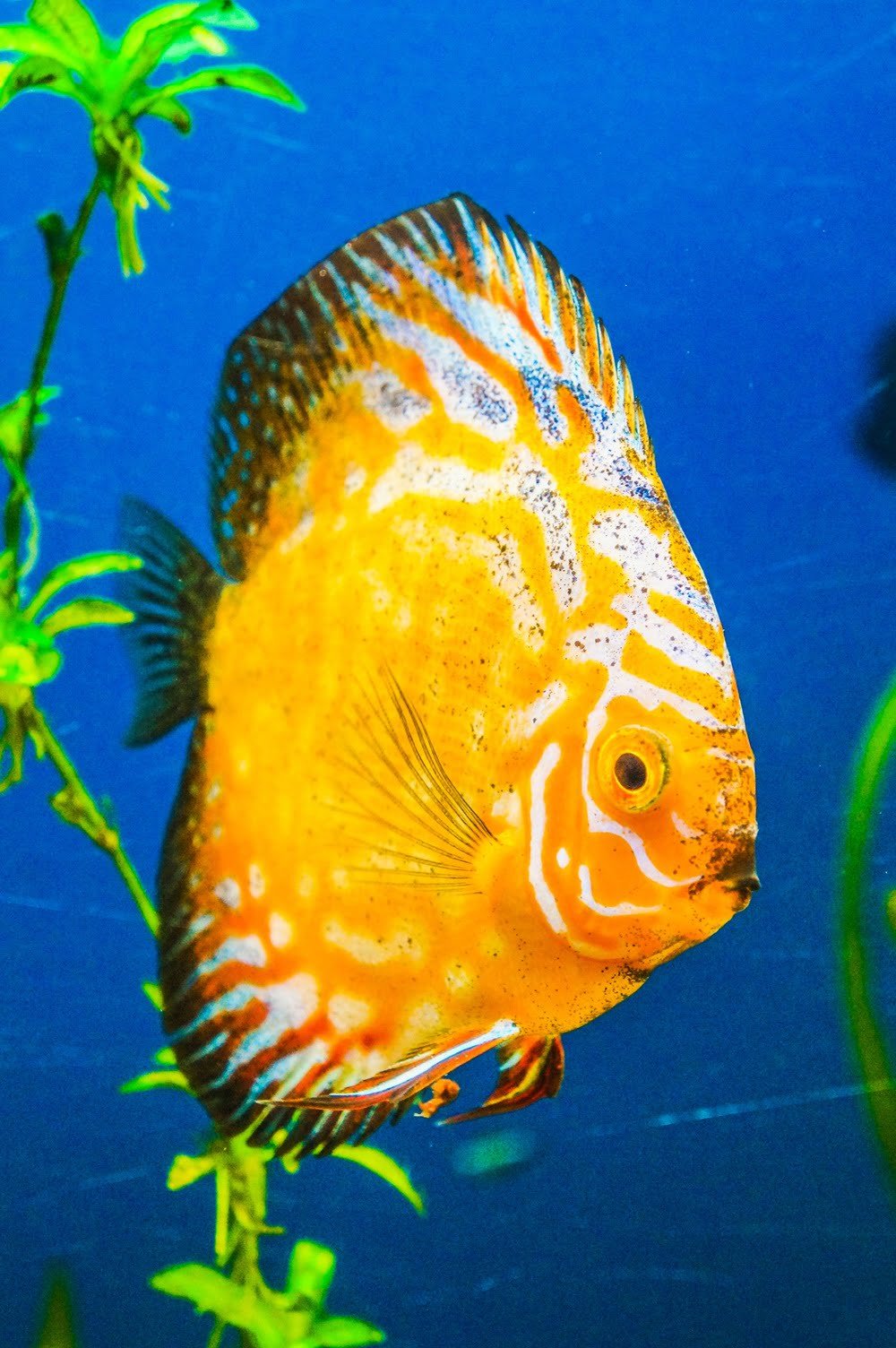
Discus Fish Tank Setup
Tank Size:
Minimum of 50 gallons for a pair.
Larger groups require more space, ideally 100 gallons or more.
Water Conditions:
Temperature: Keep between 82-86°F (28-30°C). Use a reliable heater.
pH Level: Maintain a slightly acidic environment, around 6.0 to 7.0.
Water Hardness: Soft to medium is ideal.
Filtration System:
Use a high-quality filter to keep the water clean and well-oxygenated.
Canister filters are often recommended for larger tanks.
Aquarium Layout:
Substrate: fine, dark-colored gravel or sand.
Plants: Include live plants like Amazon swords or Java ferns. They help maintain water quality and provide hiding spots.
Decorations: Driftwood and rocks can create a natural environment. Avoid sharp edges.
Lighting:
Moderate lighting is sufficient. Too-bright lighting can stress the fish.
Water Maintenance:
Regular water changes (25–30% weekly) are crucial.
Use a water test kit to monitor pH, ammonia, nitrites, and nitrates.
Tank Mates:
Choose peaceful fish that can tolerate the same water conditions.
Avoid aggressive or very active fish that may stress the Discus.
Acclimation:
Gradually acclimate Discus to the tank environment to reduce stress.
Proper tank setup and maintenance are critical for the health and well-being of Discus fish. This setup helps create a stable and stress-free environment for these sensitive and beautiful aquatic creatures.
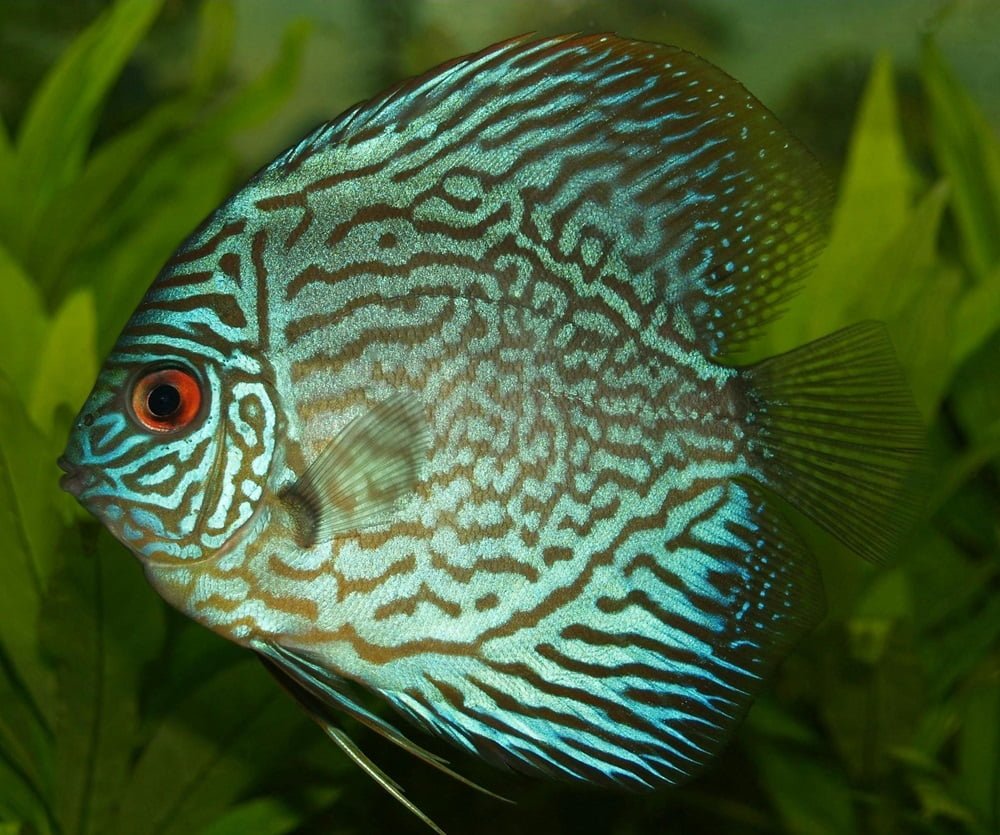
🔍 FAQs about Discus Fish
1: How long do Discus fish live?
Up to 15 years with proper care.
2: Are they suitable for beginners?
It is best for intermediate aquarists.
3 Can they live with other fish?
Yes, with peaceful companions.
4: How big do they get?
Up to 8 inches in diameter.
5: What’s the best tank size for a group?
At least 100 gallons.
6: How often should I change the water?
Weekly, about 25–30%
7: What’s their favorite food?
Bloodworms are a top choice!
8: Do they need special lighting?
Moderate lighting is sufficient.
9: How to tell male from female?
Males are generally larger.
10: What’s the ideal pH level?
Around 6.0 to 7.0.
✨ Conclusion: The Graceful World of Discus Fish
Discus fish are not just pets; they’re living art pieces that bring tranquility and beauty to your home. With the right care and attention, these aquatic marvels will thrive, creating a mesmerizing underwater world.
External links
Fanatik-Discus-International information, pictures, and videos about discus fish