





The African leopard (Panthera pardus pardus) is one of Africa’s most iconic big cats, renowned for its unmatched beauty, grace, and stealthy hunting skills. It embodies the wild essence of the African savannas, rainforests, and mountainous regions, epitomizing the elusive nature of the wilderness. Despite being one of the most adaptable and widespread big cats in Africa, the leopard is also among the most challenging to study and conserve due to its secretive habits. This article delves into the remarkable world of the African leopard, exploring its habitat, behavior, diet, and the pressing conservation issues it faces today.

Breed Overview
| Feature | Details |
|---|---|
| Scientific Name | Panthera pardus pardus |
| Common Name | African Leopard |
| Class | Mammalia |
| Order | Carnivora |
| Family | Felidae |
| Genus | Panthera |
| Species | P. pardus |
| Subspecies | Panthera pardus pardus (African subspecies) |
| Average Size | Males: 60-90 kg (132-198 lbs); Females: 30-60 kg (66-132 lbs) |
| Length | 1-2 meters (3.3-6.6 feet) excluding the tail |
| Tail Length | 0.6-1 meter (2-3.3 feet) |
| Height at Shoulder | 45-80 cm (18-31 inches) |
| Lifespan | Wild: 12-17 years; Captivity: Up to 23 years |
| Coat Color | Pale yellow to deep gold with black rosettes; white underparts |
| Melanistic Form | Commonly known as “black panther” |
| Habitat | Savannas, forests, grasslands, mountains, semi-deserts |
| Geographical Range | Sub-Saharan Africa, including South Africa, Kenya, Tanzania, Namibia, Botswana, etc. |
| Diet | Carnivorous: Medium-sized herbivores (antelope, deer), birds, reptiles, insects |
| Hunting Style | Stalking and ambushing; primarily nocturnal |
| Social Structure | Solitary, except females with cubs |
| Reproduction | Breeds year-round; gestation period of 90-105 days |
| Litter Size | 1-6 cubs (usually 2-3) |
| Conservation Status | Vulnerable (IUCN Red List) |
| Major Threats | Habitat loss, human-wildlife conflict, poaching, illegal wildlife trade |
| Conservation Efforts | Habitat preservation, anti-poaching measures, community-based programs |
| Distinctive Features | Muscular build, excellent climbers, adaptable diet, spotted coat with rosettes |
Physical Characteristics of the African Leopard
African leopards are known for their muscular build and extraordinary strength, allowing them to hunt and haul prey many times their size. They are medium to large-sized cats, with males typically larger than females. Males can weigh between 60 to 90 kg (132 to 198 lbs), while females generally weigh between 30 to 60 kg (66 to 132 lbs). Their length ranges from 1 to 2 meters (3.3 to 6.6 feet), excluding their tail, which adds an additional 0.6 to 1 meter (2 to 3.3 feet).
One of the most recognizable features of the leopard is its beautiful coat. The fur is covered in rosettes – circular patterns with a central spot, varying in size and shape across different regions. This spotted pattern provides a natural camouflage in diverse habitats, from dense rainforests to open savannas. The base color of the coat can range from pale yellow to deep gold, with white underparts. This stunning coat not only contributes to its beauty but also offers a perfect disguise, allowing leopards to remain hidden while stalking prey or resting.
In rare cases, some leopards exhibit a melanistic form, commonly known as a “black panther.” This condition results from a recessive gene that causes the fur to appear black, although the spots are still faintly visible. These melanistic leopards are found mainly in dense forests, where their dark coloration provides better concealment.
Habitat and Distribution
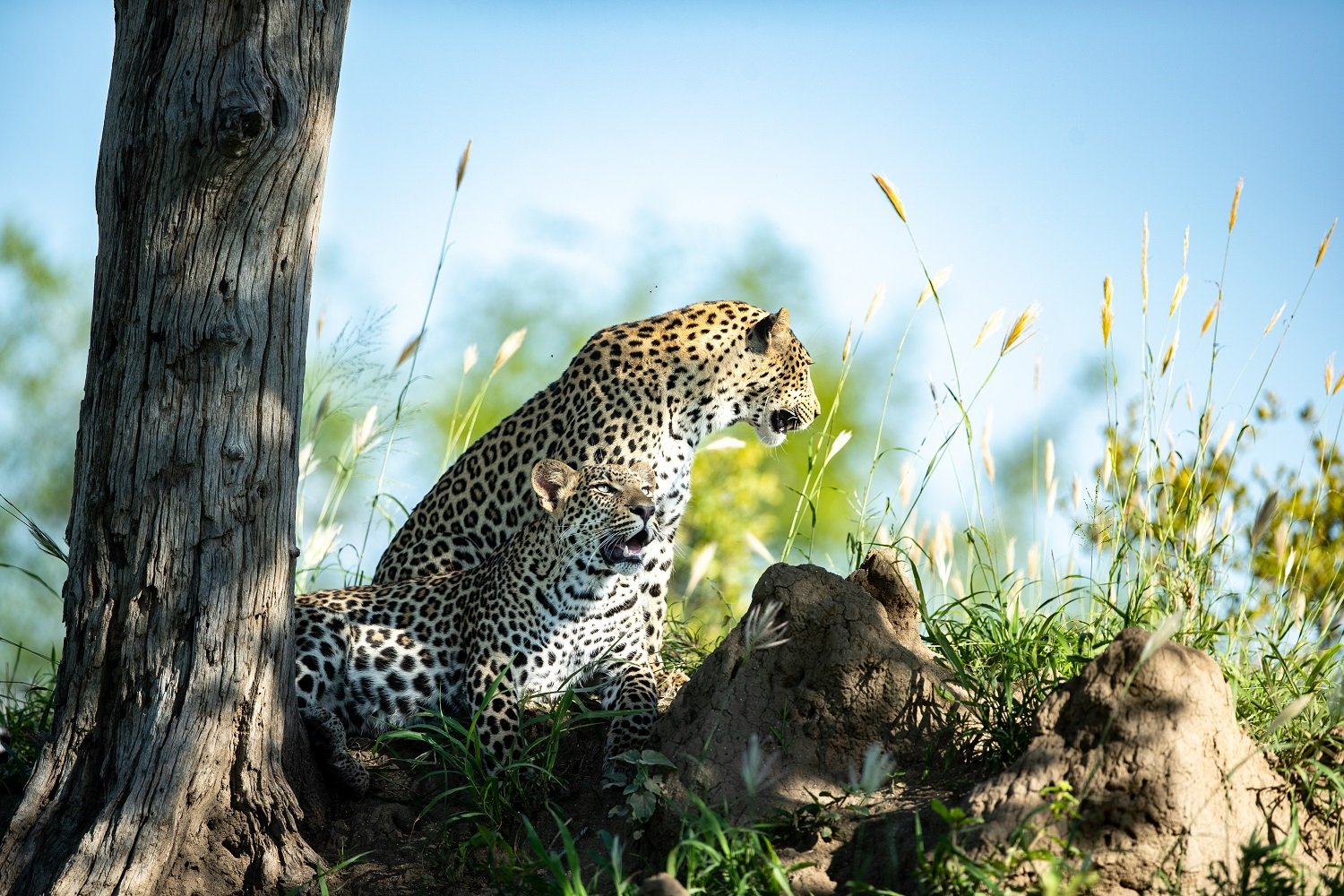
African leopards are among the most versatile of the big cats, inhabiting a vast array of environments across sub-Saharan Africa. They thrive in various ecosystems, including savannas, grasslands, forests, mountains, and even semi-deserts. Their presence spans countries like South Africa, Kenya, Tanzania, Namibia, Botswana, and parts of West and Central Africa.
This adaptability is a testament to their versatile hunting strategies and solitary nature. They are capable climbers, often resting in trees during the day and using elevated vantage points to scan for prey. Their arboreal skills also help them store their kills away from scavengers like hyenas and lions.
In terms of elevation, leopards are incredibly adaptable, found from sea level to altitudes exceeding 5,000 meters (16,400 feet) in mountainous regions. They occupy both protected reserves and unprotected areas, including agricultural lands, demonstrating their remarkable ability to coexist near human populations when their habitat preferences are preserved.
Behavior and Social Structure
Leopards are solitary animals, with the exception of females with cubs. They are territorial and mark their territory with scent markings, scratches on trees, and vocalizations such as growls, roars, and a distinct rasping call. Each individual has a home range, which can overlap with others but is primarily defended against members of the same sex.
These big cats are primarily nocturnal, using the cover of darkness to hunt and avoid competition with other large predators like lions and hyenas. During the day, they are often seen resting on tree branches or hidden within dense vegetation. Their heightened senses of sight, hearing, and smell aid their hunting success and make them formidable predators.
Leopards are known for their adaptability and problem-solving skills. They can alter their hunting strategies based on prey availability and environmental conditions. Unlike cheetahs and lions, which have relatively specialized hunting methods, leopards use a variety of techniques, including stalking and ambushing their prey, displaying incredible patience and stealth.
Diet and Hunting Techniques

African leopards are carnivorous and exhibit an extremely varied diet, one of the broadest among large carnivores. They are opportunistic hunters and feed on a wide range of animals, including mammals, birds, reptiles, and even insects. Their primary prey typically consists of medium-sized herbivores such as antelopes (impalas, gazelles), warthogs, and deer. However, they are also known to take down animals much larger than themselves, such as wildebeests and young giraffes, demonstrating their immense strength and hunting prowess.
Leopards employ a stealth-based approach to hunting. They rely on cover provided by vegetation and their camouflaged coat to get as close to their prey as possible before launching a short, explosive attack. This ambush strategy requires immense patience, often involving long periods of observation and slow movements. Once close enough, they pounce on the prey and deliver a fatal bite to the neck or throat. If the prey is small, they may carry it up into the branches of a tree to prevent scavengers from stealing their meal. This behavior, known as caching, is a distinctive trait of leopards, showcasing their foresight and resourcefulness.
Their diet varies with the environment. In forested regions, they may prey more on primates and small mammals, while in savannas and grasslands, they focus on antelopes and other ground-dwelling animals. This dietary flexibility is crucial for their survival in regions where prey availability fluctuates.
Reproduction and Life Cycle
Leopards do not have a specific breeding season and can mate throughout the year. Female leopards reach sexual maturity around two to three years of age, while males mature slightly later. Courtship behavior involves vocalizations and scent marking, with the female initiating the process when she is in estrus. The mating period is brief, lasting only a few days, after which the pair separate.
The gestation period lasts around 90 to 105 days, after which the female gives birth to a litter of one to six cubs, although two to three cubs are most common. She typically seeks out a hidden den, such as a cave, dense thicket, or hollow tree, to give birth and protect her cubs. The cubs are born blind and helpless, weighing just 500 to 600 grams (1.1 to 1.3 pounds) at birth. Their eyes open within 7 to 10 days, and they begin to explore their surroundings within a few weeks.
The mother is highly protective and often moves the cubs to new hiding places to avoid detection by predators. She provides for them by hunting and bringing back food, gradually teaching them essential hunting skills as they grow. Cubs usually stay with their mother for up to two years, learning to fend for themselves before establishing their own territories.
Conservation Status and Threats
The African leopard is currently listed as “Vulnerable” on the International Union for Conservation of Nature (IUCN) Red List, with declining population trends across most of its range. Several factors contribute to this decline, including habitat loss, human-wildlife conflict, poaching, and illegal wildlife trade.
Habitat Loss: Rapid human population growth and agricultural expansion in Africa have resulted in significant habitat fragmentation and loss for leopards. As natural habitats are converted into farmland and settlements, leopards are forced into smaller, more isolated patches of land. This fragmentation not only reduces their available hunting grounds but also leads to genetic isolation, threatening long-term population viability.
Human-Wildlife Conflict: Leopards occasionally prey on livestock, leading to conflicts with local communities. In retaliation, they are often killed or trapped by farmers to protect their livestock. This conflict poses a significant threat, especially in areas where natural prey populations are low due to human encroachment or overhunting.
Poaching and Illegal Wildlife Trade: Despite legal protections in many countries, leopards are still targeted by poachers for their beautiful skins, bones, and other body parts used in traditional medicine. The illegal trade in leopard skins is particularly prevalent in regions where enforcement of wildlife protection laws is weak.
Conservation Efforts: Several conservation initiatives are underway to protect African leopards. These include habitat preservation, anti-poaching measures, and community-based conservation programs that aim to mitigate human-wildlife conflict. Some organizations work with local communities to develop livestock protection strategies and promote ecotourism as an alternative source of income, reducing the incentive to kill leopards.
Protected areas, such as national parks and wildlife reserves, play a crucial role in leopard conservation by providing safe havens where they can hunt, breed, and thrive with minimal human interference. However, the success of these protected areas relies on effective management, adequate funding, and collaboration between governments, non-governmental organizations, and local communities.
The Cultural Significance of the African Leopard
Throughout history, leopards have held a prominent place in African folklore, art, and cultural practices. They are often revered as symbols of power, strength, and cunning in various African cultures. In some traditional beliefs, leopards are considered sacred and are associated with spiritual protection and guidance.
In contemporary times, the image of the leopard continues to feature prominently in African art, fashion, and media, symbolizing the wild, untamed spirit of the African wilderness. This cultural significance adds another layer of importance to the conservation of leopards, as preserving them is not only about protecting a species but also about maintaining a vital part of Africa’s natural and cultural heritage.
FAQS
What is the difference between a leopard and a cheetah?
Leopards are stockier with a muscular build, have a rosette-patterned coat, and are excellent climbers. Cheetahs are more slender, have a spotted coat with solid black spots, and are known for their incredible speed. Additionally, cheetahs have distinctive black “tear marks” running from their eyes to their mouths, which leopards lack.
Where can African leopards be found?
African leopards are distributed across sub-Saharan Africa, inhabiting a wide range of ecosystems, including savannas, forests, grasslands, mountainous areas, and semi-deserts. They are found in countries like South Africa, Kenya, Tanzania, Namibia, and Botswana.
How do leopards hunt their prey?
Leopards use stealth and camouflage to stalk their prey. They get as close as possible, then pounce with a short, explosive burst of speed to ambush their target. They usually aim for the neck or throat to deliver a fatal bite. After the kill, leopards often carry their prey up into a tree to avoid scavengers.
Are leopards solitary animals?
Yes, leopards are generally solitary, except during mating or when a mother is raising her cubs. They maintain territories marked by scent markings, scratches on trees, and vocalizations.
What do African leopards eat?
African leopards have an extremely varied diet, including medium-sized herbivores (such as antelopes and deer), birds, reptiles, and small mammals. They are opportunistic hunters and can adapt their diet based on prey availability in their habitat.
Why are African leopards considered vulnerable?
African leopards face several threats, including habitat loss due to human expansion, poaching for their skins and body parts, illegal wildlife trade, and human-wildlife conflict, particularly when they prey on livestock. These factors have led to a decline in their population, leading to their classification as “Vulnerable” on the IUCN Red List.
How do leopards differ from other big cats like lions and tigers?
Leopards are smaller and more agile than lions and tigers. They are solitary, unlike lions that live in prides. Leopards are also adept climbers and often store their prey in trees, a behavior not commonly seen in tigers or lions. Their coat pattern, which includes rosettes, also distinguishes them from lions and tigers.
How long do African leopards live?
In the wild, African leopards typically live for 12 to 17 years. In captivity, where they are protected from natural threats, they can live up to 23 years.
Can leopards survive in human-populated areas?
Yes, leopards are highly adaptable and can survive near human-populated areas if there is sufficient cover and prey. However, this often leads to conflict, especially when they prey on livestock. Proper management and community conservation programs are essential to mitigate such conflicts.
Are there black leopards in Africa?
Yes, melanistic leopards, commonly referred to as “black panthers,” do exist in Africa, though they are rarer than in Asia. The melanistic trait is due to a recessive gene that causes the fur to appear black. The rosette patterns are still faintly visible in certain lighting conditions.
References And External Links
References
International Union for Conservation of Nature (IUCN): Detailed information on the conservation status, distribution, and threats faced by African leopards.
IUCN Red List: Panthera pardus
National Geographic: Offers an in-depth overview of the African leopard, including its habitat, behavior, and hunting techniques.
National Geographic – African Leopard
African Wildlife Foundation (AWF): Provides extensive insights into leopard behavior, habitat, and conservation initiatives.
External Links
African Leopard Profile – Animal Diversity Web:
A detailed profile of the African leopard, including taxonomy, behavior, habitat, and diet.
Animal Diversity Web – Panthera pardus
Kruger National Park – Leopard Information:
Insights into leopards in one of Africa’s largest game reserves, detailing their habits, sightings, and behaviors.
Kruger National Park – Leopard
BBC Earth – Leopard Hunting Techniques:
Videos and articles on leopard hunting strategies, stealth, and adaptation.