





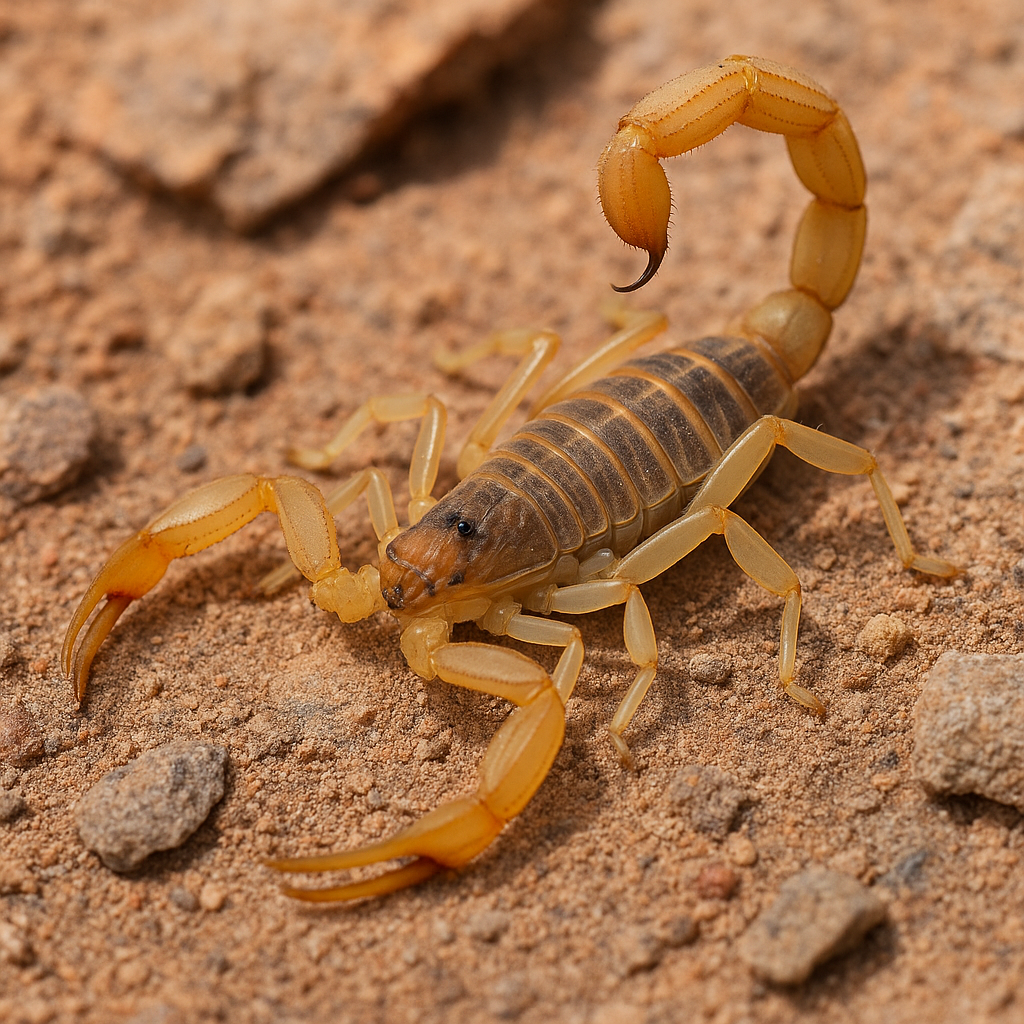
The Arizona bark scorpion (Centruroides sculpturatus) is a small but highly venomous arachnid that has earned a fearsome reputation across the desert regions of the southwestern United States. Known for its painful and potentially dangerous sting, this scorpion thrives in arid environments and has adapted remarkably well to both natural landscapes and human settlements.
Physical Characteristics
The Arizona bark scorpion possesses several distinct features that set it apart from other scorpion species. While it may appear similar to other small scorpions at first glance, closer inspection reveals key differences.
Size and Coloration
Adults typically measure between 2 to 3 inches (5 to 7.5 cm) in length.
Their bodies are slender and lightweight, allowing them to climb with ease.
Coloration ranges from light tan to yellowish-brown, helping them blend into desert surroundings.
Unlike bulkier scorpion species, the bark scorpion has a more delicate and elongated appearance.
Unique Anatomical Features
Slender pincers (pedipalps): Smaller and weaker than those of other scorpions, indicating a greater reliance on venom for hunting.
Long, flexible tail (metasoma): The tail curves upward and ends in a sharp stinger, which delivers venom.
UV fluorescence: Like all scorpions, the Arizona bark scorpion glows a bright blue-green under ultraviolet (black) light, making nighttime detection easier.
Comparison with Other Scorpions
Many people confuse the Arizona bark scorpion with less dangerous species. Here’s how to tell them apart:
| Feature | Arizona Bark Scorpion | Other Common Scorpions |
|---|---|---|
| Size | 2-3 inches | Often larger (3-5 inches) |
| Color | Light tan/yellow | Darker brown/black |
| Pincers | Thin and narrow | Thick and robust |
| Tail Shape | Slender, curves upward | Thicker, less curved |
| Aggressiveness | Defensive (stings when threatened) | Less likely to sting |
These physical traits make the Arizona bark scorpion a highly specialized predator, well-suited to its desert environment.
Habitat and Geographic Distribution
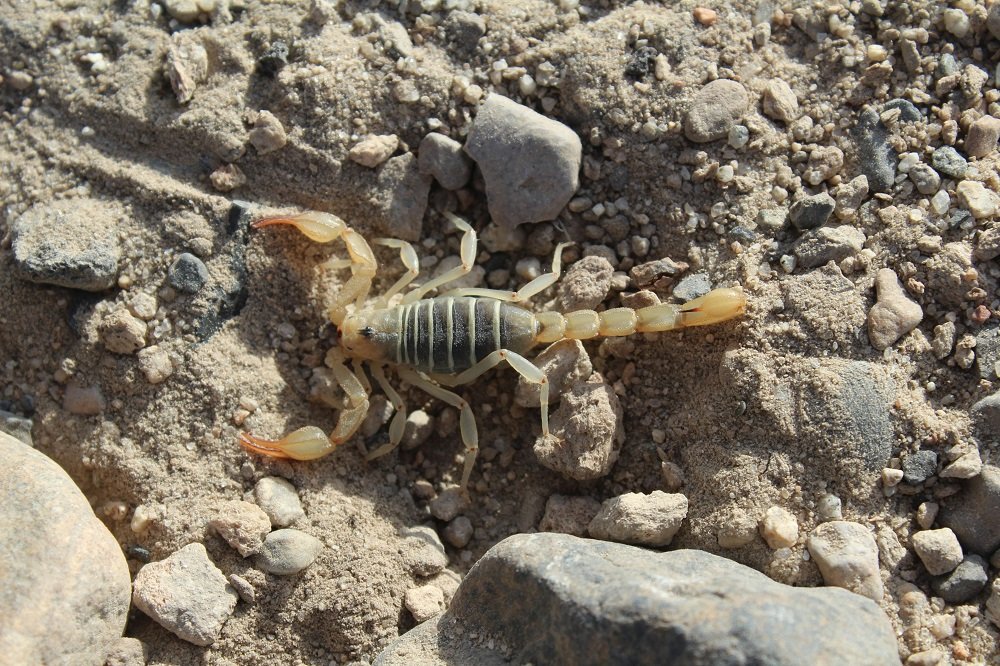
The Arizona bark scorpion is primarily found in the Sonoran Desert, one of the hottest and most arid regions in North America. However, its range extends beyond Arizona, covering several neighboring states and parts of Mexico.
Primary Locations
Arizona (most abundant, especially in Phoenix, Tucson, and surrounding areas)
Southern California (particularly the Colorado Desert region)
Southwestern New Mexico
Southern Nevada and Utah (near the Mojave Desert)
Northern Mexico (Sonora and Baja California)
Preferred Habitats
This scorpion is highly adaptable and can be found in both wild and urban environments:
Natural Habitats
Desert washes and rocky slopes – Provides shelter under loose rocks and crevices.
Mesquite and palo verde trees – Often hides under tree bark (hence the name “bark scorpion”).
Caves and abandoned burrows – Seeks refuge from extreme daytime heat.
Human Environments
Residential homes – Frequently enters through cracks in walls, pipes, and vents.
Garages and sheds – Attracted to clutter and stored items.
Swimming pool areas – Drawn to moisture in dry climates.
Unlike many other scorpions, the Arizona bark scorpion is an excellent climber, capable of scaling walls, trees, and even ceilings. This ability allows it to invade homes more easily than ground-dwelling species.
Behavior and Hunting Strategies
The Arizona bark scorpion is a nocturnal predator, meaning it is most active at night. During the day, it seeks shelter in cool, dark places to avoid dehydration and extreme heat.
Hunting and Feeding Habits
Prey selection: Feeds primarily on insects such as crickets, roaches, beetles, and spiders.
Cannibalistic tendencies: Will sometimes prey on other scorpions, including its own species.
Ambush hunting: Uses stealth and quick strikes rather than chasing prey.
Venom Delivery and Effectiveness
The bark scorpion’s venom is a neurotoxin, meaning it attacks the nervous system.
It paralyzes small prey almost instantly, making escape impossible.
Against humans, the venom causes intense pain and sometimes systemic reactions.
Social Behavior
Unlike most solitary scorpions, the Arizona bark scorpion exhibits limited social tolerance
Group clustering: In colder months, multiple scorpions may huddle together for warmth.
Maternal care: Females carry their young on their backs for the first few weeks of life.
Defensive Responses
When threatened, the bark scorpion will:
Raise its tail in a defensive posture.
Deliver a quick sting if provoked.
Retreat rapidly to avoid further confrontation.
Despite its venomous nature, this scorpion prefers to flee rather than fight unless cornered.
The Dangers of the Arizona Bark Scorpion Sting
The sting of the Arizona bark scorpion is the most venomous in North America. While fatalities are rare, the effects can be severe, especially in vulnerable individuals.
Symptoms of a Sting
Immediate sharp pain (often compared to a strong electric shock).
Numbness and tingling radiating from the sting site.
Localized swelling and redness.
Muscle twitching or spasms, particularly in the limbs.
Difficulty swallowing or breathing (in severe cases).
Increased heart rate and blood pressure.
High-Risk Groups
Children (due to smaller body mass).
Elderly individuals (weaker immune response).
People with allergies (risk of anaphylaxis).
First Aid and Medical Treatment
If stung, follow these steps:
Stay calm – Panicking increases heart rate, spreading venom faster.
Wash the area with soap and water to prevent infection.
Apply a cold compress (not ice directly) to reduce swelling.
Take over-the-counter pain relievers (ibuprofen or acetaminophen).
Avoid sedatives or alcohol, as they can worsen symptoms.
Seek immediate medical attention if severe reactions occur.
In extreme cases, antivenom is available in hospitals, particularly in Arizona.
Preventing and Controlling Arizona Bark Scorpions
Since these scorpions often enter homes, prevention is crucial. Here are the most effective strategies:
Home Protection Tips
Seal all cracks in walls, foundations, and windows.
Install door sweeps and weather stripping.
Remove debris (woodpiles, rocks, leaf litter) near the house.
Use yellow outdoor lighting (attracts fewer insects, reducing scorpion prey).
Pest Control Measures
Professional extermination (sprays and dusts specifically for scorpions).
Regular inspections with a UV flashlight at night.
Glue traps placed along walls and entry points.
What to Do If You Find a Scorpion Indoors
Do not crush it (can release pheromones attracting others).
Use tongs or a jar to capture and release it far from the house.
Call pest control if infestations persist.
Fascinating Facts
Long lifespan: Can live 5-7 years, longer than many insects.
Survival skills: Can slow metabolism to survive months without food.
Live birth: Unlike insects, scorpions give birth to live young.
Ancient creatures: Scorpions have existed for over 400 million years.