




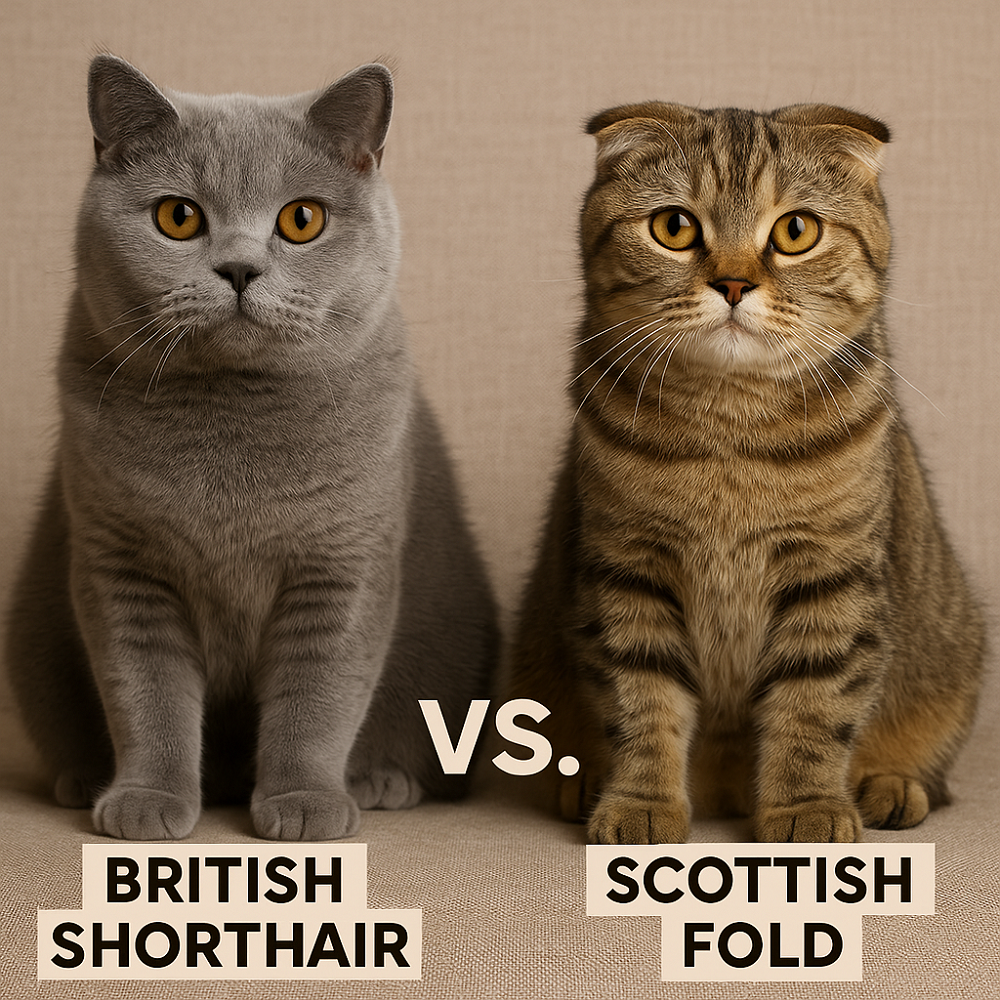
Choosing the right cat breed can feel overwhelming, especially when deciding between two adorable and gentle breeds like the British Shorthair and the Scottish Fold. Both cats are known for their calm, quiet personalities and charming looks, making them ideal companions for peaceful homes. But what sets them apart? Which one is better suited to your lifestyle?
Breed Origins and History
British Shorthair
The British Shorthair is one of the oldest cat breeds in the world, with a lineage that traces back to ancient Rome. Roman invaders brought cats to Britain to control pests, and over the centuries, these cats developed into the breed we know today.
Originally working cats, British Shorthairs were prized for their strength, hunting ability, and resilience. The breed was refined and standardized during the late 19th century, gaining recognition in cat shows. It nearly disappeared during the World Wars, but breeders revived the population. Today, the British Shorthair is one of the most popular cat breeds in the UK and around the globe.
Scottish Fold
The Scottish Fold is a more modern breed. It originated from a spontaneous mutation in a barn cat named Susie, discovered in Scotland in 1961. Susie had unusual ears that folded forward, giving her a distinctive “owl-like” appearance. Her kittens inherited the same trait, and breeders began to selectively develop the breed.
Scottish Folds gained popularity quickly, but they’ve also faced controversy due to health concerns linked to their genetic mutation. Nonetheless, they remain beloved for their sweet demeanor and adorable folded ears.
Appearance and Physical Traits
Both breeds are round-faced and plush, but they have distinct features.
British Shorthair
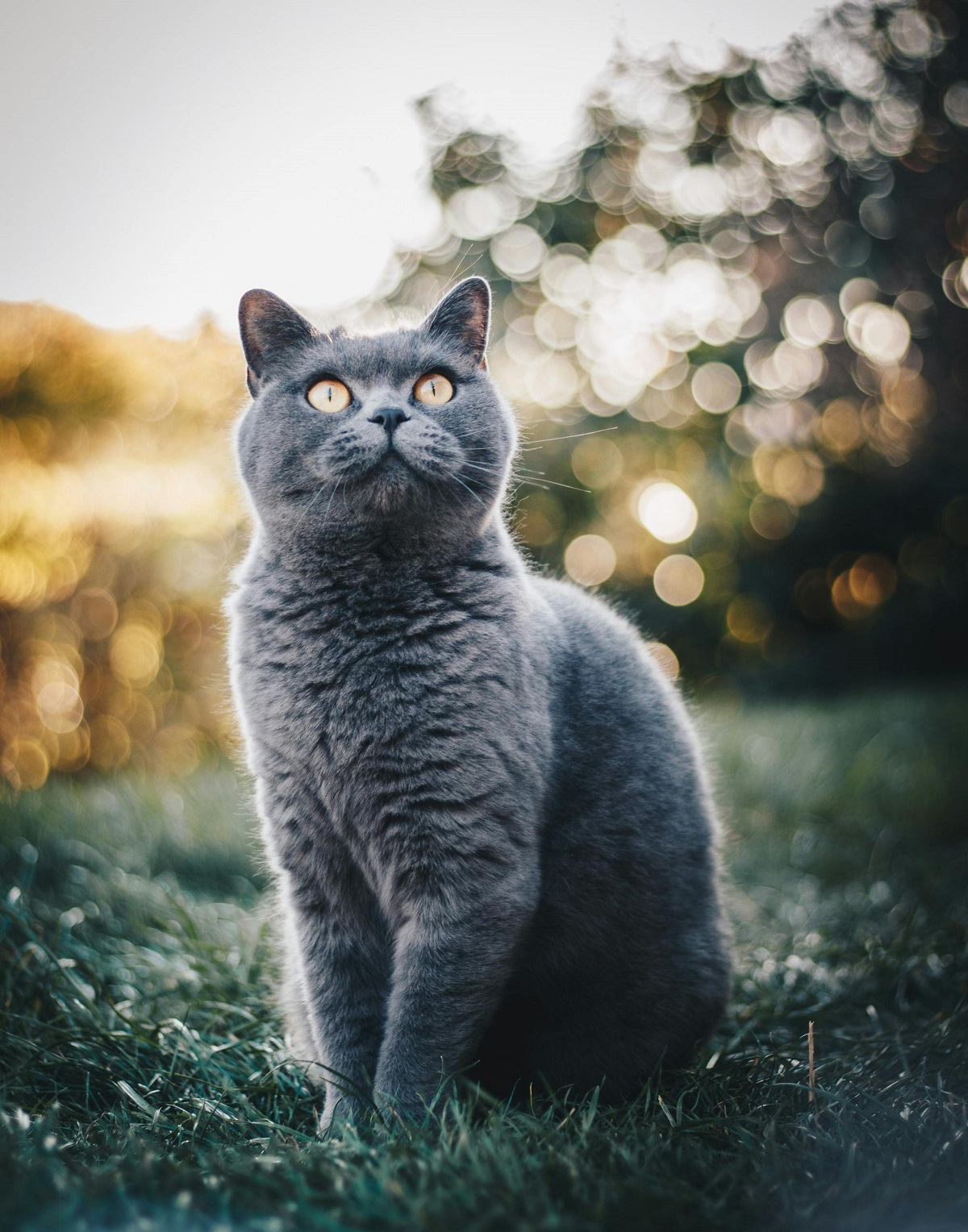
Build: Sturdy, muscular, and well-boned. Often described as “cobby.”
Size: Medium to large; males can weigh 12–17 lbs, females 9–14 lbs.
Face: Round head, full cheeks, and large, expressive copper or gold eyes.
Ears: Upright and well-spaced.
Coat: Dense, plush, and short. Often likened to teddy bear fur.
Colors: Wide variety, but the “British Blue” (a solid bluish-gray) is most iconic.
Scottish Fold
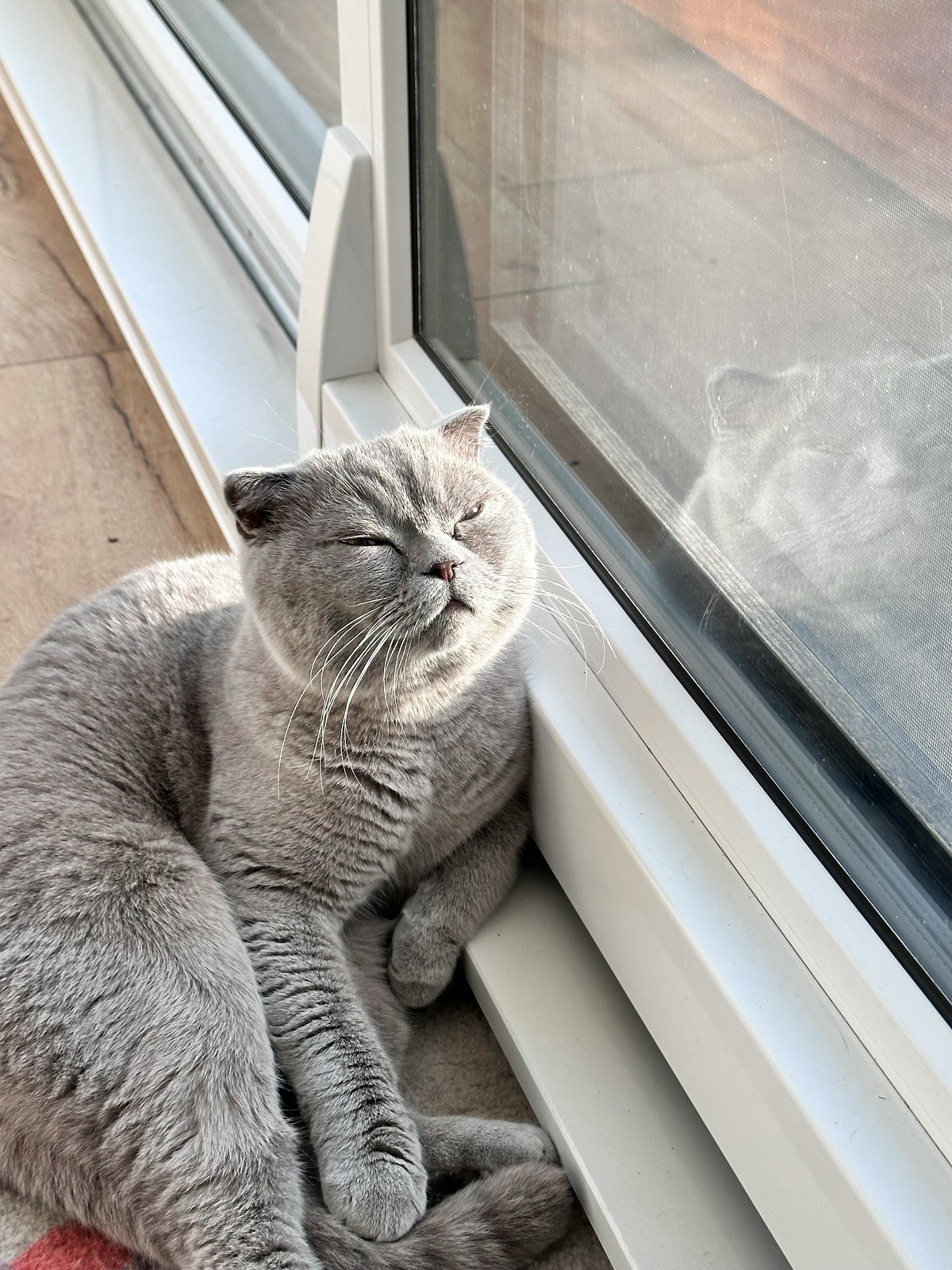
Build: Medium-sized with a more delicate frame than the British Shorthair.
Size: Males typically weigh 9–13 lbs, females 6–9 lbs.
Face: Round face with large, round eyes giving a sweet expression.
Ears: Folded forward and downward, though not all kittens inherit the fold.
Coat: Comes in short and long-haired varieties.
Colors: Available in many colors and patterns.
Temperament and Personality
British Shorthair
These cats are dignified, calm, and somewhat independent. They enjoy being near their humans but don’t usually demand constant attention. British Shorthairs are often described as “low-maintenance companions.” They prefer not to be picked up or carried around and are content watching you from a cozy perch.
Good for: People who work full-time, singles, and families who want a calm, quiet cat.
Interaction style: They’ll follow you from room to room but without being clingy.
Kid and pet friendliness: Excellent. Their calm demeanor makes them great around respectful kids and other pets.
Scottish Fold
Scottish Folds are affectionate, gentle, and playful. They are known to form strong bonds with their humans and enjoy spending time with them. While not overly needy, they are more likely than British Shorthairs to seek cuddles and lap time.
Good for: Families, seniors, or individuals looking for an affectionate pet.
Interaction style: More social and interactive. Many love being picked up.
Kid and pet friendliness: Very high. They adapt well to a multi-pet household.
Grooming Needs
British Shorthair
Thanks to their short, dense coat, British Shorthairs are relatively low-maintenance when it comes to grooming. Weekly brushing is usually enough to remove loose hair and keep their coat looking plush. During shedding seasons (spring and fall), brushing twice a week may be beneficial.
Scottish Fold
Short-haired Scottish Folds need weekly brushing, while long-haired Folds may require brushing 2–3 times per week to prevent mats. The ears—especially in folded varieties—must be checked and cleaned regularly, as they can trap dirt and moisture, making infections more likely.
Health Considerations
British Shorthair
This breed is generally healthy but can be prone to:
Obesity: They are not highly active and love to eat. Monitor diet and encourage play.
Dental issues: Regular dental care is recommended.
Hypertrophic cardiomyopathy (HCM): A heart condition found in some purebred lines.
Scottish Fold
Scottish Folds are adorable, but their ear-folding gene is linked to osteochondrodysplasia, a condition that affects cartilage and bone development. This can lead to:
Joint pain and arthritis: Especially in the hind limbs and tail.
Mobility issues: Some Folds develop painful abnormalities over time.
Ear infections: Due to reduced airflow in folded ears.
Important Note: Reputable breeders only breed folded-eared cats with straight-eared ones to reduce the chances of severe genetic disorders. Always adopt from responsible breeders or rescues.
Living Environment and Lifestyle Needs
British Shorthair
They’re the definition of a couch potato. These cats love quiet environments and aren’t big jumpers or climbers. An indoor lifestyle suits them perfectly. They’re not overly playful, so you may need to encourage exercise.
Apartment Friendly: Yes
Noise Tolerance: High
Exercise Needs: Moderate (play is important to prevent weight gain)
Scottish Fold
Scottish Folds are playful, curious, and a bit more active than British Shorthairs. They enjoy toys, interactive play, and spending time with their people. While still calm, they bring a bit more energy to a home.
-
Apartment Friendly: Yes
-
Noise Tolerance: Moderate
-
Exercise Needs: Moderate
Compatibility with Children and Other Pets
Both breeds are excellent choices for families.
British Shorthair: Their patient and tolerant nature makes them great for homes with older children who respect boundaries.
Scottish Fold: Their affectionate personality and gentle playfulness are perfect for families with kids of all ages.
Both breeds also generally get along well with dogs and other cats, especially if raised together or introduced properly.
Intelligence and Trainability
British Shorthair
Intelligence: High, but not showy.
Trainability: Can learn basic tricks and respond to commands, especially with food rewards. Not the most playful breed, so training may take patience.
Scottish Fold
Intelligence: High and curious.
Trainability: Easily trained with treats and praise. Enjoy interactive toys and puzzle feeders. Can learn tricks and even leash walk with proper training.
Which One is Right for You?
Choosing between a British Shorthair and a Scottish Fold depends on what you’re looking for in a feline companion:
If you want a quiet, dignified, low-maintenance cat that adds calm to your home without demanding constant attention, the British Shorthair is your match.
If you’re seeking a loving, interactive, and cuddly cat with a quirky look and playful personality, the Scottish Fold may be the better fit—just be sure to adopt from ethical sources.
Ferrets vs Chinchillas Unusual Pets with Big Personalities A Detailed Comparison