





Darkling beetles are an intriguing group of insects that belong to the family Tenebrionidae. Found across the globe, they thrive in a wide variety of environments, from deserts to forests. Known for their adaptability and diverse roles in ecosystems, darkling beetles are not only fascinating but also vital to the natural world.
Darkling Beetle Breed Overview
| Characteristic | Details |
|---|---|
| Scientific Name | Tenebrionidae (family) |
| Common Name | Darkling Beetle |
| Kingdom | Animalia |
| Phylum | Arthropoda |
| Class | Insecta |
| Order | Coleoptera |
| Family | Tenebrionidae |
| Subfamilies | Includes Tenebrioninae, Diaperinae, and others |
| Habitat | Deserts, forests, grasslands, and agricultural areas |
| Size | 1–3 cm (on average, though some species are larger) |
| Color | Usually dark shades (black, brown, or dark grey) |
| Diet | Scavengers; feed on decaying matter, fungi, and plant materials |
| Lifespan | A few months to several years (depending on the species) |
| Reproduction | Lay eggs in soil or decaying organic matter |
| Larval Stage | Known as mealworms or super worms (depending on the species) |
| Geographic Distribution | Found worldwide; most abundant in arid and semi-arid regions |
| Special Adaptations | Desert species collect water from fog; chemical sprays for defense |
| Role in Ecosystem | Decomposers, pollinators (rare), and prey for other animals |
| Conservation Status | Generally stable, but some species are threatened due to habitat loss |
Physical Characteristics
Darkling beetles exhibit a range of physical traits that enable them to thrive in diverse environments. While their appearance varies across the many species within the Tenebrionidae family, they share several defining features:
Size
Darkling beetles typically measure 1–3 cm in length, though some species can grow larger.
Their size makes them adaptable to environments ranging from desert sands to dense forests.
Coloration
Most darkling beetles are dark-colored, appearing black, brown, or dark grey.
Their muted tones provide camouflage, protecting them from predators.
Body Shape
They have an elongated or oval-shaped body with a hard exoskeleton.
Their bodies are segmented into three main parts: head, thorax, and abdomen.
Elytra (Wing Covers)
Darkling beetles have hardened forewings, called elytra, which protect their bodies.
Many species cannot fly because their elytra are fused.
Antennae
They have short, segmented antennae that help them sense their surroundings and locate food.
Legs and Feet
Darkling beetles have six legs adapted for walking and burrowing.
Some species have spiny legs, aiding in movement through sandy or loose soils.
Defensive Adaptations
Many species possess glands near their abdomen that secrete foul-smelling chemicals to deter predators.
Their tough exoskeleton provides additional protection.
Specialized Features
Certain desert species, such as the Namib Desert beetle, have unique ridges on their elytra to collect water from fog.
Habitat
Darkling beetles are incredibly versatile and can be found in a wide variety of habitats around the world. Their ability to adapt to different environmental conditions has made them one of the most widespread families of beetles.
Deserts
Many species thrive in arid regions, such as the Namib and Sahara deserts.
These beetles are well-adapted to harsh, dry environments, where they play a key role in nutrient cycling.
Forests
Some species live in deciduous and coniferous forests.
They are often found in leaf litter, decaying wood, and under rocks, where they feed on organic matter.
Grasslands and Prairies
Grasslands provide plenty of plant debris and seeds, making them suitable for several darkling beetle species.
They help decompose plant material, enriching the soil.
Agricultural Fields
Certain species are common in cultivated lands, feeding on grains, stored food, and crop residues.
These beetles can sometimes become pests, especially in storage facilities.
Coastal Areas
A few species inhabit sandy coastal regions, where they live under driftwood and other debris.
Adaptation to Extreme Conditions
Darkling beetles can endure extreme climates, from freezing temperatures in mountainous regions to the scorching heat of deserts.
Their nocturnal habits and burrowing behavior help them avoid extreme daytime heat or predators.
Diet
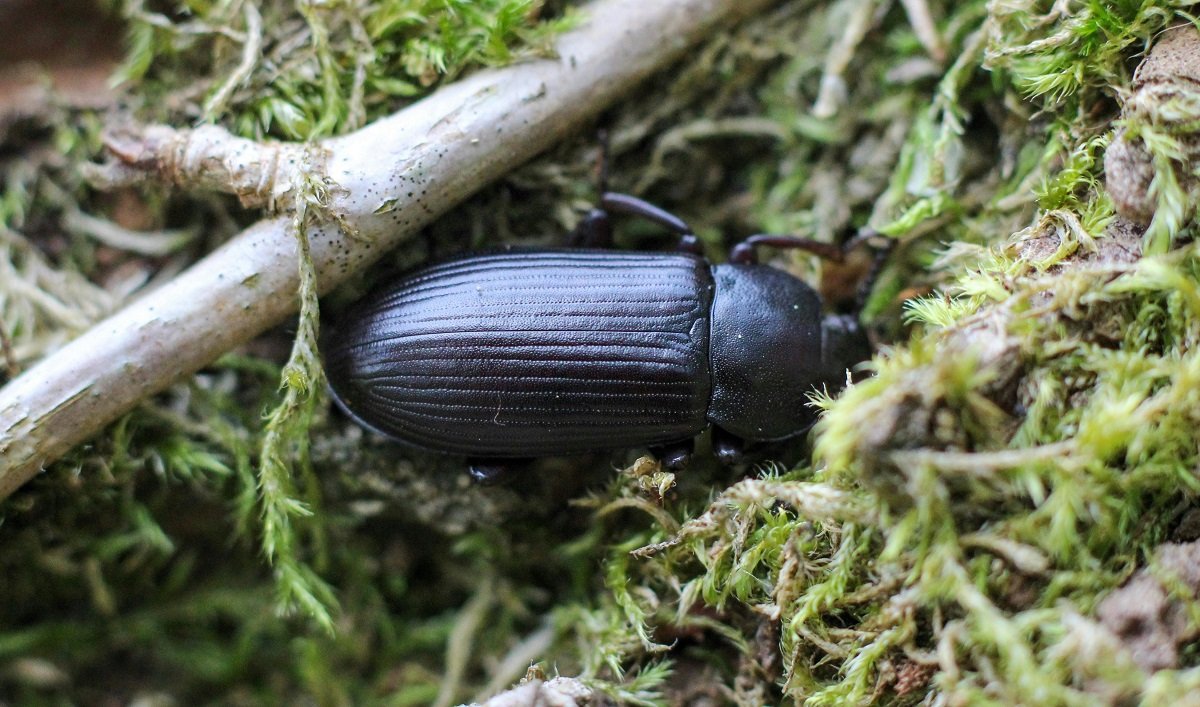
Darkling beetles have a varied diet, depending on their species and habitat. Most are scavengers, playing an essential role in breaking down organic material in their ecosystems.
Decaying Organic Matter
A significant part of their diet includes rotting plant material, dead leaves, and decayed wood.
This helps recycle nutrients back into the soil.
Fungi
Many species feed on fungi, especially those found in moist, decomposing environments like forests.
Seeds and Grains
Some darkling beetles consume seeds and grains, which makes them occasional pests in agricultural settings.
Their larvae, such as mealworms, are particularly known for feeding on stored grains.
Fresh Plant Material
While most prefer decaying plants, some species feed on fresh plant matter, including crops and garden plants.
Animal Detritus
They occasionally consume dead insects or other small animal remains, although this is less common.
Diet of Larvae
Larvae, like mealworms and superworms, primarily consume grains, fruits, and vegetables.
They are known to thrive on simple diets and are often used as feed for pets and livestock.
Life Cycle
Darkling beetles undergo a complete metamorphosis, transitioning through four distinct stages in their life cycle:
Egg Stage
Female darkling beetles lay eggs in soil, decaying organic matter, or hidden crevices.
The eggs are small, oval, and pale in color, often going unnoticed in their environment.
Depending on the species and environmental conditions, the eggs hatch within a few days to weeks.
Larva Stage
The larvae, commonly referred to as mealworms or superworms (depending on the species), emerge from the eggs.
They are worm-like, with a segmented yellowish or brownish body.
During this stage, they feed voraciously on organic matter, grains, or vegetation to gather energy for pupation.
The larval stage can last several weeks to months, influenced by temperature, food availability, and species.
Pupa Stage
After sufficient growth, the larvae enter the pupal stage, during which they encase themselves in a hard, protective shell.
Inside the pupa, the transformation into an adult beetle takes place.
This stage is usually immobile and lasts for a few days to weeks.
Adult Stage
Fully developed darkling beetles emerge from the pupa.
Adults are typically hard-bodied with dark-colored elytra (wing covers).
They focus on reproduction and foraging during this stage, which may last from a few months to several years, depending on the species and environmental conditions.
Role of Darkling Beetles in the Ecosystem
Darkling beetles play a crucial role in maintaining the balance of their ecosystems. Their activities as decomposers, prey, and nutrient recyclers make them valuable contributors to various habitats.
Decomposition
Darkling beetles feed on decaying plant matter, dead leaves, and wood.
By breaking down organic material, they help recycle nutrients into the soil, supporting plant growth.
Soil Health
As they burrow and forage, darkling beetles aerate the soil.
Their activity improves water infiltration and nutrient mixing in the soil.
Food Source for Other Animals
Darkling beetles and their larvae (mealworms) serve as a vital food source for birds, reptiles, small mammals, and other predators.
This makes them an essential link in the food chain.
Seed Dispersal
In some habitats, darkling beetles contribute to seed dispersal by consuming and excreting seeds, aiding in plant propagation.
Pest Management
By consuming fungi, decaying crops, and waste, they help clean their environment, reducing the spread of harmful pathogens.
Indicators of Environmental Health
Their presence and abundance can indicate the health of an ecosystem, as they are sensitive to changes in habitat quality and pollution.
Scientific Research on Darkling Beetles
Darkling beetles (Tenebrionidae) have garnered significant attention from scientists due to their ecological importance, adaptability, and unique physiological traits. Research on these insects spans various fields, including entomology, environmental science, and even technology.
One key area of research focuses on their ability to survive in harsh environments, particularly deserts. Species like the Namib Desert beetle have specialized elytra that capture water from fog. This adaptation has inspired biomimetic designs for water-harvesting systems in arid regions, aiding efforts to address global water scarcity.
In agriculture, darkling beetles are studied for their dual role as pests and beneficial decomposers. Their larvae, commonly known as mealworms, are explored as a sustainable protein source for livestock and even human consumption. Studies reveal that mealworms can digest polystyrene, a form of plastic, raising hope for innovative solutions to reduce plastic waste.
Ecologists study darkling beetles as indicators of environmental health. Their populations reflect habitat quality, making them valuable in monitoring ecosystem changes caused by pollution or climate change.
Beneficial Uses of Darkling Beetles
Darkling beetles (Tenebrionidae) and their larvae provide numerous benefits across various fields, from agriculture to environmental management and even biotechnology.
Sustainable Protein Source
The larvae of darkling beetles, such as mealworms and superworms, are rich in protein and nutrients.
They are used as feed for livestock, poultry, fish, and exotic pets like reptiles and birds.
Mealworms are also being explored as a sustainable food source for humans, helping reduce the environmental impact of traditional meat production.
Plastic Decomposition
Studies have shown that darkling beetle larvae can digest polystyrene (plastic) through the action of gut microbes.
This discovery offers potential solutions to combat plastic pollution by breaking down non-biodegradable waste.
Soil Health Improvement
By feeding on decaying organic matter, darkling beetles enrich the soil with nutrients, promoting healthier plant growth.
Their burrowing activity aerates the soil, improving water retention and root penetration.
Pest Management
Certain darkling beetles feed on fungi and decaying materials, helping to control unwanted growths in agricultural fields and stored food supplies.
Scientific Research and Biomimicry
The Namib Desert beetle’s ability to collect water from fog has inspired innovative water-harvesting technologies for arid regions.
Their chemical defenses are studied for applications in eco-friendly pest control.
Fun Facts About Darkling Beetles
Overwhelming Diversity
The Tenebrionidae family, which includes darkling beetles, boasts more than 20,000 species worldwide.
Masters of Defense
Some darkling beetles release a foul-smelling liquid to deter predators.
Their nickname “stink beetles” comes from this unique defense mechanism.
Desert Survival Experts
The Namib Desert beetle can collect water from fog by tilting its body, allowing droplets to roll down to its mouth.
Plastic Eaters
Darkling beetle larvae, like mealworms, can digest polystyrene, a type of plastic, thanks to special gut microbes.
Famous Larvae
Mealworms and superworms, commonly used as pet food, are the larval forms of certain darkling beetle species.
Flightless Wonders
Many darkling beetles cannot fly because their elytra (wing covers) are fused together, but this makes their bodies more durable.
Glow-in-the-Dark Species
Some species of darkling beetles in tropical regions can produce light, similar to fireflies.
Eco Engineers
By breaking down decaying organic matter, they play a crucial role in nutrient recycling and soil health.
Long Lifespan for Insects
Adult darkling beetles can live for several years, an impressive lifespan compared to many other insects.
Edible Insects
In some cultures, darkling beetle larvae are considered a delicacy and are valued for their high nutritional content.