




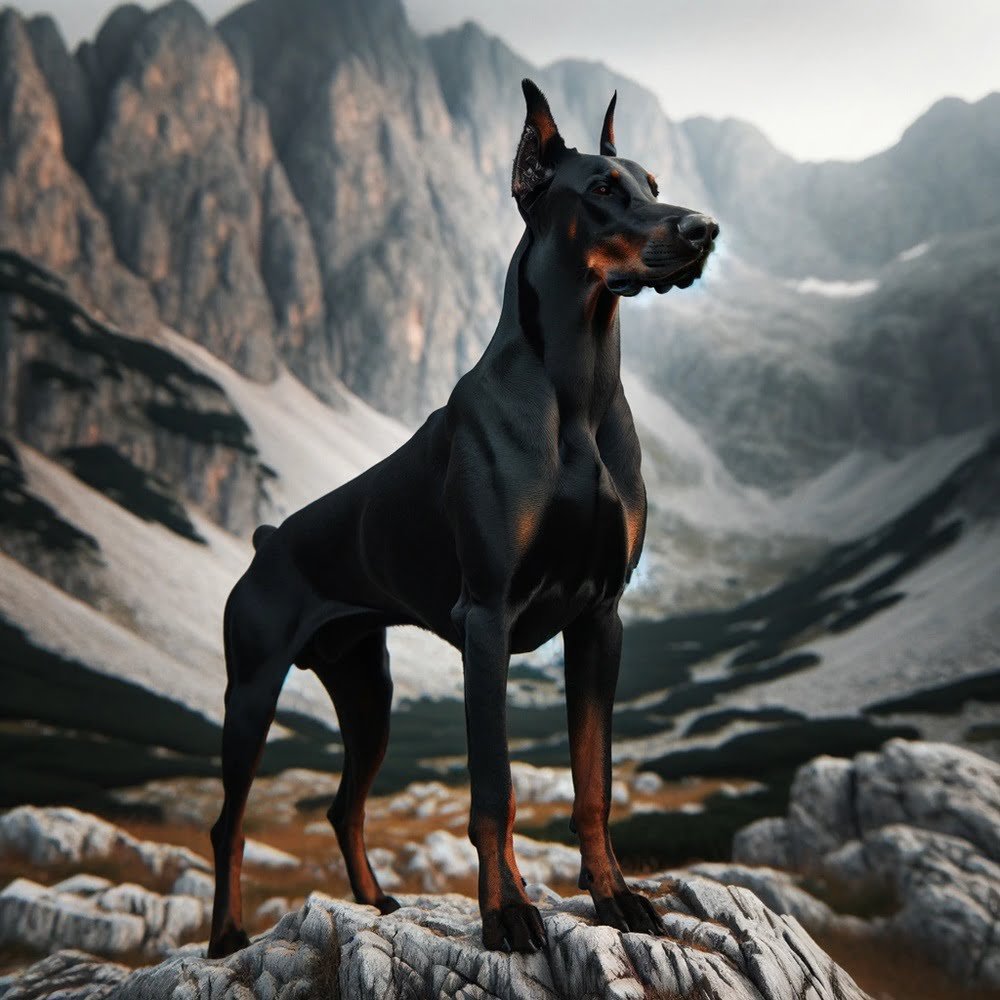
The Doberman Pinscher, a blend of beauty and brawn, stands as a symbol of elegance and strength. Originating in Germany, these dogs have a rich history as protectors and companions. Known for their sharp intelligence and loyalty, Dobermans make excellent family pets.

History of the Doberman Pinscher
The Doberman Pinscher, a breed synonymous with dignity and strength, has a history as captivating as its appearance. Originating in Germany in the late 19th century, this breed was the brainchild of Karl Friedrich Louis Dobermann, a tax collector who sought a formidable guardian for protection. Dobermann also managed the local dog pound, giving him access to a variety of breeds, which played a crucial role in the creation of the Doberman Pinscher.
The Blend of Breeds
The exact mix used to create the Doberman is not documented, but it’s widely believed that the Rottweiler, Weimaraner, and German Pinscher were among the primary contributors. This combination was aimed at crafting a breed that was intelligent, alert, and loyal, with a physical presence that was both intimidating and agile.
Evolution of the Breed
Initially bred for protection, the early Dobermans were known for their sharp instincts and guarding capabilities. Over the years, the breed has been refined, softening some of the harsher aspects of its temperament while retaining its intelligence and loyalty. This evolution has allowed the Doberman to transition from a guard dog to a beloved family pet, without losing its protective instincts.
Recognition and Legacy
The Doberman Pinscher was officially recognized as a breed in the early 20th century. It quickly gained popularity, not just in Germany but across the world, especially in the United States. Today, the Doberman stands as a symbol of protection, loyalty, and grace, a testament to Dobermann’s vision of creating the ultimate guard dog.
Temperament of the Doberman Pinscher
The temperament of the Doberman Pinscher is a fascinating blend of alertness, loyalty, and intelligence. Known for their confidence and fearlessness, dobermans are often perceived as formidable guard dogs. However, their temperament encompasses much more, making them not only excellent protectors but also loyal family members.
Alertness and Intelligence
Dobermans are incredibly alert and smart. This combination makes them excellent at problem-solving and understanding complex commands. Their intelligence also means they are quick learners, making training a smoother process. This alertness extends to their environment, as they are always aware of their surroundings and quick to respond to potential threats.
Loyalty and Affection
One of the most endearing traits of the Doberman is their loyalty. They form strong bonds with their families and are known to be particularly protective of their owners. This loyalty drives their instinct to guard and protect. Despite their tough exterior, Dobermans are affectionate with their family members and can be gentle and loving companions.
Energetic and Playful
Dobermans possess a high energy level, and they thrive when they have a job to do or are engaged in activities. They enjoy being active, whether it’s going for a run, playing fetch, or participating in canine sports. Their playful nature often comes out around their family, displaying a more relaxed and jovial side.
Sensitivity and Responsiveness
Dobermans are surprisingly sensitive dogs, responding not only to their environment but also to the emotions of their owners. They are keenly attuned to the moods and feelings of those around them, making them responsive and empathetic companions.
Need for Socialization
Due to their protective nature, early socialization is crucial for Dobermans. Exposure to different people, animals, and environments helps them become well-adjusted and ensures that their protective instincts are well-managed. Proper socialization helps in developing a well-rounded temperament, preventing overprotectiveness or aggression.

Care and Training of the Doberman Pinscher
Caring for and training a Doberman Pinscher requires understanding their unique needs and characteristics. This breed thrives with attentive care and structured training, ensuring they develop into well-behaved and happy dogs.
Exercise Needs
Daily Exercise: Dobermans are high-energy dogs that require regular exercise to maintain their physical and mental health. An hour of exercise daily, including walks, runs, or play sessions, is essential.
Mental Stimulation: Alongside physical activity, they need mental stimulation to prevent boredom. Activities like obedience training, puzzle toys, and agility courses can keep their minds active.
Nutrition
Balanced Diet: Feed them a balanced diet suitable for their age, size, and activity level. Quality dog food, whether commercial or home-prepared (with veterinary guidance), is crucial.
- Regular Feeding Schedule: Maintain a consistent feeding schedule and avoid free-feeding to prevent obesity.
Grooming
Coat Care: With a short, sleek coat, Dobermans are low-maintenance in terms of grooming. Regular brushing, once a week, helps to keep their coat healthy and clean.
Nail Trimming and Dental Care: Regular nail trimming and dental care are essential. Clean their teeth regularly and check their nails to avoid overgrowth.
Training
Early Socialization: Start socialization early to expose them to various people, animals, and environments. This helps in developing a well-adjusted dog.
Consistent Training: They respond well to consistent, positive training methods. Firm, but gentle guidance works best, avoiding harsh techniques.
Obedience Training: Basic obedience training is crucial. Teach them commands like sit, stay, come, and heel.
Positive Reinforcement: Use treats, praise, and play as rewards. Dobermans are sensitive to their owner’s tone and respond well to positive reinforcement.
Regular Health Check-ups
Schedule regular veterinary check-ups to monitor their health. Keep up with vaccinations and preventive care for parasites.
Emotional Care
Bonding Time: Spend quality time with your Doberman. They are loyal and form strong attachments to their families.
Avoid Loneliness: Dobermans don’t do well with prolonged loneliness. Ensure they have company or activities to keep them engaged when alone.
Doberman Pinscher Color Chart
The Doberman Pinscher comes in a variety of coat colors, each with its unique appeal. Here’s a chart to outline the recognized and common colors found in this breed:
| Color | Description | Markings |
|---|---|---|
| Black and Rust | The most classic and recognized color The base coat is solid black. | Rust-colored markings on the muzzle, above the eyes, on the chest, legs, and below the tail |
| Red and Rust | A rich red, ranging from light copper to deep mahogany. This color variant is less common than black but still widely recognized. | Similar rust markings as the black and rust. |
| Blue and Rust | A diluted black coat that appears as a grayish or silvery blue. This color is due to a specific dilution gene. | Rust markings are present in the same pattern as other colors. |
| Fawn (Isabella) and Rust | A lighter, tan, or beige coat color also results from a dilution gene. This color is less common and quite distinctive. | Rust-colored markings, similar in pattern to other colors. |
| White (Albino) | A rare and non-standard color for Dobermans These dogs have a white or very light coat with pale markings and often have lighter-colored eyes and noses. | Markings can be faint or nearly invisible due to the lack of pigment. |
| Melanistic (All Black) | An all-black Doberman without the typical rust markings. This is a rare genetic variation and not a standard color for the breed. | Lack of the typical rust-colored marking |
Diet Chart for the Doberman Pinscher
When it comes to feeding a Doberman Pinscher, it’s important to provide a balanced diet that supports their active lifestyle and health needs. Below is a basic diet chart, but remember, individual needs can vary based on age, activity level, and health conditions. Always consult with a veterinarian for personalized advice.
Puppy (2-12 months)
Food Type: High-quality puppy food, rich in protein and fat.
Portions: 3–4 meals a day.
Quantities: Follow the guidelines on the food packaging, adjusting for growth and activity level.
Supplements: Consult a vet for any needed supplements.
Adult (1-7 years)
Food Type: Premium adult dog food with balanced protein, fat, and carbohydrates.
Portions: 2 meals a day.
Quantities: Generally, adult Dobermans require about 2.5 to 3.5 cups of dry food per day, divided into two meals.
Supplements: May need joint supplements, especially for active or larger dogs.
Senior (8+ years)
Food Type: Senior dog food with lower calories and higher fiber, with easily digestible proteins.
Portions: 2 meals a day.
Quantities: Less than adult portions, adjusted for reduced activity level and metabolism.
Supplements: Supplements for joint health, omega fatty acids, and any specific senior dog supplements recommended by a veterinarian.
General Dietary Tips
Consistent Feeding Schedule: Maintain a regular feeding schedule.
Fresh Water: Always provide access to fresh, clean water.
Avoid Overfeeding: Monitor weight and adjust food intake to avoid obesity.
Treats: Use treats sparingly; they should not be more than 10% of daily calorie intake.
Special Health Needs: For Dobermans with health issues like allergies, consult a vet for a specialized diet plan.
Foods to Avoid
Chocolate, grapes, raisins, onions, garlic, xylitol (found in sugar-free foods), and other foods toxic to dogs.
Excessive human food or table scraps.
Grooming a Doberman Pinscher
Grooming a Doberman Pinscher is relatively straightforward due to their short coat. However, regular grooming is still important to maintain their health and appearance. Here are the key aspects of grooming for a Doberman:
Coat Care
Brushing: Dobermans have a short, sleek coat that requires minimal grooming. Brushing once or twice a week with a soft-bristle brush or grooming mitt helps remove loose hair and maintain coat shine.
Bathing: Bathe your Doberman every few months or as needed. Using a gentle dog shampoo will help keep their skin healthy and coat shiny without over-drying.
Nail Care
Nail Trimming: Regular nail trimming is essential to prevent overgrowth, splitting, and cracking. Trim their nails once or twice a month, depending on growth.
Paw Check: Check their paws regularly for any signs of injury, such as cuts or sores, especially between the toes.
Dental Care
Teeth Brushing: Regular dental care is crucial. Brush your Doberman’s teeth several times a week with dog-specific toothpaste to prevent tartar buildup and gum disease.
Dental Check-ups: Regular veterinary check-ups can help maintain dental health and address any issues early.
Ear Care
Cleaning: Clean your Doberman’s ears regularly with a vet-approved ear cleaner to prevent wax build-up and infections.
Inspection: Regularly inspect their ears for signs of infection, irritation, or parasites.
General Tips
Regular Check-ups: Regular grooming sessions are a good opportunity to check for any lumps, bumps, or changes in your Doberman’s skin or coat condition.
Positive Experience: Make grooming a positive experience with plenty of praise and treats, especially for young Dobermans to get accustomed to the routine.
Conclusion
The Doberman Pinscher, with its striking appearance and loyal personality, makes an excellent pet for active families. Remember, proper care, training, and regular vet visits are essential for their well-being.
References and External Links
American Kennel Club (AKC): Offers comprehensive information on the breed standard, health, training, and care tips for Doberman Pinschers. Visit AKC’s Doberman Page
Doberman Pinscher Club of America (DPCA): A valuable resource for breed-specific information, including health and genetic research, training advice, and rescue information. Explore DPCA Resources
The Kennel Club (UK): Provides detailed information on the breed, including health, breeding, and activity advice specific to Dobermans in the UK. Check The Kennel Club’s Doberman Section
Veterinary Centers and Journals: Various veterinary websites and journals offer medical and health-related information, including common conditions and care tips for Dobermans.
Top Pet Breed’s Complete Guide to Pet Breeds: Offers a wealth of information on various pet breeds, including Dobermans, with tips on care, training, and health. Learn More About Pet Breeds
Online Training Resources: Websites like DogTime or Cesar’s Way provide practical training tips and behavior advice that can be beneficial for Doberman owners. Get Training Tips
Pet Health Networks: Sites like PetMD offer insights into the health care and maintenance of Dobermans, including diet, exercise, and common health issues. Understand Pet Health