
Wed. Apr 1st, 2026
Species of Flamingos

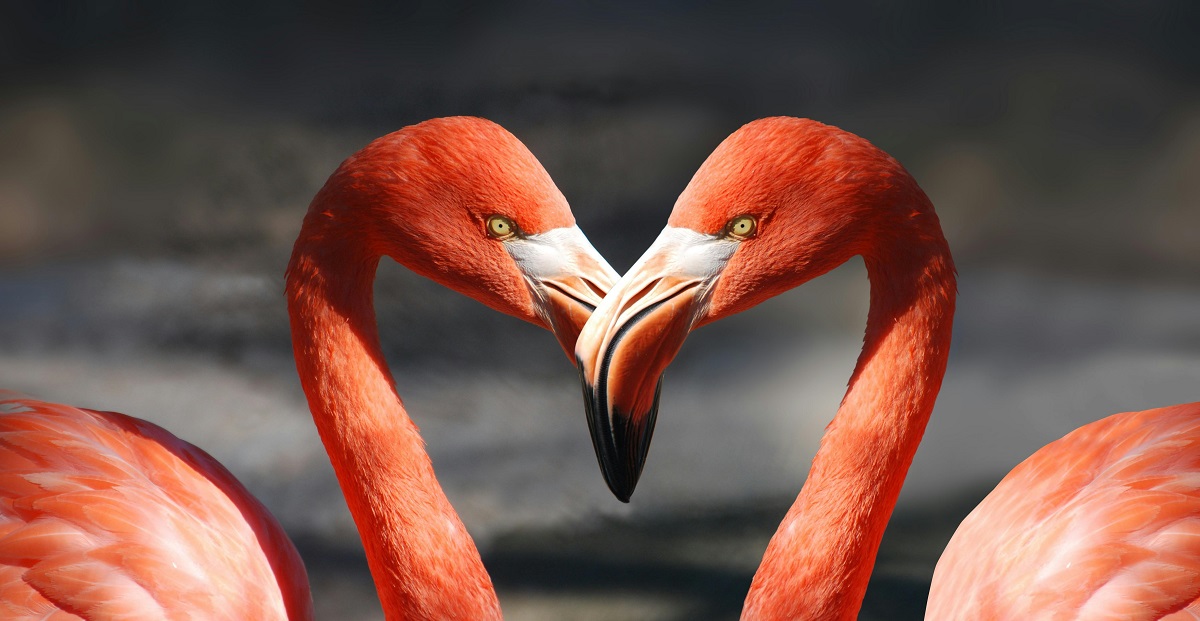
Flamingos are among the most recognizable birds in the animal kingdom. Famous for their elegant posture, long legs, and vibrant pink feathers, these charismatic creatures captivate birdwatchers, photographers, and nature lovers alike. Found across Africa, Asia, the Americas, and parts of Europe, they are beautiful and biologically and behaviorally intriguing. Despite their exotic appearance, they are hardy and adaptive birds that thrive in some of the world’s most extreme environments.

Table of Contents

Why Are Flamingos Pink?

Species of Flamingos


One of the most common and intriguing questions about them is why they are pink. Interestingly, they are not born with pink feathers; they hatch with gray or white plumage. Their color comes from carotenoids, natural pigments found in the algae, crustaceans, and small invertebrates that make up their diet. As flamingos digest these foods, the carotenoids are broken down and absorbed, gradually turning their feathers shades of pink, orange, or even red. The richer their diet is in carotenoids, the more vibrant their coloration becomes. In captivity, zookeepers often provide supplements to help maintain their iconic hue.

Species of Flamingos Around the World

There are six recognized species of flamingos, each adapted to different regions and habitats. The Greater Flamingo (Phoenicopterus roseus) is the largest and most widespread species, found in parts of Africa, Europe, and South Asia. The Lesser Flamingo (Phoeniconaias minor), which is smaller but often seen in massive flocks, resides primarily in sub-Saharan Africa and India. In the Americas, the American Flamingo (Phoenicopterus ruber) stands out for its brilliant reddish-pink coloration and thrives in the Caribbean and along the northern coast of South America.

South America is also home to three more species: the Chilean Flamingo, the high-altitude Andean Flamingo, and the James’s Flamingo, the rarest of all. These birds are specially adapted to the salty and alkaline lakes of the Andes, where few other animals can survive. Each species varies in size, color intensity, and bill shape, reflecting their specialized feeding habits and habitats.

Habitat and Distribution

Flamingos typically inhabit shallow lakes, wetlands, estuaries, salt pans, and lagoons. These water-rich environments provide the perfect feeding grounds for filter feeding and offer protection from many land-based predators. One of the most striking features of their habitats is the high salinity or alkalinity, which deters most competitors and predators but suits flamingos perfectly. Iconic flamingo habitats include Lake Nakuru and Lake Natron in East Africa, the Camargue region in southern France, and the salt flats of the Andes in South America.

Diet and Feeding Behavior

Flamingos have an unusual yet highly effective feeding strategy. Their specialized, downward-curved beaks are equipped with comb-like structures called lamellae, which help them filter food from water and mud. By turning their heads upside down and sweeping their beaks side-to-side, flamingos filter tiny food particles from the water. Their diet primarily consists of blue-green algae, diatoms, small crustaceans, and brine shrimp, all of which contribute to their coloration.

In areas where certain food sources are scarce, they may travel long distances in search of better feeding grounds. These migrations are usually dictated by seasonal changes in water levels, food availability, and climate.

Social Behavior and Mating

Flamingos are extremely social birds, often forming large colonies that can range from a few hundred to over a million individuals. Living in such dense groups offers several benefits, including increased protection from predators, synchronized breeding, and more efficient foraging. During the mating season, they engage in elaborate courtship rituals, including synchronized dancing, head-flagging, and vocal calls. These displays not only strengthen pair bonds but also help stimulate breeding activity within the flock.

They typically mate for a single breeding season and form monogamous pairs. They build cone-shaped nests out of mud, where the female lays a single egg. Both parents share incubation duties and later feed the chick with a nutrient-rich secretion known as “crop milk,” which is produced in their upper digestive tracts. The chick is born gray and gradually develops its adult coloration over the next two to three years.

Lifespan and Conservation

In the wild, they can live up to 30 years, while those in captivity often surpass 50 years thanks to stable environments and veterinary care. While they are not currently endangered, several species are considered near-threatened or vulnerable due to habitat loss, pollution, water management issues, and climate change. Illegal egg collection and human disturbances at breeding sites also pose threats in certain regions. Conservation efforts focus on protecting wetland ecosystems, regulating tourism, and supporting breeding programs to maintain stable populations.


FAQs

What gives them their pink color?

Their diet, rich in carotenoid pigments found in algae and shrimp, turns their feathers pink.

Are they born pink?

No, baby flamingos are born gray or white and turn pink over time through their diet.

How long do they live?

In the wild, they live up to 30 years; in captivity, they can live over 50 years.

Where can you see flamingos in the wild?

You can see them in regions such as East Africa (e.g., Lake Nakuru), the Caribbean, South America’s Andes, and parts of Europe like southern Spain.

Are they endangered?

Most species are not endangered, but some are near-threatened due to habitat loss and environmental changes.

By admin

Leave a Reply

Your email address will not be published. Required fields are marked *

We use cookies to personalise content and ads, to provide social media features and to analyse our traffic. We also share information about your use of our site with our social media, advertising and analytics partners. View more
Cookies settings
Accept
Privacy & Cookie policy
Privacy & Cookies policy
Cookie name Active

Privacy Policy for Pet Breed Hub
At Pet Breed Hub, accessible from toppetbreeds.com/, one of our main priorities is the privacy of our visitors. This Privacy Policy document contains types of information that are collected and recorded by Pet Breed Hub and how we use it.

If you have additional questions or require more information about our Privacy Policy, do not hesitate to contact us.

This Privacy Policy applies only to our online activities and is valid for visitors to our website with regard to the information that they share and/or collect in Pet Breed Hub. This policy is not applicable to any information collected offline or via channels other than this website.

Consent
By using our website, you hereby consent to our Privacy Policy and agree to its terms.

Information we collect
The personal information that you are asked to provide, and the reasons why you are asked to provide it, will be made clear to you at the point we ask you to provide your personal information.

If you contact us directly, we may receive additional information about you such as your name, email address, phone number, the contents of the message and/or attachments you may send us, and any other information you may choose to provide.

When you register for an Account, we may ask for your contact information, including items such as name, company name, address, email address, and telephone number.

How we use your information
We use the information we collect in various ways, including:

Provide, operate, and maintain our website
Improve, personalize, and expand our website
Understand and analyze how you use our website
Develop new products, services, features, and functionality
Communicate with you, either directly or through one of our partners, including for customer service, to provide you with updates and other information relating to the website, and for marketing and promotional purposes
Send you emails
Find and prevent fraud
Log Files
Pet Breed Hub follows a standard procedure of using log files. These files log visitors when they visit websites. All hosting companies do this and are a part of hosting services' analytics. The information collected by log files includes internet protocol (IP) addresses, browser type, Internet Service Provider (ISP), date and time stamp, referring/exit pages, and possibly the number of clicks. These are not linked to any information that is personally identifiable. The purpose of the information is to analyze trends, administer the site, track users' movement on the website, and gather demographic information.

Google DoubleClick DART Cookie
Google is one of the third-party vendors on our site. It also uses cookies, known as DART cookies, to serve ads to our site visitors based upon their visit to www.website.com and other sites on the internet. However, visitors may choose to decline the use of DART cookies by visiting the Google ad and content network Privacy Policy at the following URL – https://policies.google.com/technologies/ads

Our Advertising Partners
Some of the advertisers on our site may use cookies and web beacons. Our advertising partners are listed below. Each of our advertising partners has its own Privacy Policy for their policies on user data. For easier access, we hyperlinked to their Privacy Policies below.

Google

https://policies.google.com/technologies/ads

Third Party Privacy Policies
Pet Breed Hub's Privacy Policy does not apply to other advertisers or websites. Thus, we are advising you to consult the respective Privacy Policies of these third-party ad servers for more detailed information. It may include their practices and instructions about how to opt out of certain options.

You can choose to disable cookies through your individual browser options. More detailed information about cookie management with specific web browsers can be found at the browsers' respective websites.

CCPA Privacy Rights (Do Not Sell My Personal Information)
Under the CCPA, among other rights, California consumers have the right to:

Request that a business that collects a consumer's personal data disclose the categories and specific pieces of personal data that a business has collected about consumers.

Request that a business delete any personal data about the consumer that a business has collected.

Request that a business that sells a consumer's personal data, not sell the consumer's personal data.

If you make a request, we have one month to respond to you. If you would like to exercise any of these rights, please contact us.

GDPR Data Protection Rights
We would like to make sure you are fully aware of all of your data protection rights. Every user is entitled to the following:

The right to access – You have the right to request copies of your personal data. We may charge you a small fee for this service.

The right to rectification – You have the right to request that we correct any information you believe is inaccurate. You also have the right to request that we complete the information you believe is incomplete.

The right to erasure – You have the right to request that we erase your personal data, under certain conditions.

The right to restrict processing – You have the right to request that we restrict the processing of your personal data, under certain conditions.

The right to object to processing – You have the right to object to our processing of your personal data, under certain conditions.

The right to data portability – You have the right to request that we transfer the data that we have collected to another organization, or directly to you, under certain conditions.

If you make a request, we have one month to respond to you. If you would like to exercise any of these rights, please contact us.

Children's Information
Another part of our priority is adding protection for children while using the internet. We encourage parents and guardians to observe, participate in, and/or monitor and guide their online activity.

Pet Breed Hub does not knowingly collect any Personal Identifiable Information from children under the age of 13. If you think that your child provided this kind of information on our website, we strongly encourage you to contact us immediately and we will do our best efforts to promptly remove such information from our records.

Save settings
Cookies settings