





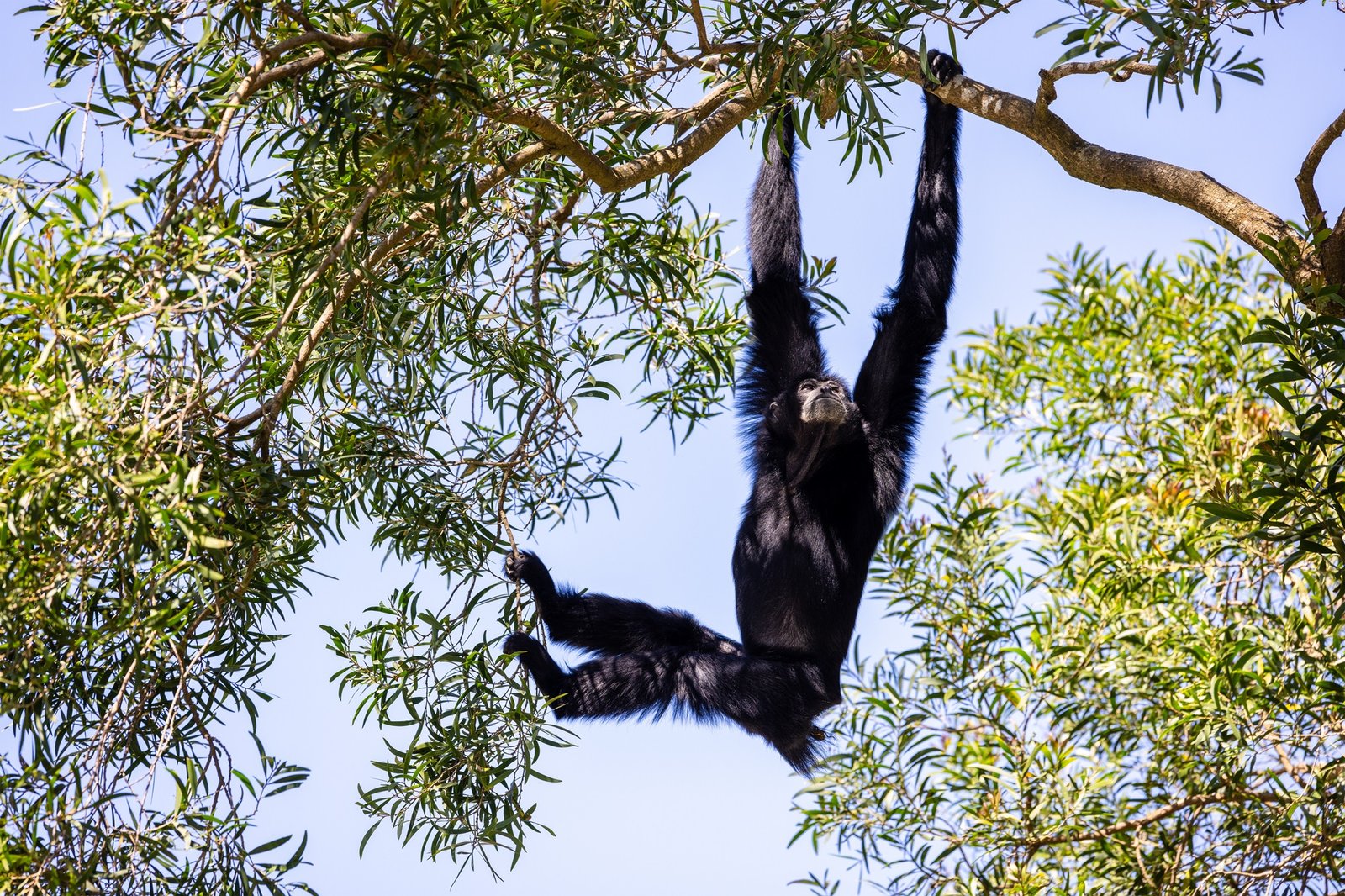
Welcome to the Pet Breed Hub, your go-to guide on all things pet! Today, we’re branching out into the wilder side of animal companionship, exploring the enchanting world of gibbons! Known for their melodious songs and lightning-fast brachiation, these forest acrobats offer a spectacle unlike any other. Let’s swing into their world!
What Makes Gibbons So Special?
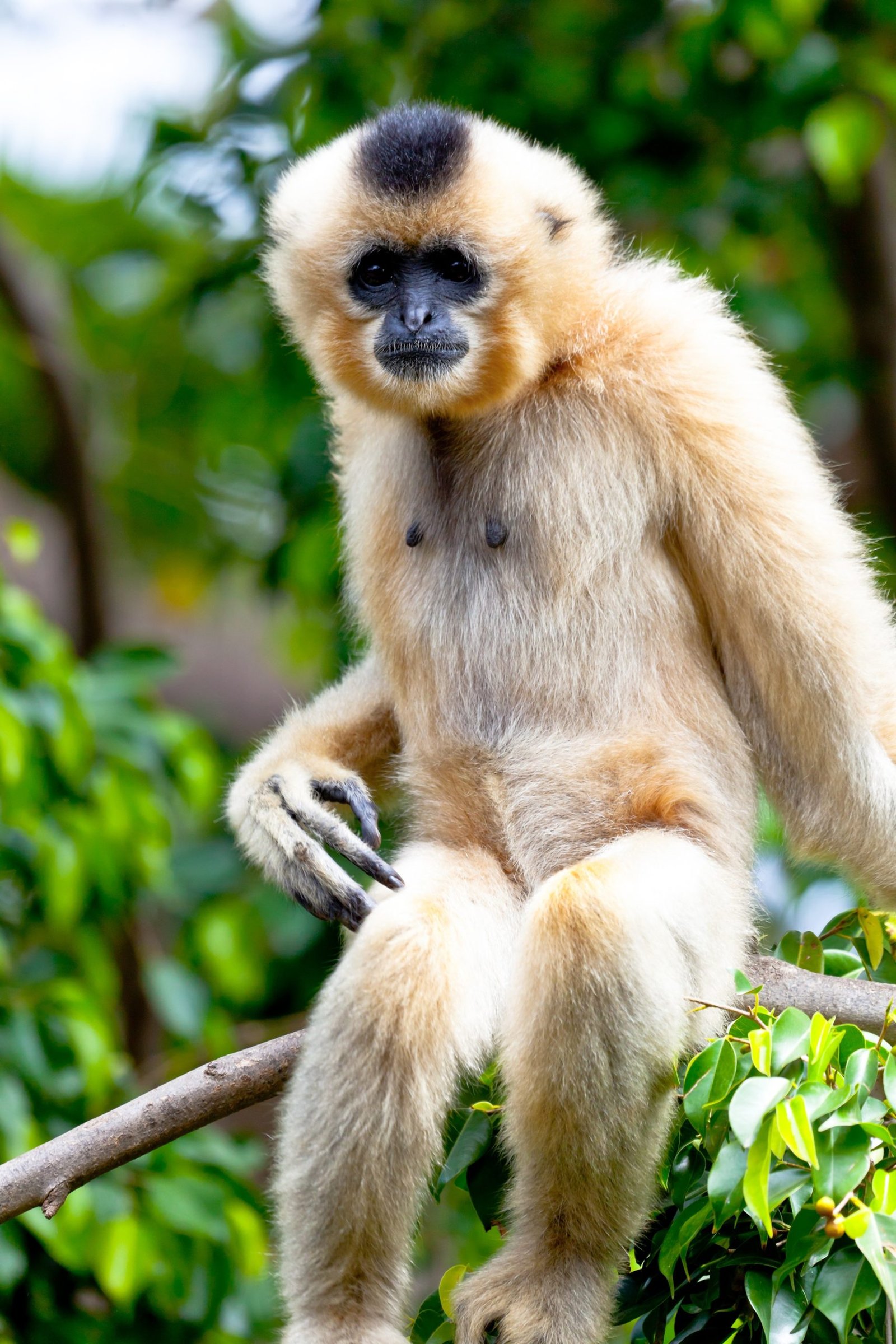
Gibbons holds a special place in the primate world and the broader tapestry of biodiversity due to several distinctive and fascinating traits. Here’s what makes them so special:
Masterful Brachiation: Gibbons are renowned for their brachiation ability, which is a form of locomotion using their arms to swing from branch to branch. They are the fastest and most agile of all tree-dwelling, non-flying mammals.
Remarkable Vocalizations: Gibbons are famous for their loud and complex songs, which can carry for up to 3.2 km (2 miles) through dense forests. These songs are used to mark territory, attract mates, and maintain bonds between family members.
Long Arms and Light Bodies: Their long arms, which are longer than their legs, and lightweight bodies are perfectly adapted to their life in the trees. This anatomy allows them to move through the canopy with ease and grace.
Social and Monogamous: Unlike many other primates, gibbons typically form monogamous pair bonds and are known for their strong family ties. They often engage in grooming and are seen singing duets, which strengthens their bonds.
Diversity in Species: There are around 20 species of gibbons, each with its unique characteristics, calls, and behaviors. This diversity is a splendid display of evolutionary adaptation to various habitats across Southeast Asia.
Human-Like Qualities: Gibbons, being apes, share many similarities with humans, including a lack of a tail and similar aspects of anatomy and behavior. This makes them fascinating subjects of study for understanding human evolution and behavior.
Conservation Indicator: Gibbons are considered indicators of the health of their habitat. They require large, stable territories of forest to thrive, and their presence indicates a healthy, biodiverse ecosystem.
Cultural Significance: In many of the cultures where they are found, gibbons have been a part of folklore and myth, often symbolizing purity and nobility. Their haunting calls and solitary nature have inspired numerous stories and works of art throughout history.
Types of Gibbons
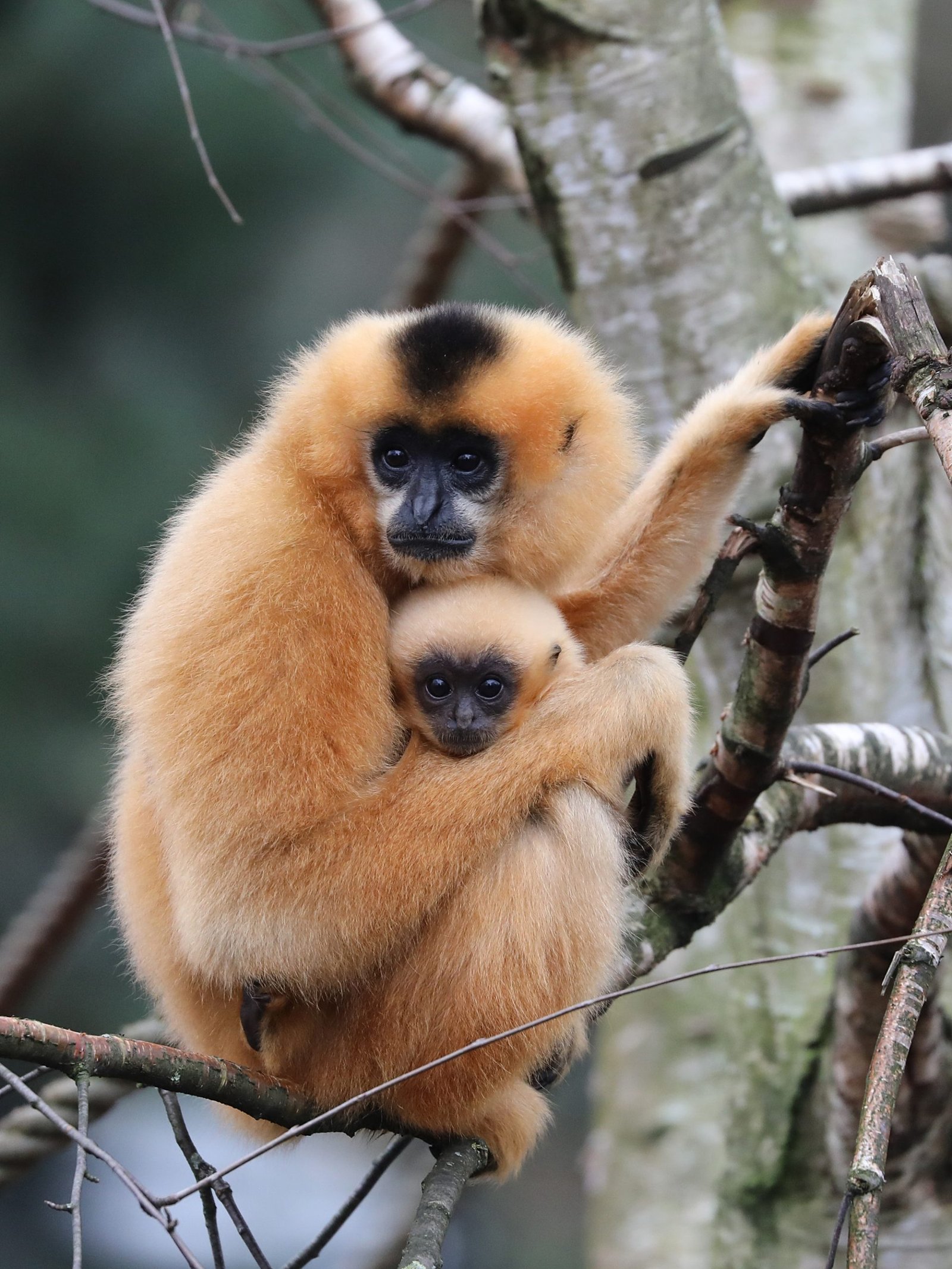 Hylobates
Gibbons, the slender and acrobatic tree-dwellers, are more than just a single entity. This fascinating group includes several species, each with its unique traits and treetop territories. Dive into the world of gibbons and discover the variety that nature offers!
1. Lar Gibbon (Hylobates lar)
Region: Found in the forests of Southeast Asia.
Distinctive Features: Lar gibbons have a wide range of fur colors, from black to pale fawn, often with a contrasting white facial ring.
Notable Behavior: They are known for their incredible agility and the complexity of their vocalizations.
2. Hoolock Gibbon (Hoolock hoolock)
Region: Inhabits the dense forests of India, Bangladesh, and Myanmar.
Distinctive Features: Hoolocks are recognized by their striking white eyebrows and a generally darker coat.
Notable Behavior: They are deeply vocal with haunting calls that resonate through the forests, and they are known for their deep emotional bonds within family groups.
3. Siamang (Symphalangus syndactylus)
Region: Native to the forest fringes of Malaysia and Sumatra.
Distinctive Features: The siamang is the largest of the gibbon species, noticeable by its almost entirely black body and the large throat pouch used for amplifying calls.
Notable Behavior: Siamangs have a unique song, using their inflatable throat sac as a resonating chamber, and are also known for their monogamous pair bonds.
4. Agile Gibbon (Hylobates agilis)
Region: Lives primarily in the rainforests of Sumatra and Borneo.
Distinctive Features: Agile gibbons have a sleek, dark coat and a lighter cap, with very long arms perfect for brachiation.
Notable Behavior: As their name suggests, they are incredibly agile and quick, moving through the trees with ease and grace.
5. Javan Gibbon (Hylobates moloch)
Region: Endemic to the western part of Java, Indonesia.
Distinctive Features: They typically have silvery grey fur and a darker cap, with a less pronounced face ring compared to other species.
Notable Behavior: Javan gibbons are critically endangered, living in the rapidly diminishing forests of Java and known for their morning choruses.
Habitats: Where to Find These Tree Dwellers
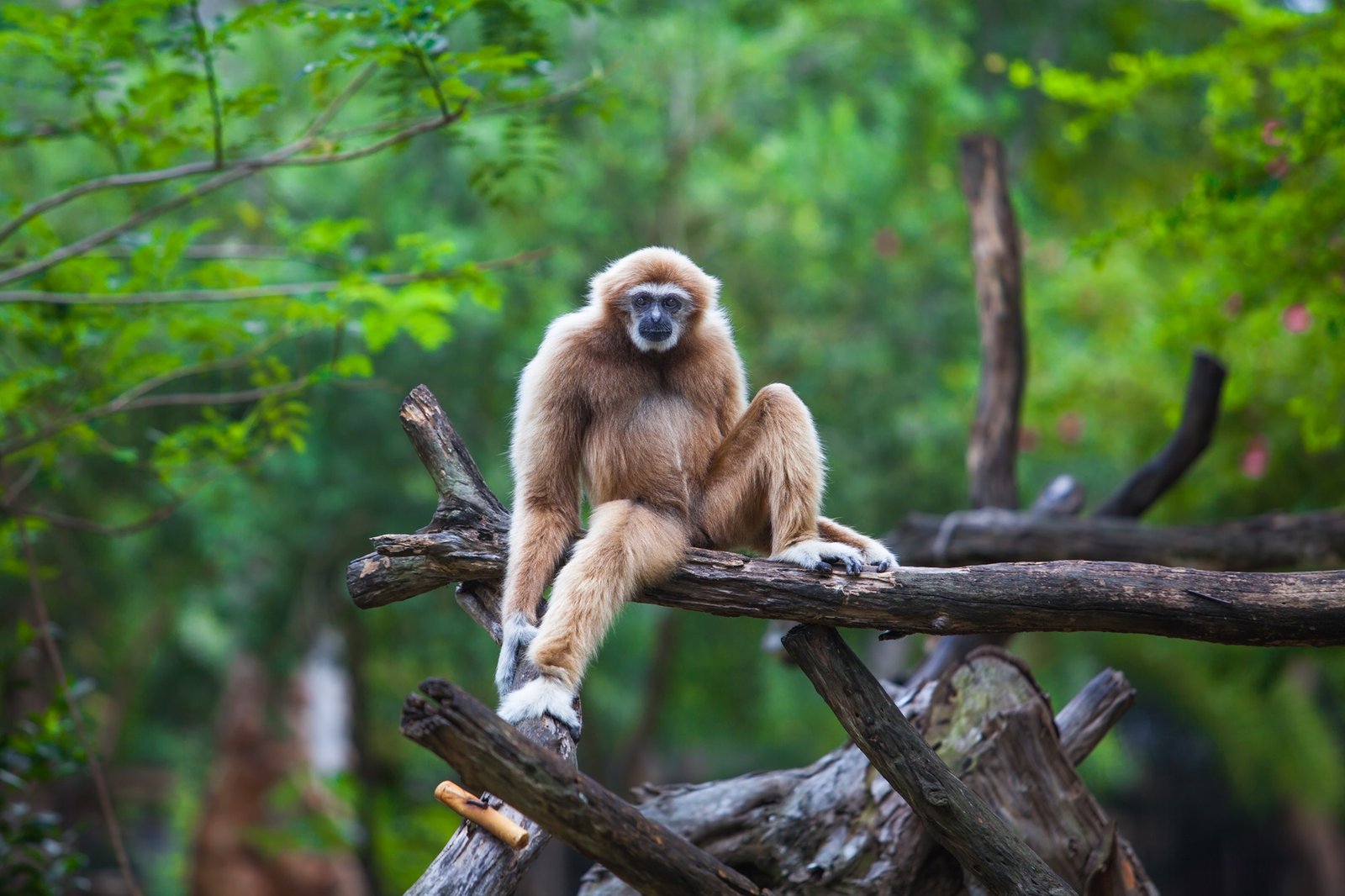
Gibbon habitats are as fascinating as the creatures themselves, marked by rich biodiversity and the complex ecosystems of tropical rainforests. Here’s a brief look into where gibbons call home:
Tropical Rainforests: Canopy Living
Gibbons are arboreal, spending most of their lives in the trees of dense, humid rainforests. They are almost exclusively found in Southeast Asia, including countries like Indonesia, Laos, Malaysia, Myanmar, Thailand, and China. The specific types of forests they inhabit include:
Lowland Dipterocarp Forests: These forests are characterized by a diversity of large trees, including the dipterocarps, which provide the gibbons with abundant fruit, leaves, and insects.
Hill and Montane Forests: Some gibbon species are adapted to living at higher altitudes where the forest composition changes. These areas are cooler and often have a different set of flora and fauna.
Swamp Forests: Certain areas with waterlogged soil or periodic flooding also host gibbon populations, demonstrating their adaptability to various forest types.
Vertical Stratification: High Canopy Specialists
Gibbons primarily occupy the upper canopy of the forest, rarely descending to the ground. The high canopy provides them with the following:
Food Resources: Access to a variety of fruits, leaves, flowers, and sometimes insects or birds’ eggs.
Safety: Protection from ground-based predators and human activities.
Travel Pathways: A continuous canopy allows gibbons to brachiate efficiently and rapidly over large distances.
Territorial and Social Space
Gibbons are territorial animals, with family groups occupying and defending specific areas of the forest. Their territories are essential for providing:
Sufficient Food: Ensuring a steady supply of fruits and other food sources.
Mating and Rearing Young: A safe environment for pair-bonded gibbons to mate and raise their offspring.
Communication Channels: Dense canopies act as excellent mediums for their songs to travel, maintain social bonds, or warn others of their presence.
Threatened Habitats
Unfortunately, gibbon habitats are under severe threat from human activities, including deforestation for logging, agriculture, and palm oil plantations, as well as from hunting and the illegal pet trade. The loss of habitat is the most significant threat to gibbon populations, leading to numerous species becoming endangered.
The Song of the Forest
The song of the forest is, in many ways, defined by the complex and beautiful calls of gibbons. Understanding gibbon calls is crucial to comprehending their behavior, social structures, and the health of the forest ecosystems they inhabit. Here’s a concise exploration of the symphony created by these fascinating primates:
Vocal Acrobats of the Canopy
Gibbons are among the most vocal of all primates, and their calls are one of the most characteristic and enchanting sounds of Asian rainforests. These calls serve several critical functions:
Territorial Claims: Gibbons use loud calls to establish and maintain their territory, warding off rival families and informing others of their presence.
Mating and Bonding: Calls play a vital role in attracting mates and reinforcing the pair bonds between monogamous couples. Mated pairs often perform duets, which strengthen their bond and coordinate their activities.
Social Cohesion: In a gibbon family, calls help to maintain social bonds and coordinate group movements throughout the canopy.
Characteristics of Gibbon Calls
Gibbon songs are not mere vocalizations but complex, structured sequences that can vary widely among different species. Here are some characteristics:
Pitch and Pattern: Gibbon calls can range from deep booms to piercing barks. The songs typically follow a pattern that may start slow and build up to a fast, rhythmic climax.
Duet Singing: Particularly notable are the duets performed by mated pairs, with the male and female often singing different parts that interlock and complement each other.
Individual Variation: Just as humans have unique voices, each gibbon has a slightly different call, which helps individuals recognize each other.
Conservation Through Calls
Understanding and monitoring Gibbon calls are not only fascinating but also have significant conservation applications.
Population Monitoring: By recording and analyzing calls, researchers can estimate population sizes and monitor the health of gibbon groups without disturbing them.
Habitat Quality Assessment: The presence and frequency of gibbon calls can indicate the health of the forest, as gibbons require large, undisturbed areas of canopy to thrive.
Behavioral Studies: Studying the nuances of calls helps scientists understand the social dynamics and mating behaviors of these elusive creatures.
FAQs
1: What are gibbons?
Gibbons are small, arboreal apes known for their brachiation (arm swinging) and vocalizations. They belong to the family Hylobatidae and are found in the rainforests of Southeast Asia.
2: How many species of gibbons are there?
There are about 20 recognized species of gibbons, divided into four genera: Hylobates, Hoolock, Nomascus, and symphalangus.
3: What do gibbons eat?
Gibbons are primarily frugivorous, meaning they eat mostly fruit. They also consume leaves, flowers, and occasionally insects and small animals.
4: Are gibbons endangered?
Many gibbon species are endangered or critically endangered due to habitat loss, hunting, and the illegal pet trade. Conservation efforts are underway to protect them.
5: How do gibbons communicate?
Gibbons are known for their loud and complex songs, which they use to mark territory, attract mates, and communicate with family members.
6: Do gibbons live in groups?
Gibbons typically live in small family groups consisting of a mated pair and their offspring. They are known for their strong pair bonds and territorial behavior.
7: How long do gibbons live?
In the wild, gibbons can live up to 40 years, while in captivity, they may live longer due to regular care and the absence of predators.
8: Can gibbons walk on two legs?
Gibbons can walk bipedally (on two legs) when on the ground, holding their arms above their heads for balance. However, they spend most of their lives in the trees, where they swing from branch to branch.
9: Where can you find gibbons?
Gibbons are native to the rainforests of Southeast Asia, including countries such as Indonesia, Thailand, China, and India.
10: Why are gibbon songs important?
Gibbon songs are important for maintaining social bonds, establishing territories, and attracting mates. They also play a crucial role in scientific research and conservation efforts as they help in monitoring populations and understanding behavioral patterns.
Conclusion
Gibbons are not just another primate; they are symbols of the forest’s soul, singing the anthem of the trees. Let’s protect these nimble acrobats, ensuring their songs continue to echo through the forests. Remember, every creature has its tale, and gibbons tell theirs from the treetops!
References And External Links
IUCN Red List of Threatened Species: IUCN Red List
The IUCN Red List provides the conservation status and detailed species accounts for gibbons, offering information on population trends, threats, and conservation actions.
The Gibbon Conservation Alliance: Gibbon Conservation Alliance
Dedicated to the conservation of gibbons through research, outreach, and habitat preservation, the Gibbon Conservation Alliance provides extensive resources and ways to get involved in gibbon conservation.