





Welcome to the vibrant world of Panther Chameleons, presented by Pet Breed Hub! These mesmerizing creatures aren’t just another pet; they are a window into nature’s most fascinating color palette.
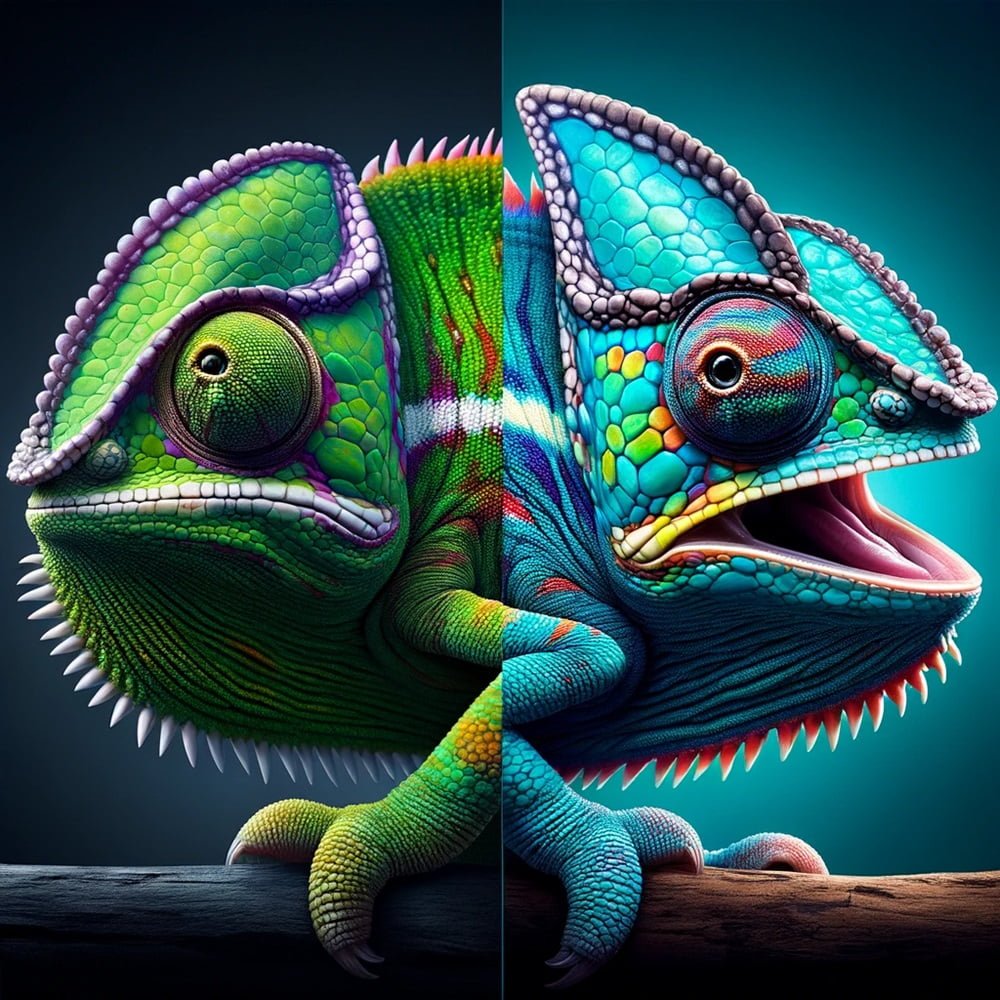
Panther Chameleon Lifespan
When you bring a Panther Chameleon into your life, you’re embarking on an adventure that, on average, spans 5 to 7 years.
These captivating creatures, with their ever-changing colors and unique personalities, offer a window into a world that’s as transient as it is beautiful.
Their lifespan, though seemingly brief, is full of growth, changes, and a multitude of color shifts that reflect their experiences and environment.
Caring for a Panther Chameleon means being a part of their entire life cycle, from the sprightly young lizard full of energy to a more serene and mature individual. Each stage of their life offers a different insight into the natural wonder that is the Panther Chameleon.
Panther Chameleon Care: Ensuring a Vibrant Life
Caring for a Panther Chameleon is both a responsibility and a joy. These unique creatures require specific conditions to thrive:
Habitat
Enclosure: Spacious and well-ventilated.
Climbing Space: Provide branches and foliage for natural climbing and hiding.
Lighting: UVB lighting is crucial for their health.
Temperature: A gradient of 72–80°F (22-27°C) during the day and slightly cooler at night.
Humidity: Maintain around 50–70% humidity.
Diet
Variety is Key: Feed a diet of crickets, mealworms, and other insects.
Supplements: Calcium and vitamin supplements are essential for preventing metabolic bone disease.
Hydration
Misting: Regular misting encourages natural drinking behavior.
Dripping System: A slow-dripping system can also be used to provide water.
Health Monitoring
Regular Check-ups: Regular visits to a reptile-savvy veterinarian
Watch for Signs: Be alert to changes in behavior or appearance, which can indicate health issues.
Interaction
Handling: Minimal handling is recommende, as they can stress easily.
Observation: Enjoy their beauty and behaviors through observation.
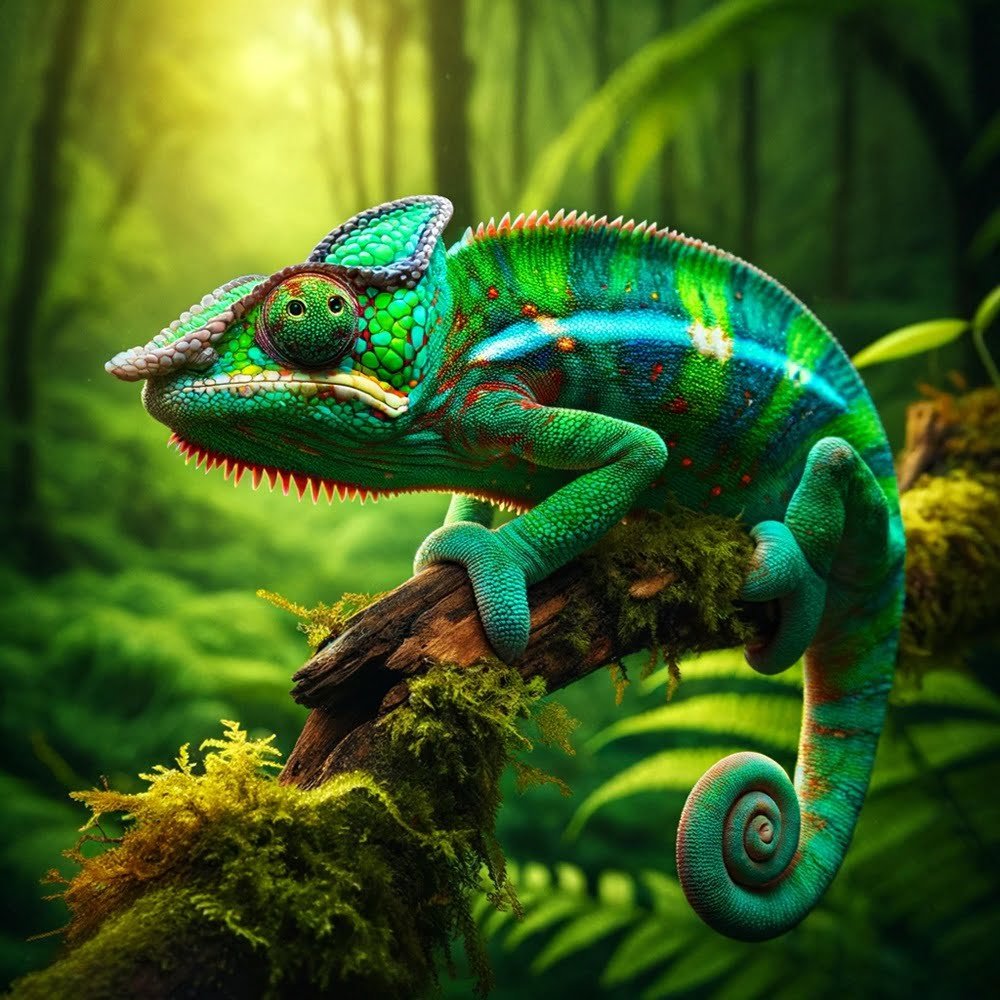
Panther Chameleon Color Chart: A Spectrum of Beauty
The Panther Chameleon is renowned for its ability to change colors, displaying a remarkable range of hues throughout its life. Here’s a simplified color chart to help understand the diverse palette these creatures can exhibit:
Color Chart
| Age/State | Male Colors | Female Colors |
|---|---|---|
| Juvenile (0–6 months) | Greens and Browns, with hints of blue and red | Mostly green and brown, less vibrant |
| Adult Non-Dominant | Muted greens, browns, and yellows | Light green or brown, with subtle patterns |
| Adult Dominant/Excited | Vivid blues, reds, and greens | Brighter greens and yellows |
| Breeding Season | Intense reds, blues, and purples | Darker green with visible patterns |
| Stressed or Sick | Darker tones, less vibrant | Darker, more muted tones |
Understanding Color Changes
Mood Indicator: Colors can signify mood – brighter colors often indicate excitement or territorial behavior, while darker tones can indicate stress or discomfort.
Health Indicator: Consistent dark or dull colors might signal health issues, warranting a check-up.
Temperature Response: They may darken in cooler temperatures to absorb more heat.
Panther Chameleon Size Chart: Understanding Their Growth
When it comes to Panther Chameleons, their size can vary depending on gender, age, and genetics. Here’s a simple chart to help understand their growth stages:
Size Chart
| Age | Male Size | Female Size |
|---|---|---|
| 0-3 months | 3-4 inches | 2-3 inches |
| 3-6 months | 5-8 inches | 4-6 inches |
| 6-12 months | 9-12 inches | 7-9 inches |
| Adult (12+ months) | 14-20 inches | 10-14 inches |
Key Points to Remember
Males are larger: Male Panther Chameleons generally grow larger than females.
Rapid Growth: They experience rapid growth in the first year of their lives.
Variation is Normal: Individual chameleons may grow at different rates or reach slightly different sizes based on genetics and environment.
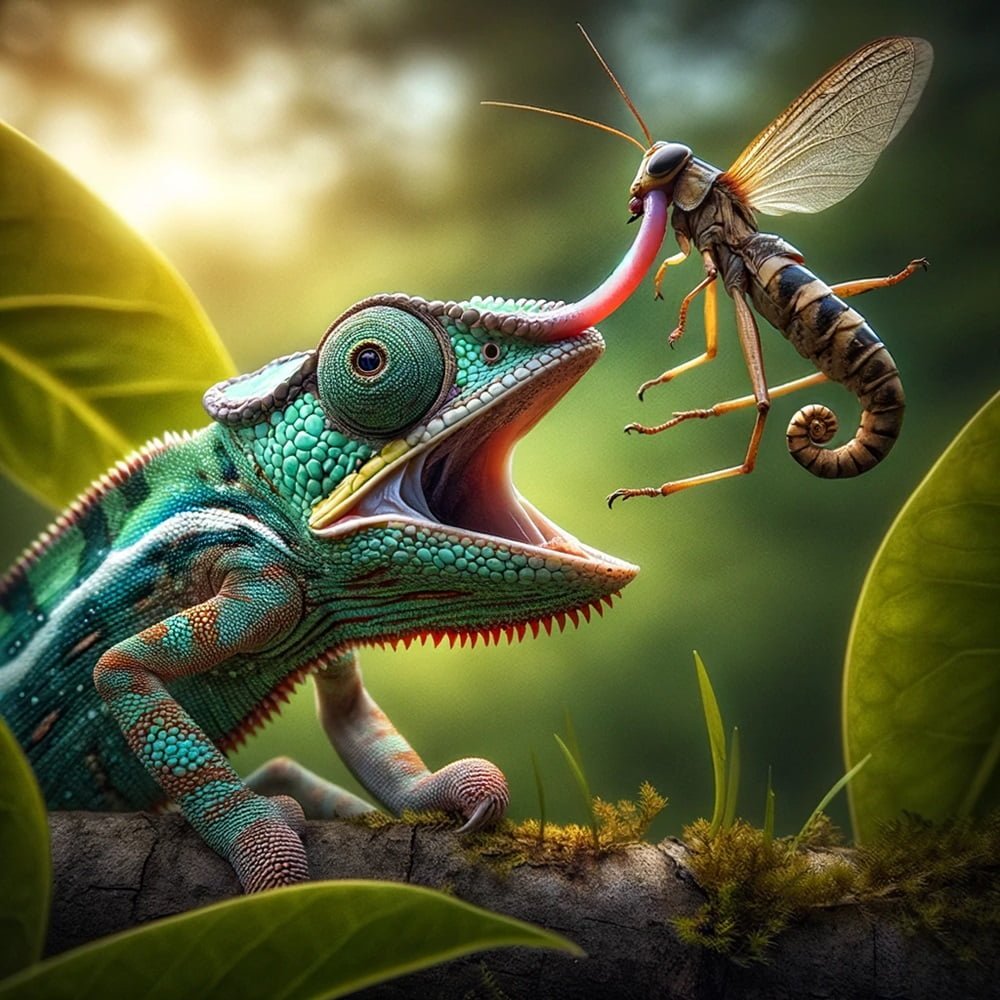
Panther Chameleon Diet Chart: Balancing Nutrition
Feeding Panther Chameleons a well-balanced diet is crucial for their health and vitality. Here’s a diet chart to guide you in providing the right nutrition for your colorful companion:
Diet Chart
| Food Type | Frequency | Notes |
|---|---|---|
| Crickets | Daily | Staple diet; gut-loaded and appropriately sized |
| Mealworms | 2-3 times a week | As a supplement to the staple diet |
| Waxworms | Once a week | High in fat; treat in moderation |
| Fruits/Veggies | Once a week | Small amounts; good for hydration |
| Calcium Supplement | Every other feeding | Essential for bone health |
| Multivitamin | Once a week | To ensure a balanced intake of nutrients |
Important Dietary Considerations
Gut-loading: Feed the insects a nutritious diet 24 hours before offering them to your chameleon.
Size Matters: The size of the prey should be appropriate for the size of the chameleon, usually no larger than the space between their eyes.
Hydration: Provide water through misting, as chameleons may not drink from a water bowl.
Temperament of Panther Chameleons
Panther chameleons are known for their distinct temperament, which is important to understand for any potential or current owners. These traits influence how they interact with their environment and caregivers:
Key Temperament Traits
Solitary Nature: Panther Chameleons are inherently solitary creatures. They prefer to live alone and can become stressed or aggressive if housed with other chameleons.
Territorial Behavior: Especially in males, territorial instincts are strong. They may display brighter colors or aggressive postures when defending their space.
Calm but Sensitive: While they can be calm and seemingly indifferent to human presence, they are sensitive to changes in their environment, handling, and loud noises.
Limited Tolerance for Handling: Unlike some pets, Panther Chameleons generally do not enjoy being handled. Frequent handling can cause stress and potentially lead to health issues.
Visual Communicators: They communicate largely through color changes and body language, which can indicate their mood, health status, and comfort levels.
Panther Chameleon Facts
Panther chameleons, with their mesmerizing color changes and unique behaviors, are among the most fascinating reptiles. Here are some key facts about them:
Origin: Native to Madagascar, these chameleons thrive in tropical forests.
Lifespan: They typically live for about 5-7 years in captivity.
Color-Changing Ability: Known for their dramatic color changes, these shifts occur due to changes in mood, temperature, and communication needs.
Diet: Mainly insectivores, they feed on a variety of insects like crickets and mealworms.
Unique Hunting Method: They catch prey using their long, sticky tongue, which can extend twice the length of their body.
Size: Males can grow up to 20 inches, while females are smaller, reaching about 14 inches.
Reproduction: They are oviparous, meaning the females lay eggs. A typical clutch contains 10-30 eggs.
Solitary Nature: They are mostly solitary and territorial, especially the males.
Sensitivity to Environment: Their wellbeing is closely linked to their environment, requiring specific humidity and temperature conditions.
Distinctive Features: Apart from their color-changing skin, they have zygodactylous feet for gripping branches, a prehensile tail for balance, and 360-degree vision.
FAQs
1: How long do Panther Chameleons live?
Typically, they live for about 5 to 7 years.
2: Can Panther Chameleons change color?
Yes, they can change colors based on mood, temperature, and communication needs.
3: What do Panther Chameleons eat?
Their diet mainly consists of insects like crickets, mealworms, and occasionally small fruits and vegetables.
4: How often should I feed my Panther Chameleon?
Young chameleons should be fed daily, while adults can be fed every other day.
5: Do Panther Chameleons need UV light?
Yes, UVB lighting is essential for their health, aiding in calcium absorption and vitamin D synthesis.
6: How can I tell if my Panther Chameleon is healthy?
Signs of a healthy chameleon include clear eyes, regular eating and shedding, active behavior, and bright, vibrant colors.
7: Are Panther Chameleons good for beginners?
They can be a bit challenging for first-time reptile owners due to their specific care requirements.
8: How do I set up a habitat for my Panther Chameleon?
Their habitat should include a well-ventilated enclosure with temperature gradients, humidity control, climbing structures, and UVB lighting.
9: Can Panther Chameleons be handled?
They generally do not enjoy being handled and can get stressed easily, so it’s best to minimize handling.
10: Do Panther Chameleons get along with other pets?
They are solitary creatures and can get stressed around other animals, so it’s best to keep them separate.
Conclusion
Panther chameleons are fascinating creatures, perfect for those ready for a unique pet experience. With the right care, they can be a joyful addition to your life!
References
Panther Chameleon Care Guide” by Reptiles Magazine – An in-depth guide covering all aspects of Panther Chameleon care, including diet, habitat, and health.
“Chameleon Husbandry” by Dr. Chris Anderson A comprehensive book that provides detailed information on the care and maintenance of chameleons, including species-specific advice for Panther Chameleons
“The Chameleon Handbook” by Francois Le Berre A popular reference book that offers valuable insights into the behavior, diet, and breeding of chameleons
“Exotic Animal Medicine for the Veterinary Technician” by Bonnie Ballard and Ryan Cheek – While aimed at veterinary professionals, this book contains useful information on the care and medical needs of exotic pets, including Panther Chameleons.
External Links
Chameleon Forums – An online community where chameleon enthusiasts can share experiences, ask questions, and find a wealth of information about chameleon care.
The International Reptile Conservation Foundation provides information on reptile conservation efforts, including those for chameleons, educational resources, and ways to get involved.
Herpetology.com – Chameleons – A resourceful website offering detailed information on various species of chameleons, their habitats, and care requirements.
National Geographic – Panther Chameleon offers insightful information about Panther Chameleons in their natural habitat, with a focus on their behavior and ecological role.