



Ever found yourself puzzled, trying to choose between a Somali cat and an Abyssinian cat? Both are stunning, but they have their own unique sparkle. Let’s dive into what sets these feline friends apart, making your decision a whisker easier!
Breed Overview: Somali Cat vs Abyssinian Cat
| Characteristic | Somali Cat | Abyssinian Cat |
|---|---|---|
| Scientific Name | Felis catus | Felis catus |
| Origin | United States (from Abyssinian lineage) | Southeast Asia and Africa |
| Coat Length | Long | Short |
| Coat Colors | Ruddy, red, blue, and fawn | Ruddy, red, blue, and fawn |
| Personality | Intelligent, playful, and affectionate | Highly energetic, intelligent, and curious |
| Maintenance | Medium (regular brushing required) | Low (minimal grooming needed) |
| Activity Level | High, but enjoys cuddles | Very high, loves to explore |
| Suitability | It is good for families and singles, especially those who enjoy grooming | Great for active households, suitable for families and individuals |
| Lifespan | 12-15 years | 12-15 years |
Origins: Somali Cat vs Abyssinian Cat
Abyssinian Cat
Tracing the paw prints of the Abyssinian cat takes us back to the exotic landscapes of Southeast Asia and Africa. With a lineage shrouded in mystery, these cats are believed to have been the jewels of ancient Egyptian pharaohs, depicted in art and literature for centuries.
The breed, as we know it began to be refined in Britain in the late 19th century, combining its mysterious past with a distinctly noble British flair.
Somali Cat
The Somali cat, with its luxurious long coat, is essentially the fabulous, fluffy version of the Abyssinian. This breed’s story began in the 1950s in the United States, emerging from a recessive gene in Abyssinians that produced a longer coat. Initially seen as a divergence, the Somali was embraced for its distinct beauty and charm, earning its breed status.
It shares the Abyssinian’s ancient origins but adds a twist with its lush, fox-like tail and tufted ears, making it a relatively new star in the feline world.
Personality: Somali Cat vs Abyssinian Cat
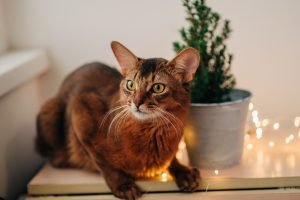
Abyssinian Cat
The Abyssinian cat is the epitome of energy and curiosity. This breed is renowned for its intelligence, often described as being constantly on the move. Abyssinians love to explore their surroundings, climb to the highest points in the home, and engage in interactive play.
They’re social, and loving, and interact with their human families, often following them around to be part of the action. Despite their high energy, Abyssinians are also affectionate, enjoying a good cuddle session after a day of adventure.
Somali Cat
Somali cats share the playful and intelligent nature of their Abyssinian relatives but with a slightly more laid-back attitude. They are equally curious but tend to balance their exploration with moments of relaxation and affection. Somalis are known for their bushy tails and expressive eyes, often using them to communicate their mood.
They enjoy interactive play and are skilled at fetching, but they’re also content lounging in a sunny spot or on a favored lap. This breed’s social nature makes them excellent companions, as they’re always keen to participate in family activities or simply curl up for a cozy night in.
Characteristics of Somali Cat vs Abyssinian Cat
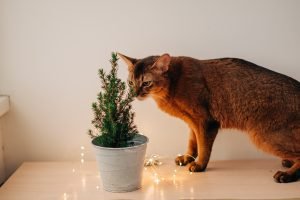
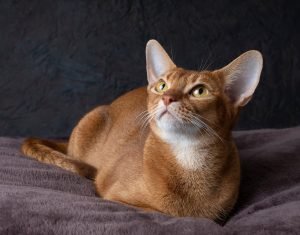
Somali Cat
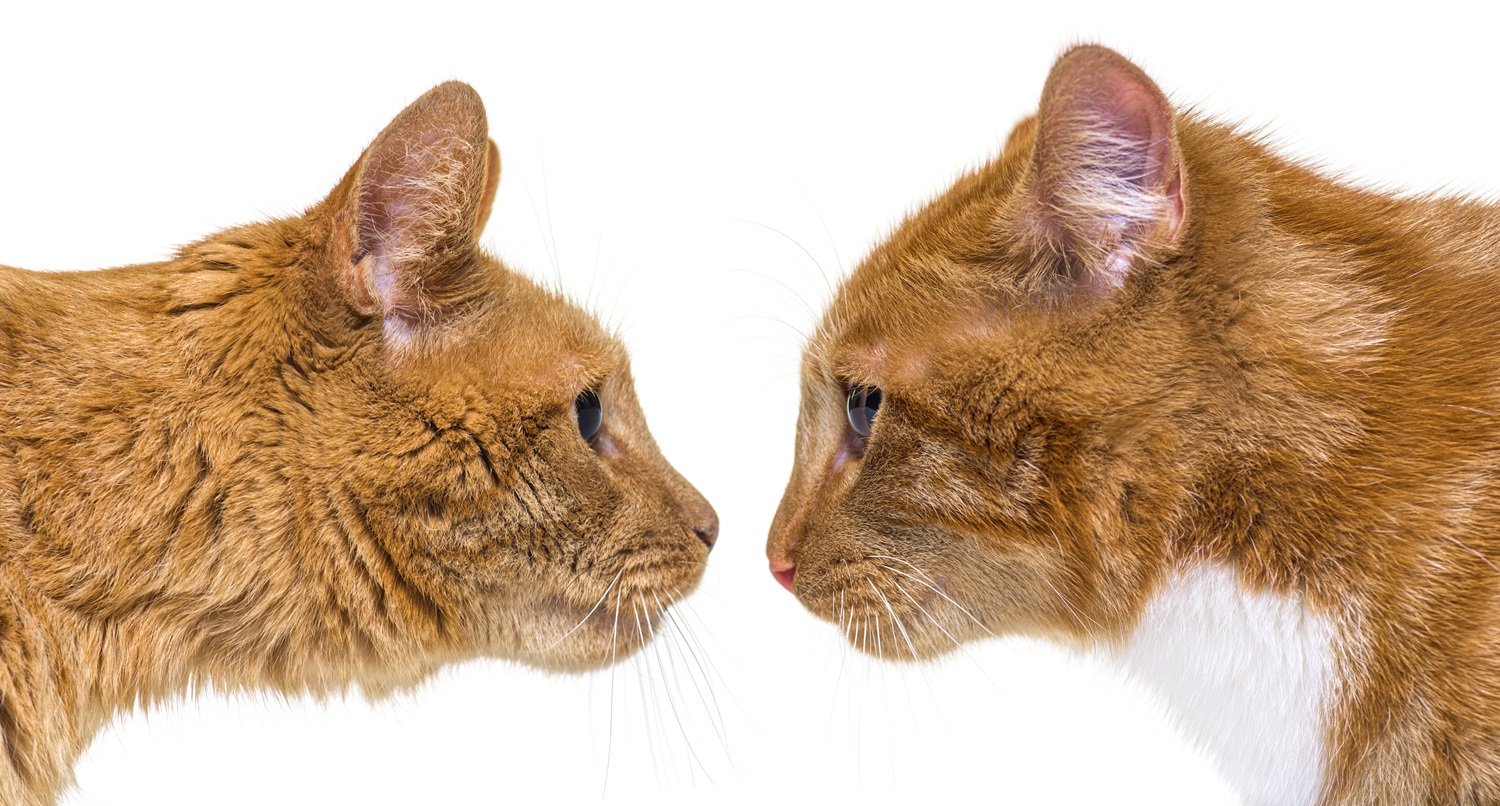
Coat: The Somali cat boasts a long, luxurious coat that’s soft to the touch. Their fur is dense and full, with a notable ruff around the neck and breeches, giving them an almost fox-like appearance.
Tail: One of the Somali’s most distinctive features is its bushy tail, which resembles that of a fox, both in fullness and movement.
Ears: Their large, almond-shaped ears are set wide apart, often with tufts of fur at the tips, adding to their wild, elegant look.
Eyes: Somali cats have large, expressive eyes that can range from green to copper, adding to their captivating expression.
Body: Despite their fluffy appearance, Somalis have a strong, muscular build, enabling their agile and graceful movements.
Abyssinian Cat
Coat: Abyssinians feature a short, fine coat that lies close to the body, known for its distinctive ticked pattern, where each hair has bands of color.
Tail: Their tails are slender and taper to a fine point, reflecting their sleek, athletic build.
Ears: Abyssinian cats have an alert, pointed ears that are broad at the base, contributing to their attentive and curious expression.
Eyes: Bright, almond-shaped eyes are a hallmark of the breed, with colors ranging from gold to green, complemented by a dark outline that enhances their striking gaze.
Body: They possess a light and athletic physique, with a slight arch to the back that showcases their agility and strength.
FAQs: Somali Cat vs Abyssinian Cat
1: What’s the main difference between Somali and Abyssinian cats?
The most noticeable difference is their coat; Somalis have long, fluffy coats, while Abyssinians have short, fine coats.
2: Do Somali cats require a lot of grooming?
Yes, due to their longer fur, Somali cats require regular brushing to prevent matting and tangles.
3: Are Abyssinian cats good for families with allergies?
No cat breed is truly hypoallergenic, but Abyssinians’ short coats may produce fewer allergens compared to fluffier breeds.
4: Which breed is more active, Somali Cat vs Abyssinian Cat?
Both breeds are highly active, but Abyssinians are particularly known for their high energy levels and curiosity.
5: Can Somali and Abyssinian cats live in small apartments?
Yes, both can adapt to apartment living, provided they have enough mental stimulation and physical activity.
6: Do Abyssinian cats get along with dogs?
Yes, Abyssinians are social and can get along with dogs if properly introduced.
7: Are Somali cats good with children?
Somali cats are generally good with children, thanks to their playful and gentle nature.
8: How long do Somali and Abyssinian cats live?
Both breeds can live 12–15 years or more with proper care.
9: Do Somali cats like to be held?
Somalis enjoy affection and can be lap cats, but this varies by individual temperament.
10: Are Abyssinian cats loud?
Abyssinians are not particularly loud; they have a moderate vocalization level.
11: What colors do Somali cats come in?
Somali cats are often seen in ruddy, red, blue, and fawn, similar to Abyssinians.
12: Is the Abyssinian cat breed expensive?
Abyssinians can be expensive, especially from reputable breeders with pedigreed lines.
13: Do Somali cats have health issues?
Like all breeds, they can have genetic health issues but are generally healthy with proper care.
14: Can Abyssinian cats be left alone?
Abyssinians prefer companionship and may not do well if left alone for extended periods.
15: What’s the best diet for a Somali cat?
A high-quality diet suited to their age, size, and activity level is recommended.
16: Are Abyssinians easy to train?
Yes, their intelligence makes Abyssinians relatively easy to train.
17: Do Somali cats shed a lot?
Their longer fur means Somalis can shed quite a bit, especially seasonally.
18: Can Abyssinian cats go outside?
It’s safest to keep them indoors, but supervised outdoor access or walks can be beneficial.
19: How social are Somali cats?
Somali cats are very social and thrive on interaction with their human families.
20: Do Somali Cat vs Abyssinian Cat need a companion?
They enjoy the company of humans and other pets, but whether they need a companion varies according to the individual’s social needs.
References and External Links
The Cat Fanciers’ Association (CFA) Provides comprehensive breed profiles, care guidelines, and show information for both Somali and Abyssinian cats.
The International Cat Association (TICA) Offers detailed descriptions and standards for a wide range of cat breeds, including Somalis and Abyssinians.
Abyssinian Cat Club: Focuses on the Abyssinian breed, offering resources for breeders, owners, and enthusiasts looking to learn more or connect with the Abyssinian cat community.
Somali Cat Club: Dedicated to Somali cats, this club provides information on breed standards, health, and welfare, as well as opportunities to engage with other Somali cat lovers.
Petfinder: An excellent resource for adopting Abyssinian or Somali cats, offering listings from reputable shelters and rescue organizations.
Vetstreet: Features articles on cat care, behavior, and health, with breed-specific advice that can be useful for Somali and Abyssinian cat owners.