
Welcome to the Pet Breed Hub! Today, we’re diving into the fascinating world of Abyssinian cats. These feline friends aren’t just adorable; they’re history in a fur coat! Let’s explore together in a fun, easy-to-read style. Remember, if you’ve got any questions or stories to share, reach out at admin@toppetbreeds.com. Now, let’s get started!

🧬 Understanding the Abyssinian’s Personality
| Trait | Description |
|---|---|
| Affectionate | Loves cuddles and attention |
| Curious | Always exploring |
| Intelligent | Quick learners |
| Energetic | Full of life and playful |
| Sociable | Loves company |
Abyssinian Cat Temperament
🏡 Is an Abyssinian Right for Your Home?
Deciding whether an Abyssinian cat is the right fit for your home involves considering various factors, as these energetic and engaging cats have specific needs. Here’s a guide to help you determine if an Abyssinian aligns with your lifestyle and home environment:

1. Activity Level and Engagement
- Abyssinians are highly active and playful. They thrive in environments where they can explore, climb, and play.
- If you enjoy interactive play with pets and can provide stimulating toys and activities, an Abyssinian would be a great match.
2. Time and Attention
- These cats crave attention and interaction. They are not the type to be left alone for long periods.
- If you have a busy lifestyle or frequent absences, consider if you can provide enough interaction or think about a companion pet to keep your Abyssinian company.
3. Space Considerations
- While Abyssinians can adapt to apartment living, they need ample space to jump and climb. Vertical space, like cat trees, is highly beneficial.
- Ensure you have or can create a cat-friendly environment with safe, accessible high places.
4. Family Dynamics
- Abyssinians are generally good with children and other pets, especially if raised with them. They are social and enjoy being part of a family.
- If you have young children or other pets, consider how an Abyssinian would fit into this dynamic. They do best in environments where they are treated gently and respectfully.
5. Grooming and Health Care
- This breed requires minimal grooming, but regular brushing helps minimise shedding and hairballs.
- Be prepared for routine veterinary care, including vaccinations, dental care, and screenings for common health issues like renal amyloidosis.
6. Noise Levels
- Abyssinians are moderately vocal. They make soft, cooing noises rather than loud meows, making them suitable for environments where excessive noise is a concern.
7. Allergy Considerations
- If someone in your household has allergies, be aware that Abyssinians, like all cats, can trigger allergic reactions.
8. Financial Commitment
- Owning a pet comes with financial responsibilities, including food, healthcare, and emergency medical expenses.
9. Long-Term Commitment
- Abyssinians can live for 9 to 15 years, sometimes longer. Consider if you are ready for the long-term commitment of caring for a cat.
10. Personality Match
- If you appreciate a cat with a playful, curious, and affectionate nature, an Abyssinian could be a perfect addition to your home.
🌈 Colours and Patterns

The Abyssinian cat is celebrated not just for its playful and affectionate temperament but also for its distinctive and elegant coat colours and patterns. Here’s a detailed look at the variety and beauty of the Abyssinian cat’s coat:
Ticked Tabby Pattern
- Unique Feature: Abyssinians are famous for their “ticked” or “agouti” coat pattern. This means each hair shaft has alternating light and dark bands, giving it a speckled appearance.
- Effect: This ticking creates a coat that seems to shimmer and change as the cat moves, contributing to their wild and exotic look.
Main Coat Colours
-
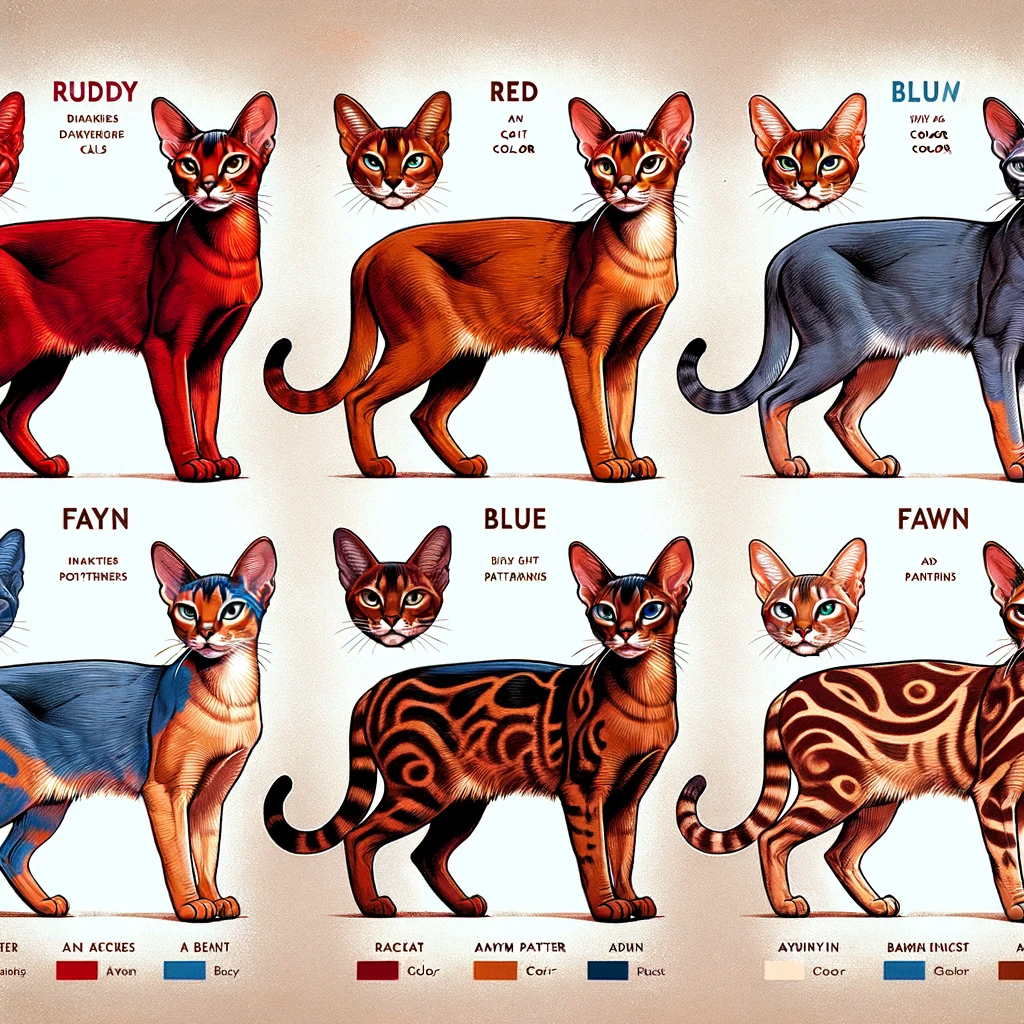
Ruddy (Usual):
- Description: Also known as ‘usual’ in some regions, this is the most common and traditional color. It features a warm, burnished shade of deep orange or reddish-brown, with ticking in black or dark brown.
- Ticking: The individual hairs are banded with black or dark brown, contrasting with the rich, coppery base color.
- Red (Sorrel/Cinnamon):
- Description: This colour is a lighter, more coppery version of ruddy. The base coat is a bright apricot colour.
- Ticking: The ticking is in various shades of chocolate and cinnamon, providing a vibrant contrast.
- Blue:
- Description: This is a dilute version of the ruddy. It presents a warm beige or slate grey base colour.
- Ticking: The hairs are tipped with dark grey or steel blue, giving a soft, elegant appearance.
- Fawn:
- Description: Fawn Abyssinians have a light, warm, pinkish-beige base colour.
- Ticking: The ticking is in a light cocoa or dark cream, creating a delicate and subtle effect.
Rare Colors and Patterns
- Other colours, like lilac and cream, have emerged through selective breeding but are less common.
- Some Abyssinians may show faint tabby markings on their legs, tail, and forehead, but these are typically less pronounced than in other tabby cats.
Coat Texture and Quality
- Texture: The coat is short and dense, with a fine, silky texture that feels pleasant to the touch.
- Glossy Sheen: The ticking pattern on Abyssinians’ coats enhances their natural sheen.
Eye Colour
- Abyssinians typically have almond-shaped eyes in shades of green, gold, or hazel, which complement their coat colours beautifully.
📚 History and Origin
The Abyssinian cat, with its distinctively ticked coat and elegant appearance, has a history shrouded in mystery and allure. Here’s a glimpse into the intriguing origins and history of this beloved breed:

Ancient Roots
- Myth vs. Reality: While often depicted in ancient Egyptian art and believed to have origins in Egypt, there’s no definitive proof that Abyssinians are direct descendants of the cats worshipped in ancient Egypt.
- First Documented Appearance: The breed as we know it today first appeared in Great Britain in the late 19th century. The earliest Abyssinians were shown in cat shows in England in 1871.
Genetic Studies and Theories
- Southeast Asian and Indian Ocean Origins: Genetic studies suggest that the Abyssinian’s ancestors might have come from the coast of the Indian Ocean and parts of Southeast Asia.
- British Breeding Programmes: The development of the breed in England in the 19th century played a crucial role in defining the modern Abyssinian. The breed was refined and popularised through selective breeding programmes.
World War II Impact
- Near Extinction: The Abyssinian breed nearly faced extinction during World War II due to severe food shortages in Europe. After the war, breeding programmes were re-established, often involving cats imported from the United States.
Post-War Revival
- Global Popularity: Post-war breeding programmes in Britain and the United States helped revive the breed. Today, the Abyssinian is one of the most popular cat breeds in the United States and Europe.
Coat and Colour Development
- Unique Ticked Coat: The breed’s defining feature is its ticked coat, where individual hairs are banded with different colours. This characteristic likely developed in their ancestral homeland, contributing to their camouflage in natural settings.
- Colour Variations: Originally, the breed was known primarily for its ruddy coat but now includes a variety of colours like red, blue, and fawn, thanks to dedicated breeding efforts.
Cultural Significance
- Symbol of Exoticism and Elegance: Abyssinians have been revered for their elegant appearance and mysterious origins. They continue to captivate cat enthusiasts worldwide with their regal demeanour and playful personalities.
Continuing Popularity
- Consistent Breeding Standards: Breeders have worked to maintain the breed’s health, temperament, and unique physical characteristics, ensuring the Abyssinian’s enduring appeal.
🏥 Health and Wellness
The health and wellness of Abyssinian cats are of paramount importance for owners who want to ensure a long, happy life for their feline companions. Abyssinians are generally healthy, but like all breeds, they have specific health considerations to be aware of:
Common Health Concerns
Renal amyloidosis is a condition where protein deposits affect the kidneys. It’s somewhat more common in Abyssinians and can lead to kidney failure.
Progressive Retinal Atrophy (PRA): A genetic condition leading to blindness Responsible breeding practises have reduced its prevalence, but it’s still a concern.
Hypertrophic cardiomyopathy (HCM) is a form of heart disease where the heart muscle thickens. It’s seen in Abyssinians but can be managed with proper veterinary care.
Patellar luxation is a condition where the kneecap slips out of place, sometimes seen in Abyssinians.
Gingivitis and Periodontal Disease: Dental issues are common; regular dental care is important.
Pyruvate Kinase Deficiency (PKD): A hereditary condition affecting red blood cells, leading to anaemia Responsible breeding has reduced its incidence.
Preventive Care and Regular Check-ups
- Regular veterinary check-ups are crucial to catching any health issues early.
- Routine vaccinations and parasite control are essential for Abyssinian cats.
- Dental hygiene is vital; regular brushing and veterinary dental check-ups can prevent serious dental diseases.
Diet and Nutrition
- A balanced diet is key to maintaining an Abyssinian’s health. High-quality cat food appropriate for their age, size, and activity level is recommended.
- Fresh water should always be available.
Exercise and Mental Stimulation
- Abyssinians are active and intelligent, requiring both physical exercise and mental stimulation.
- Interactive play, puzzle toys, and safe outdoor access or supervised leash walks can keep them engaged and healthy.
Grooming
- Regular grooming, despite their short coats, helps to remove loose hairs and maintain skin health.
- Nail trimming and ear cleaning should be part of their grooming routine.
Environmental Enrichment
- Providing a stimulating environment with climbing trees, scratching posts, and safe high places is important for their well-being.
- Abyssinians cat enjoy interactive play, so spend time daily engaging with them.
Monitoring for Signs of Illness
- Be vigilant for changes in behaviour, appetite, weight, and litter box habits, as these can be early signs of health issues.
Genetic Testing and Responsible Breeding
- Genetic testing of breeding cats can help prevent the transmission of hereditary diseases.
- Purchasing from a responsible breeder who conducts health screenings can reduce the risk of genetic health problems.
🐾FAQs About Abyssinian Cat
1. Where Do Abyssinian Cats Come From?
Abyssinians might look like they walked straight out of ancient Egypt, but their true origins are a bit of a mystery! Some say they’re from Southeast Asia or the Indian Ocean coast.
2. What’s Special About Their Fur?
Their fur isn’t just soft; it’s ticked! This means each hair has bands of colour, giving them a unique, wild look.
3. How Do They Act Around People?
Think of them as the life of the party! Abyssinians are social, love to play, and adore being the centre of attention.
4. Are Abyssinians Good with Kids and Other Pets?
Absolutely! They’re social butterflies who get along well with respectful kids and other pets.
5. How Much Grooming Do They Need?
Not much! Their short coat needs minimal grooming, making them a low-maintenance choice.
6. What’s Their Lifespan?
A well-cared-for Abyssinian can live 9–15 years, sometimes even longer!
7. Are They Prone to Any Health Issues?
Like all breeds, they have some health predispositions, such as renal amyloidosis. Regular vet check-ups are key!
8. How active Are They?
Think of them as little athletes; they love to climb, jump, and explore.
9. Can They Live in Apartments?
Yes, but they need space to play and explore. Think vertical with cat trees!
10. What Should I Feed My Abyssinian?
A balanced diet is crucial. Consult your vet for the best options.
Conclusion
Abyssinian cats are more than just pets; they’re companions with a rich history and a playful heart. If you’re ready for a lively, affectionate feline friend, an Abyssinian might just be your perfect match!
References and External Links
General Information about Abyssinian Cats
The Cat Fanciers’ Association, Abyssinian Page: For a comprehensive overview and official breed standards, visit the CFA’s Abyssinian Page.
International Cat Care: Abyssinian Cat: Get detailed insights into the breed’s characteristics at International Cat Care – Abyssinian.
Health and Wellness
Cornell University College of Veterinary Medicine: For in-depth information on health concerns specific to Abyssinian cats, explore Cornell’s Feline Health Topics.Journal of Feline Medicine and Surgery: Stay updated on the latest research and studies on feline health at the Journal of Feline Medicine and Surgery.
Nutrition and Diet
American Society for the Prevention of Cruelty to Animals: Nutrition Tips: For guidelines on proper feline nutrition, visit the ASPCA’s Nutrition Tips.
Cat Behaviour and Care
Humane Society’s Cat Behaviour Tips: Understand more about cat behaviour and how to interact with your Abyssinian at Humane Society’s Cat Behavior Tips.
Additional Resources on Top Pet Breed
Choosing the Right Cat Breed: Learn how to select the best cat breed for your lifestyle at Top Pet Breed – Choosing the Right Cat Breed.
Cat Care Essentials: Discover essential care tips for your new Abyssinian at Top Pet Breed – Cat Care Essentials.