
Welcome to Pet Breed Hub‘s exclusive peek into the enchanting world of Flying Squirrels! These remarkable creatures, with their unique ability to glide through the air, are a captivating topic for any animal enthusiast. Let’s embark on an unforgettable journey to uncover the secrets of these adorable aerobatic marvels.

Introduction to Flying Squirrels
What’s So Special?
Unlike their ground-loving cousins, flying squirrels have mastered the art of gliding. They leap from trees, spreading their limbs to reveal a hidden surprise – a thin membrane called the ‘patagium.’ This special skin flap turns them into furry kites, letting them glide gracefully from tree to tree.
A Peek Into Their Lives
Flying squirrels are the secret night-time acrobats of the forest. When the sun sets, these nocturnal critters come to life. From foraging for their favorite foods like nuts and fruits to playing and socializing with their squirrel friends, they’re a bustling bundle of activity under the moonlight.
Why Should We Care?
Apart from their obvious cuteness, flying squirrels play a crucial role in their ecosystems. They’re seed dispersers, tree pruners, and even a vital food source for other wildlife. Understanding these aerial artists helps us appreciate the delicate balance of our natural world.
Discover the Diverse Species of Flying Squirrels
1. Northern Flying Squirrel (Glaucomys sabrinus)
Found in the forests of North America, this species is known for its brown and gray fur and enjoys a diet rich in fungi.
2. Southern Flying Squirrel (Glaucomys volans)
Smaller than its northern cousin, this species inhabits the eastern parts of the United States and is recognized by its cream-colored belly.
3. Giant Flying Squirrel (Petaurista sp.)
Residing in Asia, these are the larger members of the flying squirrel family, known for their impressive size and varied diet, including leaves and small animals.
4. Red Giant Flying Squirrel (Petaurista petaurista)
Native to South Asia, this species boasts a reddish-brown coat and is one of the most visually striking of the flying squirrels.
5. Japanese Dwarf Flying Squirrel (Pteromys momonga):
Found in Japan, this adorable and tiny species is known for its fluffy fur and playful nature.
6. Siberian Flying Squirrel (Pteromys volans)
Inhabiting parts of Russia and Finland, this species is notable for its charming face and grey fur.

Anatomy of a Glider: Unveiling the Secrets of Flying Squirrels
When it comes to the anatomy of flying squirrels, these remarkable creatures are a testament to nature’s ingenuity. Let’s delve into the key features that make these animals such skilled gliders.
1. The Patagium
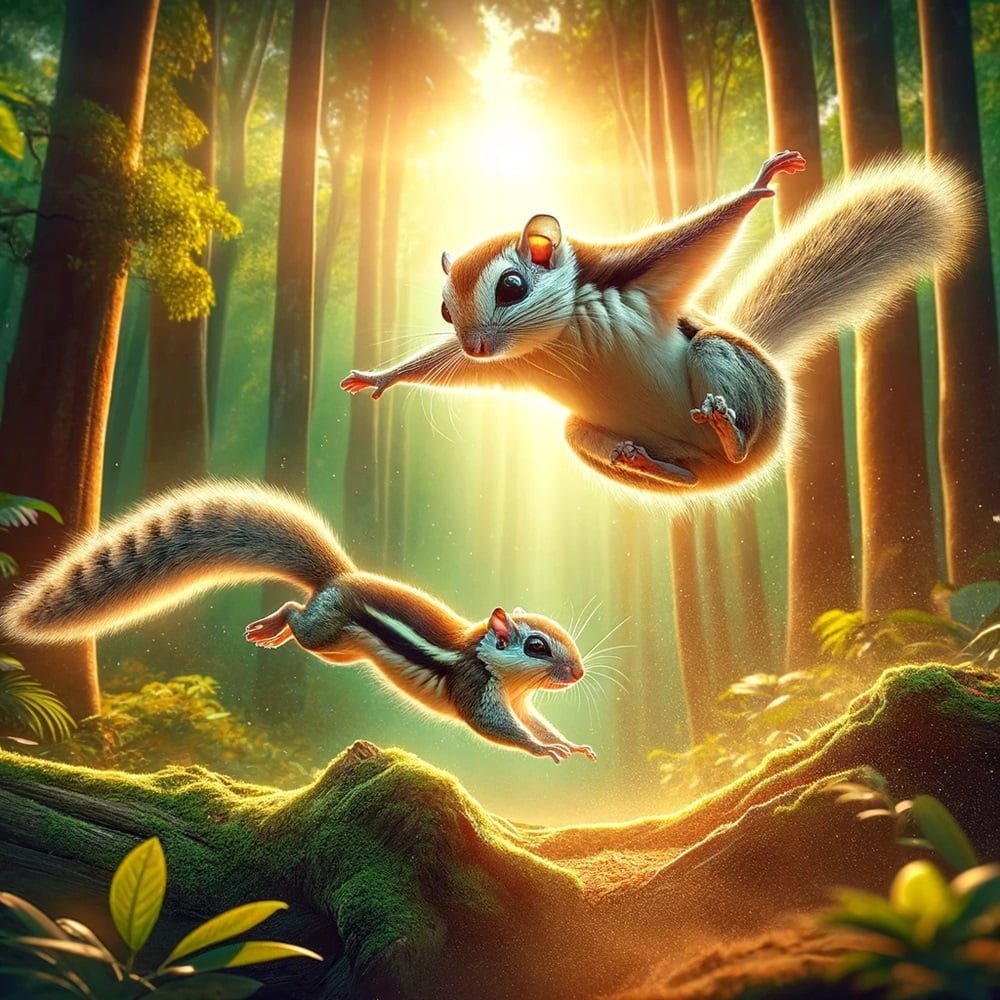
The most distinctive feature of a flying squirrel is the patagium, a stretchy, skin-like membrane that extends between their front and back legs. When the squirrel leaps and extends its limbs, this membrane stretches out, creating a wing-like surface. It’s this unique structure that allows them to glide effortlessly from tree to tree.
2. Tail
Their tail is not just for balance; it acts as a rudder in mid-air, helping them steer and stabilize as they glide. The tail’s flat shape and muscular control are crucial for making those pinpoint landings on tree trunks.
3. Limb Structure
Strong, flexible limbs are essential for launching and maneuvering during glides. The bones and muscles of flying squirrels are adapted for both strength and elasticity, giving them the power to leap and the agility to navigate through the air.
4. Eyes
Flying squirrels possess large, forward-facing eyes that provide excellent night vision. This is crucial, as most species are nocturnal, and they need to see clearly during their nighttime glides.
5. Fur and Camouflage
Their fur is typically soft and dense, providing insulation for colder nights. The coloring often blends with their woodland habitat, offering camouflage from predators.
Habitat and Lifestyle of Flying Squirrels
Flying squirrels, with their unique gliding abilities, have intriguing habitats and lifestyles that reflect their adaptability and ecological roles.
Habitats: Varied and Widespread
Forest Dwellers: Most flying squirrels prefer wooded areas, thriving in both deciduous and coniferous forests. They often choose habitats with a mix of tree species, providing ample food sources and gliding opportunities.
Urban Adaptation: Some species, like the Southern Flying Squirrel, are known to adapt to urban environments, finding refuge in parks and backyard gardens.
Nesting Habits
Tree Dwellers: Flying squirrels nest in tree holes or build nests called ‘dreys’ in the branches of trees. These nests are crucial for protection against predators and harsh weather conditions.
Social Structures: Unlike many other squirrel species, flying squirrels can be quite social. In colder regions, they are known to share nests to conserve body heat.
Lifestyle Characteristics
Nocturnal Creatures: They are primarily active at night, which helps them avoid daytime predators and competition for food.
Gliding Acrobatics: Their most famous feature, gliding, is not just a mode of travel but also an escape mechanism from predators. These glides can cover distances of over 150 feet!
Diet: Their diet mainly consists of nuts, seeds, fruits, and insects. Some species also consume small birds, eggs, and even fungi.
Communication: They communicate with each other using a variety of vocalizations and scent markings.
Diet of Flying Squirrels: A Gourmet in the Treetops
Flying squirrels have a varied and interesting diet that plays a crucial role in their survival and the ecosystem they inhabit. Here’s a glimpse into what these aerial acrobats feast on:
1. Nuts and Seeds
These are staples in the diet of flying squirrels. Acorns, hickory nuts, and the seeds of other trees provide them with essential fats and proteins.
2. Fruits and Berries
Flying squirrels also enjoy a variety of fruits and berries, which are vital sources of vitamins and hydration. Their choices often depend on seasonal availability.
3. Insects and Other Small Creatures
To supplement their diet, flying squirrels will eat insects, small birds, bird eggs, and even small rodents. This protein-rich diet component is especially important for nursing mothers and growing juveniles.
4. Fungi and Tree Sap
Some species of flying squirrels, particularly those in North American forests, are known to consume fungi, which can include both tree and ground varieties. They are also attracted to tree sap, a sweet and energy-rich food source.
5. Ecological Impact
Their feeding habits play a significant role in seed dispersal and in controlling insect populations, making them a key part of their ecological communities.
Caring for a Flying Squirrel: Essential Tips and Considerations
Providing care for a flying squirrel involves understanding their specific needs and natural behaviors. Here are key aspects to consider for anyone thinking about welcoming these unique creatures into their home:
1. Spacious and Secure Enclosure
Space to Glide: As natural gliders, flying squirrels require a large enclosure that allows them to leap and glide freely. Vertical space is particularly important.
Safe Materials: The enclosure should be made of safe, non-toxic materials, with secure latches to prevent escape.
2. Diet and Nutrition
Balanced Diet: Their diet should mimic their natural food sources, including a variety of nuts, seeds, fruits, and vegetables.
Supplements: Occasionally, they may need supplements, particularly calcium and vitamin D3, to prevent deficiencies.
3. Environmental Enrichment
Climbing Structures: Install branches, ropes, and shelves for climbing and gliding.
Hiding Spots: Provide nesting boxes or soft cloths for them to snuggle and hide, mimicking their natural nesting behavior.
4. Social Interaction
Companionship: Flying squirrels are social animals and may benefit from having a companion, though introductions should be done carefully.
Human Interaction: Regular, gentle interaction with humans can help them become more tame and accustomed to handling.
5. Health Care
Regular Check-Ups: Routine veterinary care from a vet experienced with exotic animals is essential to monitor their health.
Monitoring for Illness: Be vigilant for signs of illness, such as changes in eating habits, lethargy, or unusual behavior.
6. Legal Considerations
Check Local Laws: Ensure that keeping a flying squirrel as a pet is legal in your area, as laws and regulations vary.
Fascinating Facts About Flying Squirrels
Flying squirrels are captivating creatures with a set of unique characteristics and abilities that set them apart in the animal kingdom. Here are some fascinating facts about these amazing animals:
1. Masters of Gliding
Impressive Distance: Flying squirrels can glide for distances of over 150 feet (45 meters). This is made possible by their patagium, the membrane that stretches from wrist to ankle.
Controlled Flight: They use their tail as a rudder to steer and control their glide, adjusting their body angle to manage speed and direction.
2. Nocturnal Vision
Their large eyes are adapted for night vision, helping them to see clearly in the dark, which is essential for their nocturnal lifestyle.
3. Unique Communication
Flying squirrels communicate through a series of high-pitched chirps and chatters, especially during social interactions and to warn others of danger.
4. Temperature Regulation
During colder months, they huddle together for warmth. This social behavior is not only for companionship but also an important survival strategy.
5. Varied Habitats
While commonly found in wooded areas, some species have adapted to urban environments, showcasing their adaptability and resilience.
6. Sensitive Whiskers
Their whiskers are highly sensitive, helping them navigate and sense their surroundings, especially useful when gliding at night.
FAQS About Flying Squirrels
1. Can Flying Squirrels Actually Fly?
No, they can’t fly like birds. They glide from one tree to another using the patagium, a skin membrane, to catch the air.
2. How Far Can a Flying Squirrel Glide?
Flying squirrels can glide up to 150 feet (45 meters), depending on their altitude and wind conditions.
3. What Do Flying Squirrels Eat?
Their diet includes nuts, seeds, fruits, insects, and occasionally small birds or eggs.
4. Are Flying Squirrels Nocturnal?
Yes, they are primarily active at night, which helps them avoid predators.
5. Can I Keep a Flying Squirrel as a Pet?
Yes, in some places, but check local laws first as it’s illegal in some areas. They require special care and a suitable environment.
6. How Long Do Flying Squirrels Live?
In the wild, they typically live around 6 years but can live longer in captivity with proper care.
7. How Do Flying Squirrels Communicate?
They communicate using a variety of sounds, like chirps and also use body language.
8. What Predators Do Flying Squirrels Face?
Common predators include owls, hawks, snakes, and raccoons.
9. How Do Flying Squirrels Help the Environment?
They play a role in seed dispersal, helping to maintain healthy forests.
10. Are Flying Squirrels Endangered?
Some species are considered endangered due to habitat loss and other environmental factors.
Conclusion
Flying squirrels are more than just furry gliders; they’re an integral part of our ecosystem. As we learn more about them, we can better appreciate and protect these fascinating creatures.
External Links
Smithsonian’s National Zoo & Conservation Biology Institute: Features extensive information on the biology and conservation efforts of flying squirrels.
International Union for Conservation of Nature (IUCN): Offers detailed species profiles, including the conservation status of different flying squirrel species.
Animal Diversity Web (University of Michigan): Provides comprehensive biological and ecological information on various species of flying squirrels.
The Mammal Society: Offers insights into the behavior and lifestyle of flying squirrels, along with conservation guidelines.