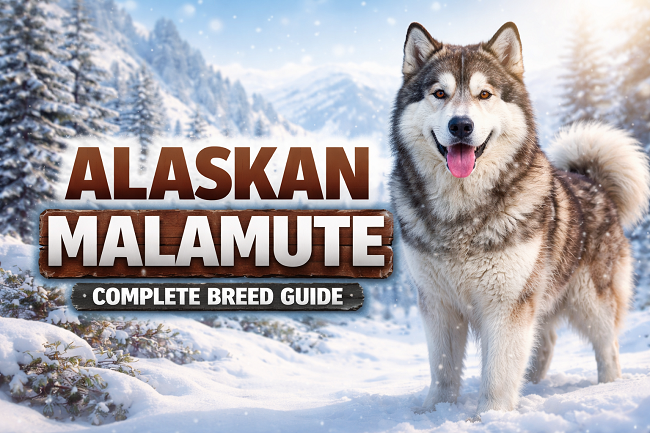





The Alaskan Malamute is one of the oldest and most powerful Arctic dog breeds in the world. This magnificent dog is widely known for its strength, endurance, loyalty, and wolf-like appearance. Originally bred to pull heavy sleds across long distances in harsh Arctic climates, the Alaskan Malamute has played an important role in human survival in the cold northern regions for thousands of years.
Today, the breed is admired not only for its working abilities but also for its friendly personality and striking beauty. Many dog lovers consider the Alaskan Malamute a symbol of resilience, companionship, and natural power. However, despite its impressive appearance, the breed requires proper care, training, and understanding from its owners.
The Ancient History of the Alaskan Malamute
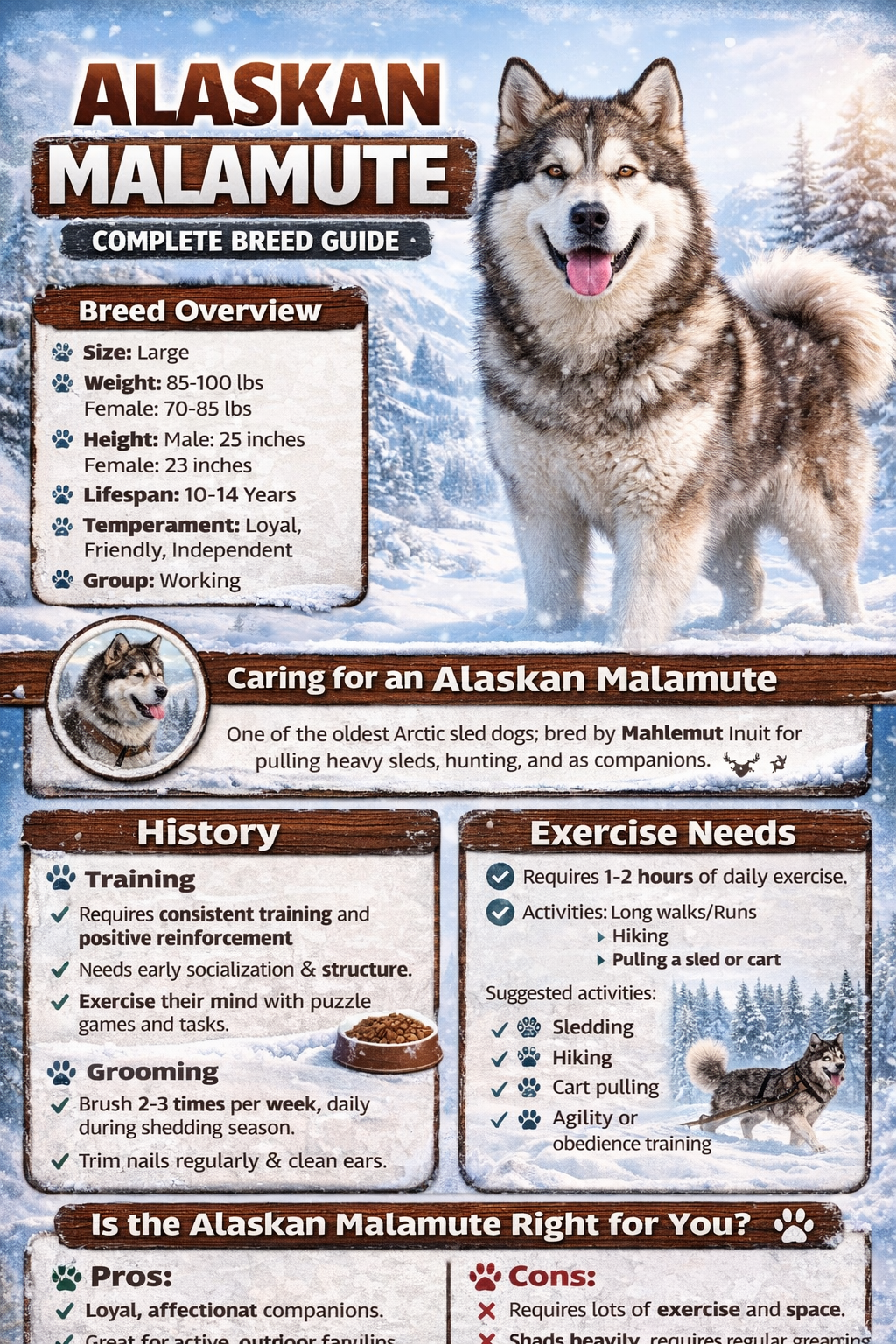
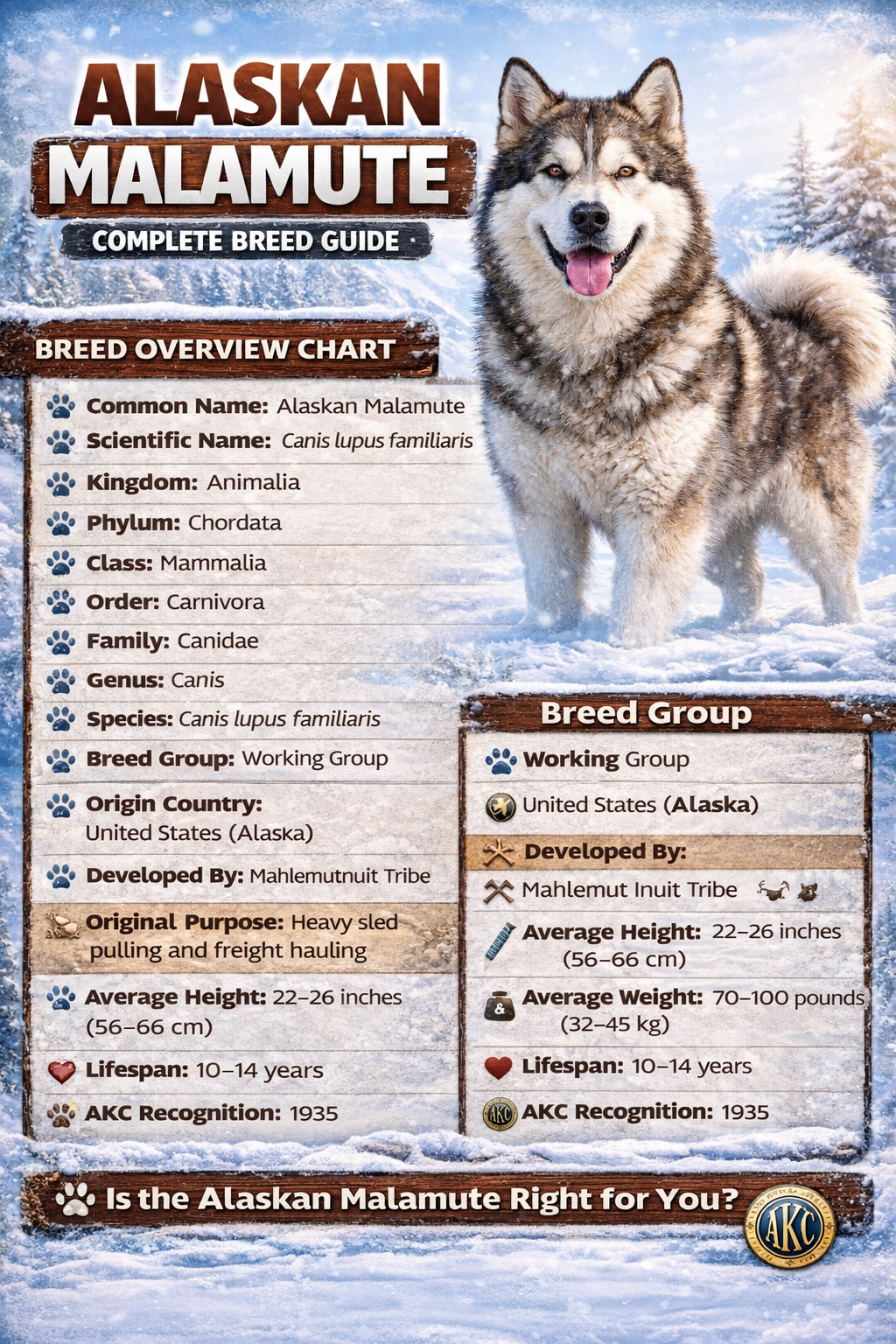
The Alaskan Malamute has a long and fascinating history that goes back thousands of years. The breed is believed to have originated in the Arctic regions of Alaska, where it was developed by the Mahlemut Inuit tribe. These indigenous people depended heavily on strong working dogs to survive in extreme winter conditions.
The Mahlemut people bred these dogs for strength, endurance, and the ability to haul heavy loads over long distances. Unlike some sled dogs that were designed for speed, the Alaskan Malamute was specifically developed for power and stamina. These dogs were capable of pulling heavy sleds filled with supplies, food, and equipment across frozen landscapes.
Because of their importance to survival, Malamutes were treated with great respect by the Mahlemut people. They were often kept close to the family and played an essential role in daily life. Their ability to hunt seals, protect camps, and transport goods made them invaluable companions in the harsh Arctic environment.
The breed gained wider attention during the Klondike Gold Rush in the late 1800s, when prospectors needed strong sled dogs to transport equipment and supplies. Many Malamutes were used during this time, but the breed also faced crossbreeding that threatened its purity.
Physical Appearance and Breed Characteristics
The Alaskan Malamute is a large, powerful dog with a strong and athletic build. Its physical features reflect its working heritage and ability to thrive in cold climates.
Size and Weight
Adult Alaskan Malamutes are considered large dogs. On average:
Male Malamutes typically weigh between 85 and 100 pounds.
Female Malamutes usually weigh between 70 and 85 pounds.
Their height ranges from 22 to 26 inches at the shoulder, although some individuals may be slightly larger.
Their muscular bodies and strong bone structure allow them to pull heavy sleds and work in demanding conditions.
Coat and Fur
One of the most distinctive features of the Alaskan Malamute is its thick double coat. This coat protects the dog from extremely cold temperatures.
The coat consists of two layers:
Outer coat: A coarse and weather-resistant layer.
Undercoat: A dense, woolly layer that provides insulation.
The breed commonly appears in colors such as:
Gray and white
Black and white
Red and white
Sable and white
Seal and white
Their facial markings often resemble those of wolves, giving them a striking and majestic appearance.
Tail and Ears
The Malamute’s tail is heavily furred and curls gently over its back, which helps protect the dog from cold weather. Their ears are triangular and stand upright, contributing to their alert expression.
Temperament
Despite their intimidating size and wolf-like appearance, Alaskan Malamutes are known for their friendly and affectionate nature. They tend to be highly social dogs that enjoy spending time with their human families.
Friendly and Loyal
Malamutes are generally loving and loyal companions. They often form strong bonds with their owners and enjoy participating in family activities.
Unlike some guard dogs, Malamutes are usually not aggressive toward humans. In fact, they are often quite friendly even with strangers.
Independent Thinking
Because they were bred to work in teams with minimal human guidance, Malamutes are naturally independent thinkers. This trait can sometimes make training more challenging.
They may choose to follow commands only when they see a clear reason to do so. Therefore, consistent training and leadership are essential.
High Energy Levels
The breed has a high level of energy and requires regular physical activity. Without enough exercise, Malamutes may become bored and develop destructive behaviors.
Long walks, hikes, and outdoor play are ideal for keeping them physically and mentally stimulated.
Pack Mentality
Malamutes are pack animals and usually enjoy being around other dogs. However, some individuals may show dominance toward dogs of the same sex.
Training and Socialization
Training an Alaskan Malamute requires patience, consistency, and positive reinforcement. Because of their intelligence and independence, they respond best to structured training methods.
Start Training Early
Puppy training should begin as early as possible. Early training helps establish boundaries and encourages good behavior.
Basic commands such as sit, stay, come, and heel should be introduced during puppyhood.
Positive Reinforcement
Malamutes respond best to positive reinforcement techniques such as:
Treat rewards
Praise
Playtime
Harsh training methods should be avoided, as they may cause the dog to become stubborn or resistant.
Socialization
Proper socialization helps Malamutes become well-adjusted adults. Puppies should be introduced to different people, animals, and environments during their early development.
Exercise Requirements
The Alaskan Malamute is a working breed that requires significant physical activity. These dogs were originally bred to travel long distances while pulling sleds, so they have remarkable stamina.
Daily exercise should include:
Long walks
Hiking
Running
Sled pulling or cart pulling
Interactive play
Experts often recommend at least one to two hours of exercise per day.
Grooming and Coat Maintenance
Because of their thick double coat, Alaskan Malamutes require regular grooming.
Brushing
The coat should be brushed two to three times per week to remove loose hair and prevent matting.
During seasonal shedding periods, known as “blowing the coat,” daily brushing may be required.
Bathing
Malamutes generally do not require frequent baths because their coat naturally repels dirt. Bathing every six to eight weeks is usually sufficient.
Nail Trimming and Ear Care
Routine nail trimming and ear cleaning should also be performed to maintain overall health.
Common Health Issues
Like all dog breeds, the Alaskan Malamute may be prone to certain health conditions. Responsible breeding and regular veterinary care can help reduce these risks.
Some common health issues include:
Hip Dysplasia
Hip dysplasia is a genetic condition that affects the hip joints. It can cause pain, mobility problems, and arthritis.
Hypothyroidism
This condition occurs when the thyroid gland does not produce enough hormones. Symptoms may include weight gain, lethargy, and hair loss.
Polyneuropathy
Polyneuropathy is a neurological disorder that affects the nerves and can lead to muscle weakness.
Eye Disorders
Certain eye conditions, such as cataracts and progressive retinal atrophy, may also occur in some Malamutes.
Regular veterinary checkups and genetic testing are important for maintaining the health of the breed.
Diet and Nutrition
A balanced diet is essential for maintaining the health and energy levels of an Alaskan Malamute.
High-quality dog food that contains protein, healthy fats, vitamins, and minerals should be provided.
Owners should also monitor portion sizes carefully, as Malamutes can be prone to weight gain if overfed.
Fresh water should always be available, especially after exercise.
Differences Between Alaskan Malamutes and Siberian Huskies
The Alaskan Malamute is often confused with the Siberian Husky because of their similar appearance. However, several differences exist between the two breeds.
Size: Malamutes are generally larger and heavier.
Purpose: Malamutes were bred for strength and hauling heavy loads, while Huskies were bred for speed and long-distance travel.
Temperament: Malamutes tend to be more independent, while Huskies are often more playful and energetic.
Understanding these differences can help potential owners choose the breed that best fits their lifestyle.
Frequently Asked Questions (FAQs)
Are Alaskan Malamutes good family dogs?
Yes, Alaskan Malamutes can be excellent family pets when properly trained and socialized. They are affectionate, loyal, and enjoy spending time with their families.
Do Alaskan Malamutes get along with other pets?
They can get along with other dogs, especially if raised together. However, their strong prey drive may make them less compatible with smaller animals.
How much exercise does an Alaskan Malamute need?
The breed requires at least one to two hours of exercise daily to stay healthy and happy.
Are Malamutes difficult to train?
They can be challenging for first-time dog owners due to their independent nature. Consistent training and leadership are important.
How long do Alaskan Malamutes live?
The average lifespan of an Alaskan Malamute is 10 to 14 years.
Reference Links
https://www.akc.org/dog-breeds/alaskan-malamute/
https://www.petmd.com/dog/breeds/alaskan-malamute
https://www.hillspet.com/dog-care/dog-breeds/alaskan-malamute
https://www.britannica.com/animal/Alaskan-malamute
https://www.akc.org/expert-advice/dog-breeds/alaskan-malamute-history/