




When it comes to dairy goats, the Alpine goat stands out as one of the most versatile, productive, and adaptable breeds in the world. Known for their impressive milk yield, strong constitution, and friendly nature, Alpine goats have become a popular choice for farmers, homesteaders, and dairy enthusiasts across the globe.
Whether you are looking to build a sustainable dairy operation, raise goats for personal milk supply, or simply enjoy their companionship, Alpine goats offer a remarkable balance of productivity and manageability. In this comprehensive guide, we will explore the Alpine goat in detail, covering its origins, physical traits, temperament, milk production, breeding, and care needs.
Origins
The Alpine goat traces its roots back to the rugged mountain regions of the French Alps, where it developed naturally as a hardy and resourceful animal. Living in a challenging environment, these goats adapted to steep terrains, variable weather, and limited forage, which shaped them into a breed with resilience, stamina, and a strong ability to thrive in diverse conditions. Their name is derived directly from their alpine homeland, which represents not only the geographic region of their development but also the resilience and hardiness that define the breed.
During the late 19th and early 20th centuries, Alpine goats were exported from France to other parts of Europe and later to North America. In the United States, they gained popularity quickly because of their impressive milk production compared to many native goat breeds.
Over time, selective breeding programs in America and other regions led to a specific line known as the American Alpine, which maintained the core qualities of the original French Alpine goats but displayed more variety in coat colors and patterns. Today, both French Alpines and American Alpines are recognized and valued, with slight differences between them in terms of physical appearance but with equally strong reputations for dairy excellence.
Physical Characteristics

Alpine goats are medium-to-large-sized animals that are well-proportioned and athletic. Their appearance is marked by elegance, sturdiness, and a distinctive upright posture.
Size and Weight: Mature does (females) typically weigh between 135 to 170 pounds, while bucks (males) are larger, often reaching 170 to 230 pounds. Their size is an advantage in dairy production, as it contributes to their capacity for consistent milk output.
Height: Adult does stand around 30 inches at the withers, while bucks can reach up to 34 inches or more.
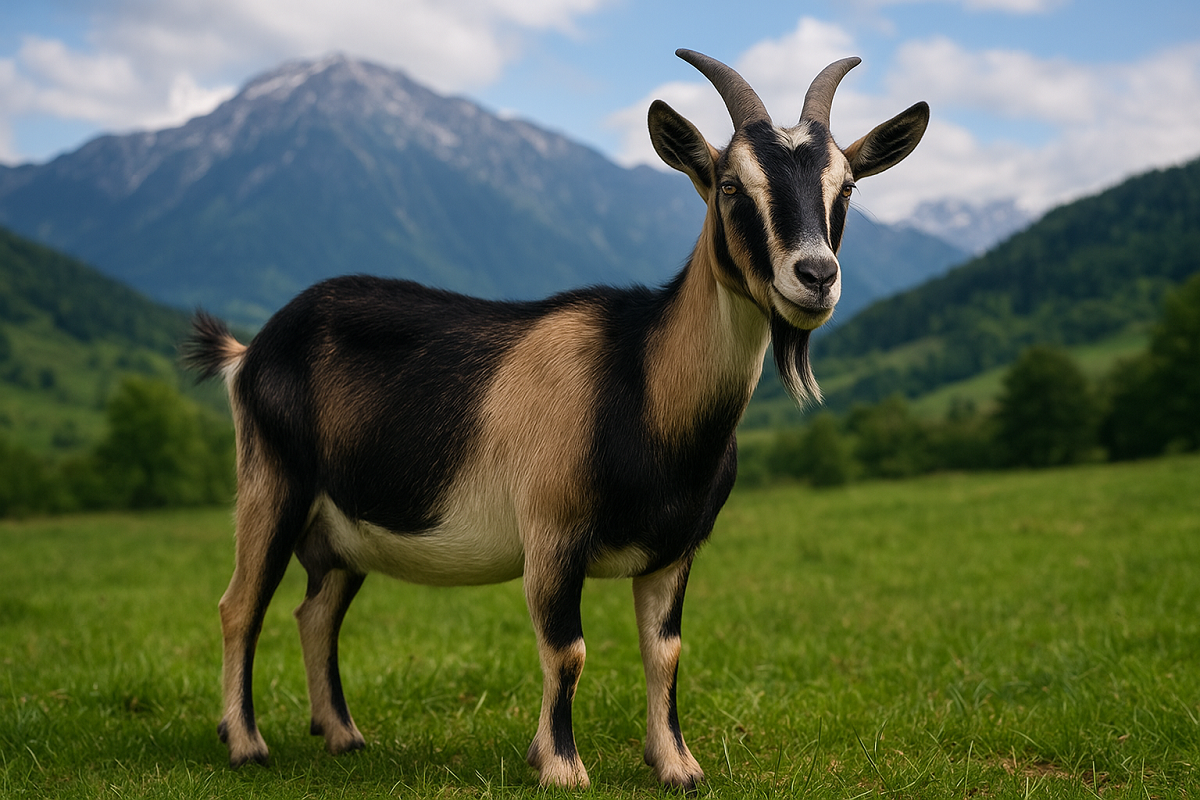
Coat and Colors: One of the unique features of Alpine goats is their wide range of coat colors. Unlike some breeds that are restricted to a single shade, Alpines can be found in patterns ranging from solid black or white to multicolored combinations. Common color patterns include cou blanc (white front, black back), cou clair (tan front, black back), and cou noir (black front, lighter back).
Head and Horns: They have straight profiles with erect ears that face forward. Both sexes can be horned or polled (naturally hornless), although many dairy goat owners choose to disbudding kids to prevent horn-related injuries.
Body Build: Alpine goats are known for their well-developed udders in females, which are high, well-attached, and symmetrical, ensuring efficient milking and long-term productivity. Their strong legs and well-structured hooves allow them to navigate rugged terrain with ease.
This combination of size, adaptability, and visual variety makes Alpine goats not only highly functional for farming but also aesthetically appealing to those who keep them.
Temperament
Alpine goats are often praised for their lively, friendly, and intelligent nature. They tend to be curious animals that enjoy exploring their surroundings, interacting with people, and socializing with other goats. Unlike some goat breeds that can be overly stubborn or shy, Alpines strike a balance that makes them manageable for both beginners and experienced goat keepers.
One of their defining traits is their energy and activity level. They are natural climbers and explorers, meaning they need plenty of space, enrichment, and secure fencing. A bored Alpine goat is more likely to engage in mischief, such as testing fences, chewing on structures, or finding creative ways to escape. However, with proper space and mental stimulation, their playful behavior becomes an enjoyable aspect of their personality.
They are also excellent mothers, known for their attentiveness to kids and generally smooth kidding (birthing) processes. Farmers appreciate Alpines not only for their milk production but also for their manageability, as they are less aggressive than some larger breeds and easier to handle during routine care and milking.
Milk Production and Dairy Qualities
The Alpine goat is considered one of the most productive dairy breeds in the world. Their milk yield is impressive, with some does producing more than 2,000 pounds of milk per lactation cycle under optimal conditions. On average, an Alpine doe produces between 1 to 1.5 gallons of milk per day during peak lactation.
Alpine goat milk has the following qualities:
Butterfat Content: Typically around 3.5%, which is lower than breeds like Nubians but higher than Saanens. This makes it an excellent choice for drinking, cooking, and cheesemaking. The moderate fat content strikes a balance between rich flavor and digestibility.
Protein: Their milk has a solid protein profile, making it suitable for producing a wide range of dairy products, including cheese, yogurt, and ice cream.
Taste: Many goat enthusiasts claim that Alpine milk has a clean, mild taste with little of the “goaty” flavor sometimes associated with other breeds. Proper handling and storage further enhance its appeal.
Because of their consistent production and balanced milk profile, Alpines are often chosen by small-scale dairy farms and homesteaders aiming to create artisanal dairy products. Their adaptability to different climates and environments ensures reliable production even under challenging conditions.
Breeding and Reproduction
Breeding Alpine goats requires knowledge of their reproductive cycle and care during pregnancy. They are seasonal breeders, with does typically coming into heat during the fall months. Heat cycles occur every 18 to 21 days, lasting about 24 to 48 hours. Signs of heat include restlessness, vocalization, tail wagging, and increased interest in bucks.
Gestation lasts approximately 150 days, and does usually give birth to twins, although singletons or triplets are not uncommon. Alpines are known for their strong maternal instincts and ease of kidding, making them favorable for breeders who want minimal complications.
When breeding, it is important to select bucks with desirable traits such as strong conformation, good temperament, and high milk production lineage. Careful breeding improves herd quality over generations and ensures consistent performance.
Feeding and Nutrition
Proper nutrition is essential to maintain the health, productivity, and longevity of Alpine goats. Being dairy goats, they have higher nutritional demands than meat or fiber breeds.
Forage and Pasture: Like all goats, Alpines thrive on high-quality forage, including grasses, legumes, and browse. They are natural foragers and enjoy eating shrubs, weeds, and leaves, which makes them excellent for land management and brush control.
Hay: During seasons when fresh forage is limited, hay becomes the primary feed source. Alfalfa hay is particularly beneficial for lactating does due to its higher protein and calcium content.
Grain Supplements: While forage should make up the majority of their diet, lactating does and growing kids may require grain supplementation to meet energy needs. Grains should be fed in moderation to avoid digestive issues.
Minerals: Goats need access to free-choice loose minerals formulated specifically for goats. Minerals help prevent deficiencies, improve coat health, and support reproductive performance.
Water: Clean, fresh water must be available at all times, as water intake directly impacts milk production.
A balanced diet tailored to their stage of life — whether growing kids, pregnant does, or lactating mothers — ensures healthy goats and optimal productivity.
Common Health Concerns
Like all livestock, Alpine goats are susceptible to certain health problems. Preventive care and routine management go a long way in maintaining a healthy herd.
Parasites: Internal parasites (worms) and external parasites (lice, mites) are common issues. Regular fecal testing, pasture rotation, and parasite control programs are necessary.
Hoof Health: Hooves should be trimmed every 4–6 weeks to prevent lameness, infections, and overgrowth.
Mastitis: As a dairy breed, Alpines can be prone to mastitis (udder infections). Clean milking practices and regular udder checks reduce risks.
Nutritional Deficiencies: Lack of proper minerals, especially copper and selenium, can lead to coat issues, poor fertility, and weak kids.
Vaccinations: Standard goat vaccinations, such as CDT (Clostridium perfringens types C & D and tetanus), should be administered annually.
A good relationship with a livestock veterinarian ensures timely treatment and guidance for herd health management.
Economic and Homestead Value
Alpine goats offer tremendous economic value for both small-scale homesteaders and larger dairy operations. Their consistent milk production, adaptability, and relatively low maintenance make them a cost-effective choice for sustainable farming.
For homesteaders, a small herd of Alpines can provide enough milk for family consumption, cheese-making, soap production, and even small-scale sales. Their versatility allows families to enjoy fresh dairy products while reducing reliance on commercial sources. For commercial dairy farms, Alpines contribute significantly to milk supply, especially when combined with other high-yield breeds.
Additionally, Alpine goats can be used for brush clearing, a valuable ecological service that reduces fire hazards and improves pasture quality. Their friendly nature also makes them suitable for educational farms, 4-H projects, and agritourism ventures.