
The Amazon river dolphin, also known as the pink river dolphin or boto, is one of the most enchanting creatures in the world. Found in the freshwater rivers and basins of South America, this unique dolphin captures the imagination with its playful nature, intelligence, and striking appearance. Unlike their ocean-dwelling relatives, Amazon river dolphins have adapted to life in the murky waters of the Amazon, making them a fascinating subject of study and admiration.
Breed Overview
| Characteristic | Details |
|---|---|
| Scientific Name | Inia geoffrensis |
| Common Names | Amazon River Dolphin, Pink River Dolphin, Boto |
| Class | Mammalia |
| Order | Cetacea |
| Family | Iniidae |
| Genus | Inia |
| Species | I. geoffrensis |
| Average Size | Length: 6.5–8 feet (2–2.5 meters) |
| Weight | 185–450 pounds (85–204 kilograms) |
| Coloration | Gray to pink, with brighter pink in older individuals |
| Lifespan | 15–30 years in the wild |
| Habitat | Freshwater rivers, lakes, and flooded forests of the Amazon and Orinoco basins |
| Diet | Carnivorous: fish, crustaceans, and small aquatic animals |
| Social Behavior | Mostly solitary or small groups of 2–4 |
| Reproductive Season | Rainy season (May–July) |
| Gestation Period | About 11 months |
| Litter Size | 1 calf |
| Conservation Status | Endangered (IUCN) |
| Population | Estimated at tens of thousands, but declining due to threats like habitat destruction and pollution |
| Geographic Range | Amazon River basin and Orinoco River basin in South America |
Physical Characteristics
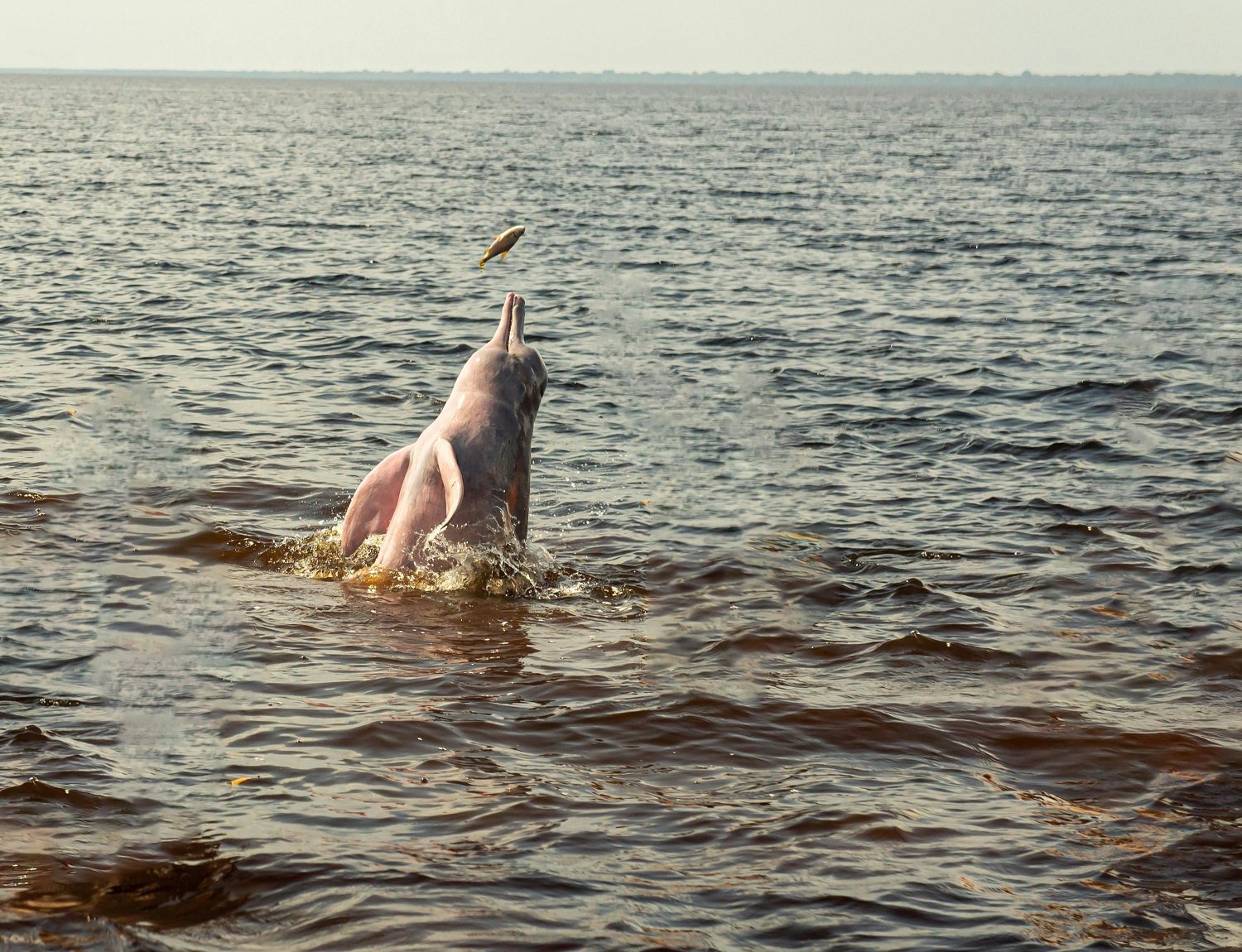
The Amazon river dolphin (Inia geoffrensis) is the largest freshwater dolphin in the world. Adults can grow up to 8 feet (2.5 meters) long and weigh up to 450 pounds (204 kilograms). One of its most notable features is its coloration, which ranges from light gray to vibrant pink.
The pink coloration becomes more pronounced as the dolphin ages. Males are typically more pink than females, with the brightest pink individuals often being older males. The exact reason for this coloration is still debated, but it might be due to capillary development or scars from rough play and fights.
These dolphins have long, slender snouts filled with up to 100 teeth, which help them catch a wide variety of prey. Their bodies are flexible, with unfused neck vertebrae that allow them to turn their heads 90 degrees, an adaptation that helps them navigate flooded forests and tight spaces.
Habitat
Amazon river dolphins are native to South America, where they inhabit the freshwater ecosystems of the Amazon and Orinoco river basins. They are found in rivers, tributaries, lakes, and flooded forests, often thriving in areas with dense vegetation.
During the rainy season, when the rivers flood vast areas of forest, the dolphins venture into these submerged areas to hunt and explore. Their ability to navigate through such complex environments is one of their most impressive adaptations.
[web_stories title=”true” excerpt=”false” author=”false” date=”false” archive_link=”true” archive_link_label=”” circle_size=”150″ sharp_corners=”false” image_alignment=”left” number_of_columns=”1″ number_of_stories=”3″ order=”DESC” orderby=”post_title” view=”carousel” /]
Behavior and Social Structure
Amazon river dolphins are intelligent and curious creatures. They are known for their playful behavior, often interacting with humans and other animals. Unlike oceanic dolphins, they are usually solitary or found in small groups of two to four individuals.
They communicate using a series of clicks, whistles, and other vocalizations. These sounds are used for echolocation, a skill that helps them find prey in the murky waters where visibility is low.
One unique behavior observed in these dolphins is object-carrying. Males often carry sticks, rocks, or plants in their mouths, possibly as a display to attract females or to assert dominance over other males.
Diet
Amazon river dolphins are opportunistic feeders, consuming a wide variety of prey. Their diet includes over 50 species of fish, including catfish, piranhas, and small crustaceans. They have strong jaws and sharp teeth that help them catch slippery prey.
When fish are more abundant in flooded forests during the rainy season, the dolphins take full advantage of this bounty. They are known to use their long snouts to probe into crevices and underroots to flush out hidden prey.
Reproduction
Amazon river dolphins typically mate during the rainy season. After a gestation period of about 11 months, females give birth to a single calf, which is gray in color and weighs around 15 pounds (7 kilograms).
The mother provides constant care for her calf, nursing it for up to two years. This extended period of maternal care helps the young dolphin develop the skills it needs to survive in its complex environment.
Unique Adaptations
The Amazon river dolphin has evolved several unique adaptations to thrive in its freshwater habitat:
Flexible Body: Their unfused neck vertebrae allow them to maneuver in tight spaces.
Excellent Echolocation: This helps them locate prey in the murky waters of the Amazon.
Coloration: Their pink hue provides camouflage in the reddish waters of the river.
Sharp Teeth: Their teeth are adapted for catching a wide range of prey, from fish to crustaceans.
Cultural Significance
Amazon river dolphins hold a special place in the folklore and culture of the Amazonian people. Many local legends and myths revolve around these creatures.
One popular legend describes the dolphin as a shape-shifter that transforms into a handsome young man at night. In this form, it attends village festivals, and woos women, and fathers’ children before returning to the river. This tale, while fictional, reflects the deep connection between the dolphins and the people of the Amazon.
Conservation Status
The Amazon river dolphin is currently classified as Endangered by the International Union for Conservation of Nature (IUCN). Several factors contribute to their declining population:
Habitat Loss: Deforestation, dam construction, and pollution threaten their natural habitat.
Fishing Practices: Dolphins are often entangled in fishing nets or hunted for bait.
Pollution: Mercury from illegal gold mining contaminates the water, affecting both the dolphins and their prey.
Efforts to Protect the Amazon River Dolphin
Conservation organizations are working to protect Amazon river dolphins through research, habitat preservation, and public education. Efforts include:
Promoting sustainable fishing practices to reduce accidental bycatch.
Raising awareness about the dangers of pollution and deforestation.
Establishing protected areas within the Amazon basin to safeguard critical habitats.
Fun Facts About Amazon River Dolphins
Amazon river dolphins are one of the few dolphin species that live exclusively in freshwater.
They can swim backward, a skill that helps them navigate tricky underwater terrain.
These dolphins have excellent eyesight, despite the murky waters they inhabit.
They can hold their breath underwater for up to two minutes.
The Amazon river dolphin is the largest of the freshwater dolphin species.
Conclusion
The Amazon river dolphin is a remarkable creature that embodies the beauty and mystery of the Amazon rainforest. Its unique adaptations, playful nature, and cultural significance make it a symbol of the region’s vibrant ecosystem.
However, the challenges these dolphins face highlight the urgent need for conservation efforts. By learning more about these gentle giants and supporting initiatives to protect them, we can help ensure that future generations have the opportunity to marvel at the wonder of the Amazon river dolphin.
Exploring Blue Whales’ Living Spaces: Insights into Their Oceanic Residences