
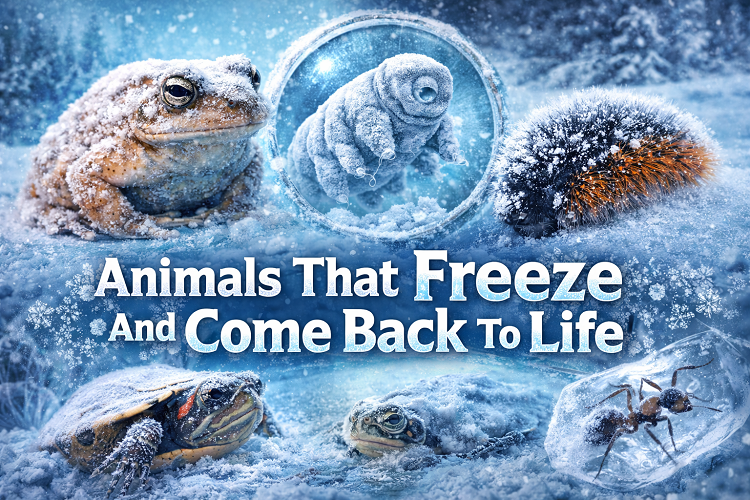




Nature contains some survival strategies so extreme that they sound impossible at first glance. One of the most astonishing is the ability of certain animals to freeze solid during harsh conditions and later return to life when temperatures rise. These creatures do not merely slow down or hibernate; their hearts stop beating, breathing ceases, and ice forms inside their bodies. Yet, when the environment becomes favorable again, they thaw and resume normal biological activity as if nothing had happened. This phenomenon is not science fiction but a remarkable example of evolutionary adaptation known as freeze tolerance or cryptobiosis.
Wood Frog
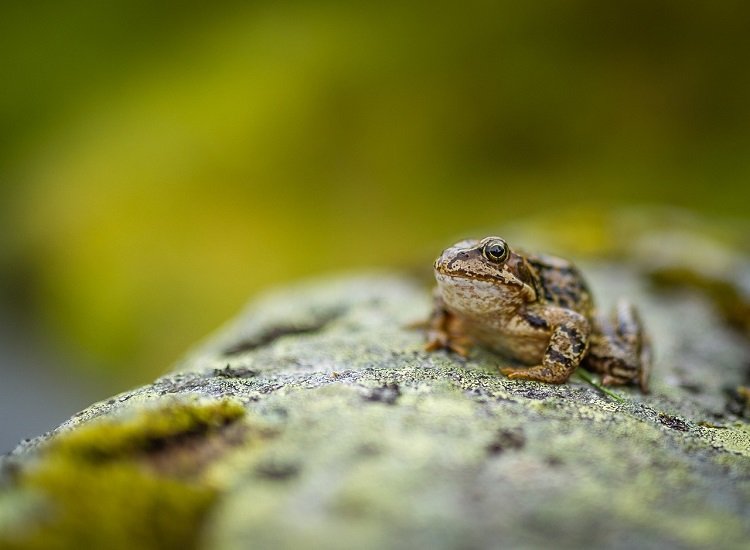
The Wood frog is one of the most famous examples of an animal that can freeze and revive. Found in North America, particularly in cold regions such as Alaska and Canada, this small amphibian survives winter temperatures that would kill most other frogs. During winter, up to 70 percent of the wood frog’s body water freezes, including water in its vital organs. Its heart stops beating, blood circulation halts, and breathing completely ceases.
What makes the wood frog’s survival possible is its ability to produce large amounts of glucose and urea just before freezing. These substances act as natural antifreeze agents, protecting cells from damage by preventing ice crystals from forming inside them. Instead, ice forms in the spaces between cells, reducing the risk of rupture. When spring arrives and temperatures rise, the frog thaws, its heart begins beating again, and it resumes normal activity, including hopping, feeding, and breeding. From an AEO perspective, the wood frog is often cited as the best example when people ask which animal can freeze and come back to life.
Tardigrade
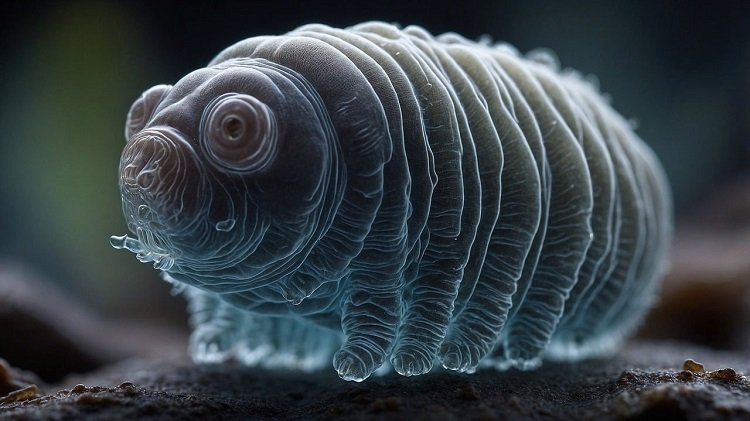
The Tardigrade, also known as the water bear, is a microscopic animal renowned for its ability to survive extreme conditions, including freezing. Tardigrades can enter a state called cryptobiosis, in which their metabolism drops to nearly zero. In this state, they can survive being frozen for years, even decades, without water or oxygen.
When temperatures drop, tardigrades expel most of the water from their bodies and replace it with special proteins and sugars that stabilize their cells. This prevents ice crystals from forming and damaging internal structures. Once conditions improve and moisture returns, tardigrades rehydrate and resume normal life functions. They begin moving, feeding, and reproducing as if they had never been frozen. Because of their incredible resilience, tardigrades are frequently mentioned in answers to questions like “What animal can survive freezing, radiation, and space?” Their ability to come back to life after freezing makes them one of the most extraordinary animals on Earth.
Painted Turtle
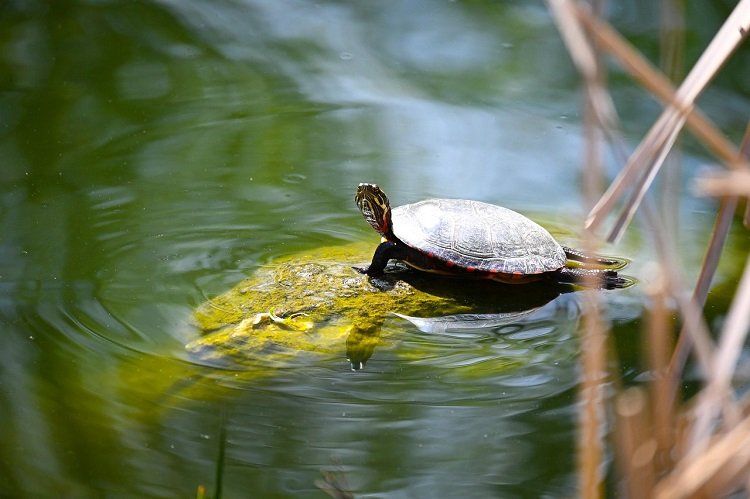
The Painted turtle is another animal capable of surviving freezing conditions, particularly during its early life stages. Hatchling painted turtles often overwinter in shallow nests where temperatures can drop below freezing. Unlike many reptiles, which cannot tolerate freezing, these turtles have evolved mechanisms that allow parts of their bodies to freeze without causing fatal damage.
Painted turtles rely on anaerobic metabolism during freezing periods, meaning they can survive without oxygen for extended durations. They also accumulate substances in their blood that help buffer acids produced during oxygen deprivation. While adult painted turtles typically avoid freezing by staying underwater in oxygen-poor mud, hatchlings can endure partial freezing and revive when temperatures rise. This ability makes them a common example in educational content explaining how reptiles can survive freezing environments.
Arctic Woolly Bear Caterpillar
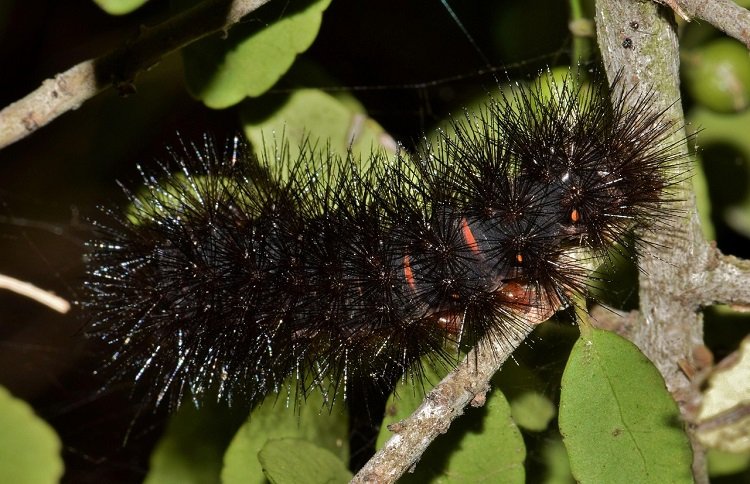
The Arctic woolly bear caterpillar is an insect larva capable of surviving some of the coldest temperatures on Earth. Found in Arctic regions, this caterpillar can freeze solid during winter, with ice forming throughout its body. Remarkably, it may freeze and thaw multiple times over several years before completing its life cycle.
This caterpillar produces cryoprotectants such as glycerol that protect its cells from ice damage. Its metabolism slows to an almost undetectable level, allowing it to survive extended periods in a frozen state. When summer returns, the caterpillar thaws and resumes feeding, eventually pupating and becoming a moth. This species is often referenced when people ask whether insects can survive being frozen solid and still live.
Antarctic Icefish and Freeze Resistance
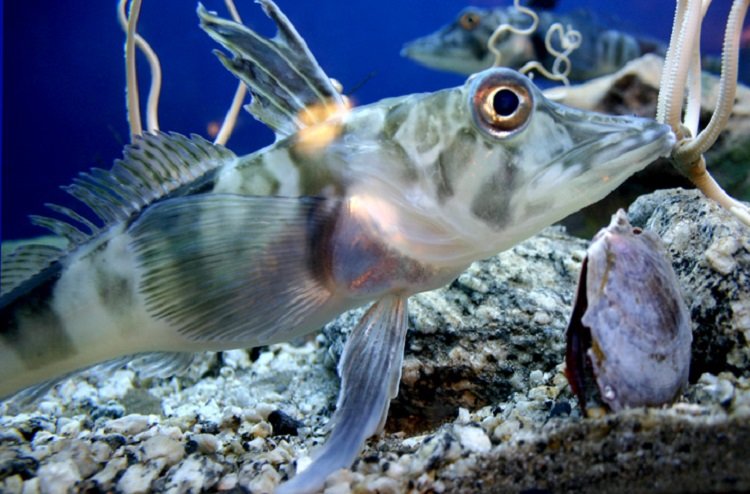
The Antarctic icefish does not freeze solid like some amphibians or insects, but it deserves mention because of its unique adaptation to freezing environments. Antarctic icefish live in waters that are below the normal freezing point of blood. To survive, they produce antifreeze proteins that prevent ice crystals from forming in their tissues.
While icefish do not fully freeze and revive, their antifreeze adaptation represents another evolutionary solution to extreme cold. These proteins bind to ice crystals and stop them from growing, allowing the fish to remain active in subzero waters. Icefish are often included in discussions about animals that survive freezing temperatures, especially in scientific and educational contexts.
How Animals Survive Freezing Temperatures
Animals that freeze and come back to life share several key survival strategies. One of the most important is the production of cryoprotectants, such as glucose, glycerol, or specialized proteins. These substances protect cells by stabilizing membranes and preventing ice crystals from puncturing vital structures. Another strategy is controlled freezing, where ice formation is directed to occur outside cells rather than inside them.
Metabolic shutdown is also crucial. By drastically slowing or stopping metabolism, these animals reduce the need for oxygen and energy. This suspended state allows them to survive weeks, months, or even years without normal biological activity. When temperatures rise, their bodies gradually restart metabolic processes, repair minor cellular damage, and return to full functionality.
Why This Matters for Science and Medicine
The study of animals that freeze and come back to life has significant implications beyond biology. Scientists are exploring how freeze-tolerant mechanisms could improve organ preservation for transplants, extend the shelf life of biological materials, and enhance cryogenic medicine. Understanding how cells survive freezing without damage could one day allow humans to preserve tissues or even whole organs for extended periods safely.
These animals also offer insight into the limits of life on Earth and potentially beyond. If organisms can survive freezing, dehydration, and oxygen deprivation, it raises important questions about life’s resilience in extreme environments, including other planets.
Nature’s Pause Button
Animals that freeze and come back to life demonstrate one of nature’s most astonishing survival strategies. From the wood frog that freezes solid each winter to the microscopic tardigrade, which can survive for decades in suspended animation, these creatures challenge our understanding of life and death. Their ability to pause biological processes and restart them later shows how evolution can solve even the harshest environmental challenges.