Thu. Apr 30th, 2026
axolotl colors

Welcome to the Pet Breed Hub! Today’s star is the axolotl, a unique aquatic creature that’s as mysterious as it is charming. Dive in with us as we explore the captivating world of axolotls!

axolotl

Origin of the Axolotl

The axolotl, a creature as mystical as it is real, has its roots in the ancient waterways of Mexico.

Native Habitat: A Mexican Marvel

Home Sweet Home: Originally found in the lake complex of Xochimilco near Mexico City

Unique Ecosystem: These salamanders thrived in the unique freshwater lakes and canals of this region.

Cultural Significance: Aztec Mythology

Mythical Connections: Named after Xolotl, the Aztec god of fire and lightning. They were believed to be a transformation of this deity.

Symbol of Renewal: Their ability to regenerate lost body parts made them a symbol of rebirth and transformation in Aztec culture.

Environmental Concerns: A Species at Risk

Endangered Status: Due to urbanization and pollution, their natural habitat has drastically diminished, leading to their endangered status.

Conservation Efforts: There are ongoing efforts to conserve and protect the remaining wild population and their habitat.


Appearance of the Axolotl

The axolotl is not only unique for its regenerative abilities but also for its distinctive appearance, which sets it apart from other aquatic creatures.

Striking Features: A Look at Their Unique Physique

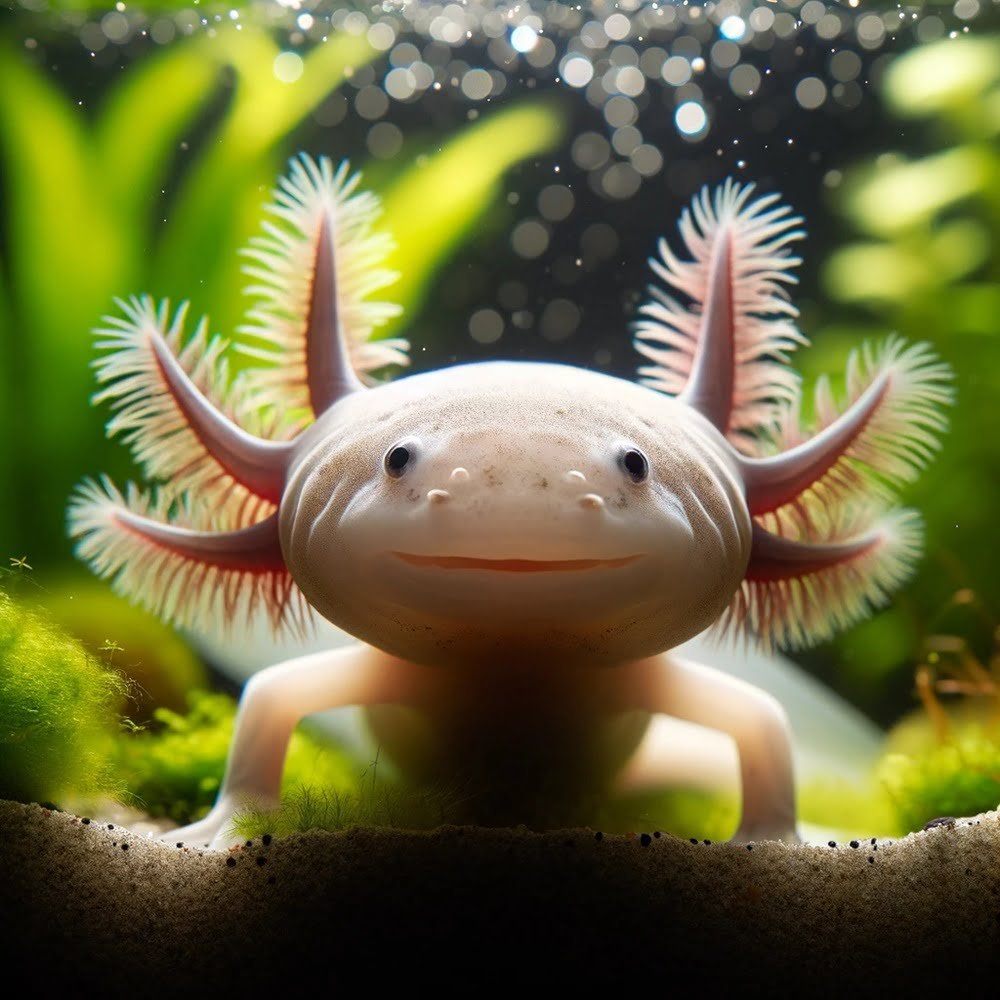
Feathery Gills: The most noticeable feature is their external, feathery gills, giving them an almost mythical look.

Wide Variety of Colors: They come in various colors, including wild-type (dark with greenish spots), leucistic (pale pink with red gills), albino, golden, and even black.

Facial Characteristics: Expressive and Endearing

Smiling Demeanor: Axolotls often appear to be smiling, adding to their charm.

Eyes: small, lidless eyes that add to their distinctive and quirky appearance.

Body Structure: Adapted for Aquatic Life

Size: They can grow up to 12 inches long, though most are smaller.

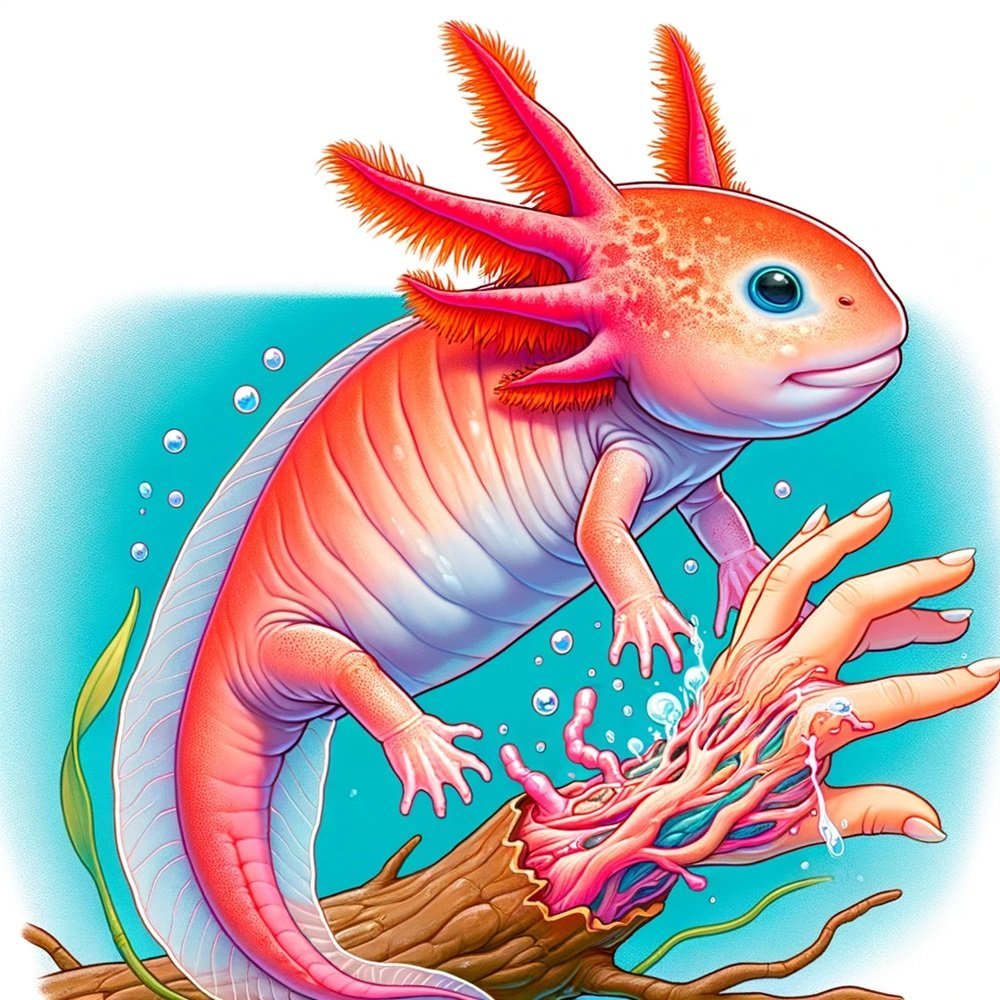
Limb Regeneration: Not just limited to their limbs, they can regenerate almost any part of their body, including their spine and brain tissue.

Skin Texture: Soft and Smooth

Texture: Their skin is smooth and delicate, a feature that requires careful handling.


Habits of the Axolotl

Axolotls, with their unique lifestyle, exhibit a range of fascinating habits that reflect their adaptation to aquatic life.

Aquatic Living: Fully Underwater

Water Dependence: Axolotls spend their entire life underwater, perfectly adapted to an aquatic lifestyle.

No Metamorphosis: Unlike other amphibians, they do not undergo metamorphosis to live on land.

Feeding Behavior: Predatory Instincts

Ambush Predators: They typically wait for their prey and use a sudden, quick motion to catch it.

Diet: In the wild, their diet consists of small fish, worms, and other aquatic invertebrates.

Regeneration: A Remarkable Ability

Healing Power: Axolotls can regenerate lost body parts, a process that fascinates scientists. This includes limbs, organs, and even parts of their brain.

Social Interaction: Solitary by Nature

Lone Dwellers: They are generally solitary creatures, interacting primarily during the breeding season.

Activity Patterns: Nocturnal Tendencies

Nighttime Activity: They are mostly nocturnal, being more active during the night.

Breathing: Gills and Beyond

Respiration: Primarily, they breathe through their gills, but they can also absorb oxygen through their skin and have rudimentary lungs for gulping air if needed.


Caring for an Axolotl

Proper care is essential for the health and happiness of an axolotl. Here’s a brief guide to help you provide the best environment for your aquatic friend.

Aquarium Setup: Creating a Comfortable Home

Tank Size: A minimum of a 20-gallon tank for one Axolotl.

Water Conditions: Keep the water cool, around 60–64°F (16–18°C), and well-filtered to maintain cleanliness.

pH Levels: The pH of the water should be maintained between 6.5 and 7.5.

Diet: Nutritional Needs

Variety is key. Feed them earthworms, bloodworms, brine shrimp, and special axolotl pellets.

Feeding Schedule: Young axolotls need to be fed once a day, while adults can be fed every other day.

Handling: With Care and Caution

Limited Handling: They are delicate creatures and should be handled minimally.

Gentle Touch: If necessary, handle them gently and with wet hands to protect their sensitive skin.

Health Monitoring: Keeping an Eye on Well-being

Regular Checks: Watch for signs of stress or illness, such as lack of appetite, lesions on the skin, or floating persistently.

Veterinary Care: Consult a vet experienced with amphibians if you notice any health issues.

Tank Maintenance: Ensuring a Clean Environment

Regular Cleaning: Perform partial water changes weekly and clean the tank thoroughly every month.

Substrate: Use fine sand or keep the bottom bare for easy cleaning, as gravel can cause digestive issues if ingested.

axolotl pet

Colors of the Axolotl

The axolotl is renowned not only for its fascinating biology but also for its diverse and captivating color palette.

A Spectrum of Shades

Wild Type: This natural coloration is dark, ranging from brown to black, with greenish or golden flecks.

Leucistic: A popular variant, characterized by a pale pink or white body with striking red gills.

Albino: These axolotls have a golden or yellowish hue with red eyes, lacking pigmentation.

Melanoid: Darker than the wild type, these axolotls have a uniform black color without any shiny gold speckles.

Golden Albino: A blend of albino and yellow pigmentation, these axolotls have a light golden color with red eyes.

Genetic Diversity

The variety in colors results from genetic variations. Each color variant offers a unique visual experience but does not significantly affect Axolotl’s care needs or behavior.

Breeding Influence

Selective breeding has led to the development of these various color morphs, with some being more rare and sought after by enthusiasts.


FAQs: Axolotl

1: What is an axolotl?

An axolotl is a type of salamander that remains aquatic its entire life and is known for its unique ability to regenerate lost body parts.

2: How long do axolotls live?

They can live up to 10–15 years with proper care.

3: What do axolotls eat?

Their diet includes worms, insect larvae, small fish, and specialized axolotl pellets.

4: Can axolotls live with other fish?

It’s not recommended, as axolotls might eat smaller fish, and larger fish could harm them.

5: Do axolotls need a heater in their tank?

No, they prefer cooler water temperatures between 60-64°F (16-18°C).

6: How big should an Axolotl tank be?

A minimum of a 20-gallon tank is recommended for one Axolotl.

7: Can axolotls regenerate any body part?

Yes, they can regenerate most body parts, including limbs, tails, and even parts of their heart and brain.

8: Are Axolotls good pets for beginners?

They can be, as long as the owner is committed to maintaining the proper water conditions and diet.

9: Do Axolotls like to be handled?

They should be handled minimally as they are delicate, and their skin is sensitive.

10: How often should I change the water in the tank?

Perform partial water changes weekly and a full change monthly to keep the tank clean and healthy.


Conclusion: The Enchanting World of Axolotls

Axolotls are not just unique; they bring a touch of magic to our world. Their ability to regenerate and their forever-young lifestyle makes them fascinating pets and a subject of scientific wonder.


References and External Links

Caudata.org – Axolotl Care Guide

Caudata.org

Offers a comprehensive guide to axolotl care, including tank setup, feeding, and health issues.

Mexican Axolotl – National Geographic

National Geographic

Provides insightful information about axolotls in their natural habitat, their biology, and conservation status.

The Axolotl Website

Axolotl.org

A dedicated website for Axolotl enthusiasts, covering all aspects of their care, breeding, and genetics

Smithsonian’s National Zoo: Axolotl Facts

Smithsonian’s National Zoo

Features interesting facts about axolotls, their habitat, and their behavior.

“Axolotl Care Guide” – Pet Breed Hub

By admin

Leave a Reply

Your email address will not be published. Required fields are marked *

We use cookies to personalise content and ads, to provide social media features and to analyse our traffic. We also share information about your use of our site with our social media, advertising and analytics partners. View more
Cookies settings
Accept
Privacy & Cookie policy
Privacy & Cookies policy
Cookie name Active

Privacy Policy for Pet Breed Hub
At Pet Breed Hub, accessible from toppetbreeds.com/, one of our main priorities is the privacy of our visitors. This Privacy Policy document contains types of information that are collected and recorded by Pet Breed Hub and how we use it.

If you have additional questions or require more information about our Privacy Policy, do not hesitate to contact us.

This Privacy Policy applies only to our online activities and is valid for visitors to our website with regard to the information that they share and/or collect in Pet Breed Hub. This policy is not applicable to any information collected offline or via channels other than this website.

Consent
By using our website, you hereby consent to our Privacy Policy and agree to its terms.

Information we collect
The personal information that you are asked to provide, and the reasons why you are asked to provide it, will be made clear to you at the point we ask you to provide your personal information.

If you contact us directly, we may receive additional information about you such as your name, email address, phone number, the contents of the message and/or attachments you may send us, and any other information you may choose to provide.

When you register for an Account, we may ask for your contact information, including items such as name, company name, address, email address, and telephone number.

How we use your information
We use the information we collect in various ways, including:

Provide, operate, and maintain our website
Improve, personalize, and expand our website
Understand and analyze how you use our website
Develop new products, services, features, and functionality
Communicate with you, either directly or through one of our partners, including for customer service, to provide you with updates and other information relating to the website, and for marketing and promotional purposes
Send you emails
Find and prevent fraud
Log Files
Pet Breed Hub follows a standard procedure of using log files. These files log visitors when they visit websites. All hosting companies do this and are a part of hosting services' analytics. The information collected by log files includes internet protocol (IP) addresses, browser type, Internet Service Provider (ISP), date and time stamp, referring/exit pages, and possibly the number of clicks. These are not linked to any information that is personally identifiable. The purpose of the information is to analyze trends, administer the site, track users' movement on the website, and gather demographic information.

Google DoubleClick DART Cookie
Google is one of the third-party vendors on our site. It also uses cookies, known as DART cookies, to serve ads to our site visitors based upon their visit to www.website.com and other sites on the internet. However, visitors may choose to decline the use of DART cookies by visiting the Google ad and content network Privacy Policy at the following URL – https://policies.google.com/technologies/ads

Our Advertising Partners
Some of the advertisers on our site may use cookies and web beacons. Our advertising partners are listed below. Each of our advertising partners has its own Privacy Policy for their policies on user data. For easier access, we hyperlinked to their Privacy Policies below.

Google

https://policies.google.com/technologies/ads

Third Party Privacy Policies
Pet Breed Hub's Privacy Policy does not apply to other advertisers or websites. Thus, we are advising you to consult the respective Privacy Policies of these third-party ad servers for more detailed information. It may include their practices and instructions about how to opt out of certain options.

You can choose to disable cookies through your individual browser options. More detailed information about cookie management with specific web browsers can be found at the browsers' respective websites.

CCPA Privacy Rights (Do Not Sell My Personal Information)
Under the CCPA, among other rights, California consumers have the right to:

Request that a business that collects a consumer's personal data disclose the categories and specific pieces of personal data that a business has collected about consumers.

Request that a business delete any personal data about the consumer that a business has collected.

Request that a business that sells a consumer's personal data, not sell the consumer's personal data.

If you make a request, we have one month to respond to you. If you would like to exercise any of these rights, please contact us.

GDPR Data Protection Rights
We would like to make sure you are fully aware of all of your data protection rights. Every user is entitled to the following:

The right to access – You have the right to request copies of your personal data. We may charge you a small fee for this service.

The right to rectification – You have the right to request that we correct any information you believe is inaccurate. You also have the right to request that we complete the information you believe is incomplete.

The right to erasure – You have the right to request that we erase your personal data, under certain conditions.

The right to restrict processing – You have the right to request that we restrict the processing of your personal data, under certain conditions.

The right to object to processing – You have the right to object to our processing of your personal data, under certain conditions.

The right to data portability – You have the right to request that we transfer the data that we have collected to another organization, or directly to you, under certain conditions.

If you make a request, we have one month to respond to you. If you would like to exercise any of these rights, please contact us.

Children's Information
Another part of our priority is adding protection for children while using the internet. We encourage parents and guardians to observe, participate in, and/or monitor and guide their online activity.

Pet Breed Hub does not knowingly collect any Personal Identifiable Information from children under the age of 13. If you think that your child provided this kind of information on our website, we strongly encourage you to contact us immediately and we will do our best efforts to promptly remove such information from our records.

Save settings
Cookies settings