
Wed. Apr 1st, 2026
baboons

Baboons are fascinating animals in different parts of Africa and the Arabian Peninsula. They belong to the family of Old World monkeys and are known for their intelligence, adaptability, and social behavior. Baboons are often seen in grasslands, savannas, and rocky areas. These primates have unique characteristics that make them stand out among other animals.

Table of Contents


Breed Overview

Category Details
Scientific Name Papio
Class Mammalia
Order Primates
Family Cercopithecidae
Habitat Savannas, grasslands, rocky areas, deserts
Diet Omnivorous (plants, fruits, insects, etc.)
Lifespan 20-30 years in the wild
Gestation Period Approximately 6 months
Social Structure Troops ranging from 5 to over 100 members
Activity Diurnal (active during the day)

Physical Appearance

baboon

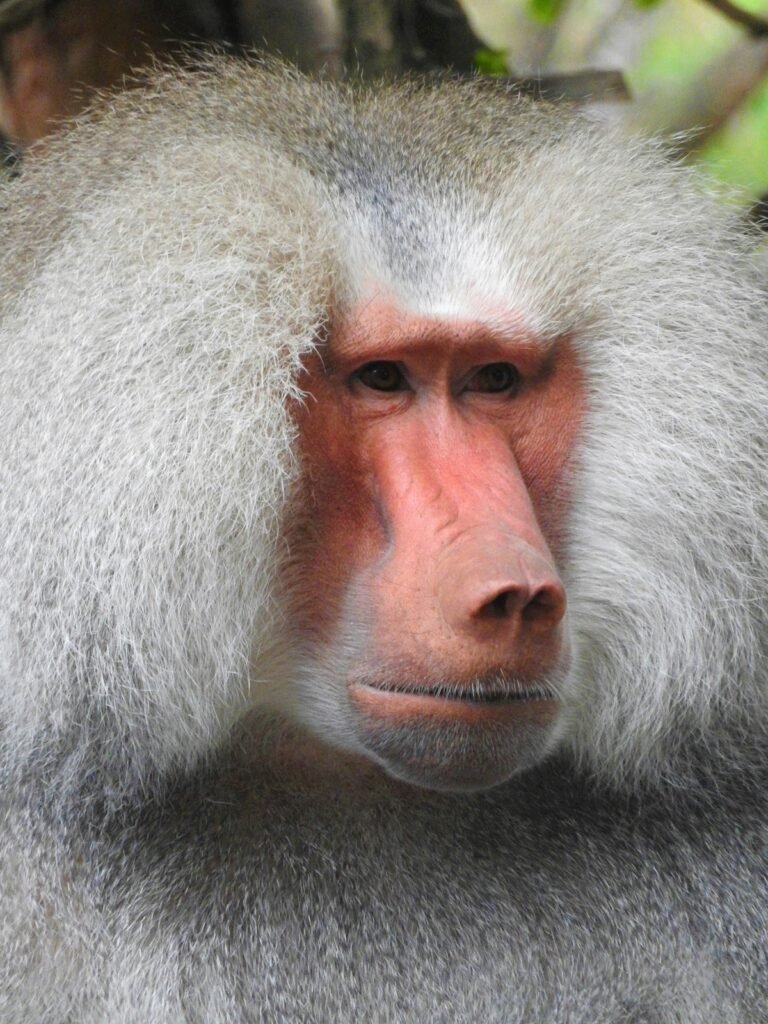
Baboons are medium to large-sized monkeys with strong bodies. They have long, dog-like muzzles, sharp canine teeth, and close-set eyes. Their thick fur varies in color depending on the species, ranging from olive green and yellowish-brown to gray and black. One noticeable feature of baboons is their bare, hairless bottoms, which are often bright in color. This helps them during mating seasons and in their social groups.

They have strong limbs that are built for walking on all fours. They also have long tails, though not prehensile like some other monkeys. These tails help with balance when climbing trees or navigating rocky terrain.


Species of Baboons

There are five main species of baboons:

Chacma Baboon: Found in southern Africa, these are the largest of all baboon species. They are known for their gray or brownish fur and long snouts.

Olive Baboon: Found across central and eastern Africa, they have greenish-gray fur. They are highly adaptable and live in a wide range of habitats.

Yellow Baboon: This species is common in East Africa, especially in countries like Kenya and Tanzania. It has yellow-brown fur and a slender body.

Hamadryas Baboon: Native to the Arabian Peninsula and parts of northeast Africa, these baboons have a unique appearance. Males have long, silver-white manes, while females are smaller and brownish.

Guinea Baboon: The smallest of all baboon species, they are found in West Africa. They have reddish-brown fur and short snouts.

Each species has unique features, but all share common behaviors and social structures.


Social Structure

Baboons are highly social animals that live in groups called troops. Troop sizes can range from a few individuals to over 100 members. The size depends on the availability of food and safety from predators.

Troops have a strict hierarchy. Dominant males lead the group and have mating privileges with females. Subordinate males and juveniles follow the leader. Female baboons also have their hierarchy based on family lineage. Social bonds are maintained through grooming, where baboons clean each other’s fur.

Living in large groups helps baboons protect themselves from predators like leopards, lions, and hyenas. They work together to alert the troops of danger and fend off attackers when needed.


Diet and Feeding Habits

They are omnivorous, which means they eat both plants and animals. Their diet is very diverse and depends on what is available in their environment. They eat fruits, seeds, leaves, flowers, and roots. They also consume insects, small birds, rodents, and even small antelopes.

They are skilled foragers. They use their hands to dig for roots and tubers. Their strong teeth help them chew tough plant materials. When food is scarce, baboons can travel long distances to find sustenance. Their adaptability allows them to survive in harsh conditions.


Communication

They are vocal animals that communicate using a wide range of sounds. They grunt, bark, scream, and make other noises to express their emotions and intentions. For example, loud barks are often used to warn the group of danger, while soft grunts signify friendly interaction.

In addition to vocalizations, baboons use body language and facial expressions to communicate. For instance, depending on the situation, showing their teeth can be a sign of aggression or submission. Grooming is another important form of communication that helps strengthen social bonds.


Reproduction and Parenting

The female usually gives birth to one baby after a gestation period of about six months. Newborn baboons are dependent on their mothers for food and protection. Mothers carry their babies on their backs or hold them close to their chests while moving around.

Male baboons also play a role in protecting young ones. Some males form special bonds with certain females and their offspring, offering extra care and protection. This behavior helps the males gain trust and increases their chances of mating in the future.

Young baboons learn by observing and imitating adults. They play with each other to develop physical and social skills. As they grow older, they take on more responsibilities within the troop.

Reindeer The Iconic Arctic Wanderers


Habitat and Range

Baboons are highly adaptable and can live in various environments. They are commonly found in savannas, open woodlands, rocky hills, and even deserts. This adaptability allows them to survive in regions with extreme temperatures and limited resources.

Baboons are diurnal, meaning they are active during the day. At night, they sleep in trees or on cliffs to avoid predators. Their ability to adapt to different habitats has helped them thrive in the wild.


Interesting Facts

Baboons can live up to 30 years in the wild.

They are excellent climbers but spend most of their time on the ground.

Baboons have been observed using tools, such as sticks, to retrieve food.

They have strong memories and can recognize individual faces within their troop.

Baboons have opposable thumbs, which help them grasp objects and food.

They are known to form alliances with their troops to achieve common goals.

Baboons are one of the few animals that display complex social behaviors similar to humans.

Spider Monkey Nature’s Agile Acrobat


Conclusion

Baboons are remarkable animals with unique physical features, complex social structures, and incredible adaptability. They play an important role in their ecosystems and have much to teach us about social behavior and survival. Despite the challenges they face, baboons continue to thrive in various environments, proving their resilience and intelligence. Protecting these fascinating creatures and their habitats is essential for maintaining biodiversity and a healthy planet.

By admin

Leave a Reply

Your email address will not be published. Required fields are marked *

We use cookies to personalise content and ads, to provide social media features and to analyse our traffic. We also share information about your use of our site with our social media, advertising and analytics partners. View more
Cookies settings
Accept
Privacy & Cookie policy
Privacy & Cookies policy
Cookie name Active

Privacy Policy for Pet Breed Hub
At Pet Breed Hub, accessible from toppetbreeds.com/, one of our main priorities is the privacy of our visitors. This Privacy Policy document contains types of information that are collected and recorded by Pet Breed Hub and how we use it.

If you have additional questions or require more information about our Privacy Policy, do not hesitate to contact us.

This Privacy Policy applies only to our online activities and is valid for visitors to our website with regard to the information that they share and/or collect in Pet Breed Hub. This policy is not applicable to any information collected offline or via channels other than this website.

Consent
By using our website, you hereby consent to our Privacy Policy and agree to its terms.

Information we collect
The personal information that you are asked to provide, and the reasons why you are asked to provide it, will be made clear to you at the point we ask you to provide your personal information.

If you contact us directly, we may receive additional information about you such as your name, email address, phone number, the contents of the message and/or attachments you may send us, and any other information you may choose to provide.

When you register for an Account, we may ask for your contact information, including items such as name, company name, address, email address, and telephone number.

How we use your information
We use the information we collect in various ways, including:

Provide, operate, and maintain our website
Improve, personalize, and expand our website
Understand and analyze how you use our website
Develop new products, services, features, and functionality
Communicate with you, either directly or through one of our partners, including for customer service, to provide you with updates and other information relating to the website, and for marketing and promotional purposes
Send you emails
Find and prevent fraud
Log Files
Pet Breed Hub follows a standard procedure of using log files. These files log visitors when they visit websites. All hosting companies do this and are a part of hosting services' analytics. The information collected by log files includes internet protocol (IP) addresses, browser type, Internet Service Provider (ISP), date and time stamp, referring/exit pages, and possibly the number of clicks. These are not linked to any information that is personally identifiable. The purpose of the information is to analyze trends, administer the site, track users' movement on the website, and gather demographic information.

Google DoubleClick DART Cookie
Google is one of the third-party vendors on our site. It also uses cookies, known as DART cookies, to serve ads to our site visitors based upon their visit to www.website.com and other sites on the internet. However, visitors may choose to decline the use of DART cookies by visiting the Google ad and content network Privacy Policy at the following URL – https://policies.google.com/technologies/ads

Our Advertising Partners
Some of the advertisers on our site may use cookies and web beacons. Our advertising partners are listed below. Each of our advertising partners has its own Privacy Policy for their policies on user data. For easier access, we hyperlinked to their Privacy Policies below.

Google

https://policies.google.com/technologies/ads

Third Party Privacy Policies
Pet Breed Hub's Privacy Policy does not apply to other advertisers or websites. Thus, we are advising you to consult the respective Privacy Policies of these third-party ad servers for more detailed information. It may include their practices and instructions about how to opt out of certain options.

You can choose to disable cookies through your individual browser options. More detailed information about cookie management with specific web browsers can be found at the browsers' respective websites.

CCPA Privacy Rights (Do Not Sell My Personal Information)
Under the CCPA, among other rights, California consumers have the right to:

Request that a business that collects a consumer's personal data disclose the categories and specific pieces of personal data that a business has collected about consumers.

Request that a business delete any personal data about the consumer that a business has collected.

Request that a business that sells a consumer's personal data, not sell the consumer's personal data.

If you make a request, we have one month to respond to you. If you would like to exercise any of these rights, please contact us.

GDPR Data Protection Rights
We would like to make sure you are fully aware of all of your data protection rights. Every user is entitled to the following:

The right to access – You have the right to request copies of your personal data. We may charge you a small fee for this service.

The right to rectification – You have the right to request that we correct any information you believe is inaccurate. You also have the right to request that we complete the information you believe is incomplete.

The right to erasure – You have the right to request that we erase your personal data, under certain conditions.

The right to restrict processing – You have the right to request that we restrict the processing of your personal data, under certain conditions.

The right to object to processing – You have the right to object to our processing of your personal data, under certain conditions.

The right to data portability – You have the right to request that we transfer the data that we have collected to another organization, or directly to you, under certain conditions.

If you make a request, we have one month to respond to you. If you would like to exercise any of these rights, please contact us.

Children's Information
Another part of our priority is adding protection for children while using the internet. We encourage parents and guardians to observe, participate in, and/or monitor and guide their online activity.

Pet Breed Hub does not knowingly collect any Personal Identifiable Information from children under the age of 13. If you think that your child provided this kind of information on our website, we strongly encourage you to contact us immediately and we will do our best efforts to promptly remove such information from our records.

Save settings
Cookies settings