
Welcome to the Pet Breed Hub, your go-to source for everything pet-related! Today, we’re galloping into the fascinating world of the coatimundi.
What’s a coatimundi? Think of a raccoon with a longer nose, and you’ve got a Coatimundi!
Nickname: Often called ‘Coati’, these critters are full of surprises.

History of the Coatimundi
Ancient Ancestors: Coatimundis, part of the raccoon family, have roamed the earth for millions of years, evolving alongside other New World mammals.
South American Origins: Originally from South America, Coatis have been a part of the continent’s ecosystem for ages, adapting to various habitats from rainforests to highlands.
Migration North: Over time, some Coatis ventured north, expanding their range into Central America and parts of North America, including Arizona and Texas.
Cultural Significance: In indigenous South American cultures, Coatis have often been depicted in art and folklore, symbolizing various aspects of life and the environment.
Modern Times: Today, while they are known to many as exotic pets, Coatis remain an integral part of the wildlife in the Americas, continuing to adapt and thrive in their native and adopted habitats.
Fun Fact: The Coatimundi’s adaptability and curious nature have made it a subject of interest in both scientific studies and popular media, highlighting its unique place in the animal kingdom.
Coatimundis in Arizona: The Desert Dwellers
Unexpected Residents: While native to South America, Coatimundis have found a home in Arizona’s desert landscapes.
Adaptable Explorers: These resourceful creatures have adapted to Arizona’s varied environments, from dense forests to arid deserts.
Sightings and Habitats: Mostly spotted in southern Arizona, Coatis often roam in canyons, riparian woodlands, and mountainous regions.
Social Behavior: In Arizona, female Coatis and they’re young are commonly seen in groups, known as ‘bands’, navigating the rugged terrain together.
Diet Adaptations: Their diet in Arizona includes local fruits, insects, and small vertebrates, showcasing their opportunistic and versatile feeding habits.
Did you know? The presence of Coatimundis in Arizona is a testament to their incredible adaptability and the diverse ecological richness of the region.

Physical Characteristics of Coatimundis
Size and Build: Coatimundis are medium-sized mammals, similar in size to a small dog. They have a slender build with a noticeable, elongated snout.
Tail: Their tails are long and ringed, often held erect for balance. It’s nearly as long as their body, adding to their distinctive appearance.
Fur: Coatis have short to medium-length fur. The color varies, typically ranging from brown and tan to reddish or grey.
Facial Features: Their faces are marked with white around the eyes and snout, creating a mask-like appearance.
Limbs: They have strong, agile limbs with sharp claws, adapted for climbing and foraging.
Sexual Dimorphism: Males are usually larger and sometimes have more pronounced features compared to females.

Habitat of the Coatimundi
Tropical Beginnings: Coatis are originally from the warm and humid rainforests of South America, thriving in dense, lush environments.
Varied Ecosystems: Their adaptability has led them to inhabit various ecosystems, including grasslands, mountainous areas, and even semi-arid regions like those in Arizona.
Home in the Trees: Arboreal by nature, Coatis are excellent climbers. They spend a lot of their time in trees, which provide safety and food sources.
Water Proximity: They prefer habitats near water sources like rivers and streams, which are essential for their survival.
Expansion Beyond Borders: Beyond their native range, Coatis have extended their habitats into Central and North America, showcasing their remarkable adaptability to different climates and terrains.
Interesting Aspect: The Coatimundi’s ability to thrive in diverse habitats highlights its resourcefulness and versatility as a species.
Behavior and Social Life of Coatimundis
Group Dynamics: Female Coatimundis are known for their social nature, often seen in groups called ‘bands’. These bands can include up to 20 members, usually mothers and their offspring.
Lone Males: Male Coatis, on the other hand, tend to be solitary, especially adult males. They only join female groups during the breeding season.
Playful and Curious: Coatimundis are incredibly curious and playful creatures. They often engage in playful activities, which helps in their development and social bonding.
Communication: Vocalizations are a key part of their social interactions. Coatis use different sounds to express emotions like fear, aggression, or contentment.
Territorial Behavior: While females and their young move around as a group, males are more territorial and will defend their space from other males.
Fun Fact: The Coatimundi’s inquisitive nature and agility make them excellent problem solvers, often leading them to explore new environments and find creative solutions to access food.
Diet of the Coatimundi
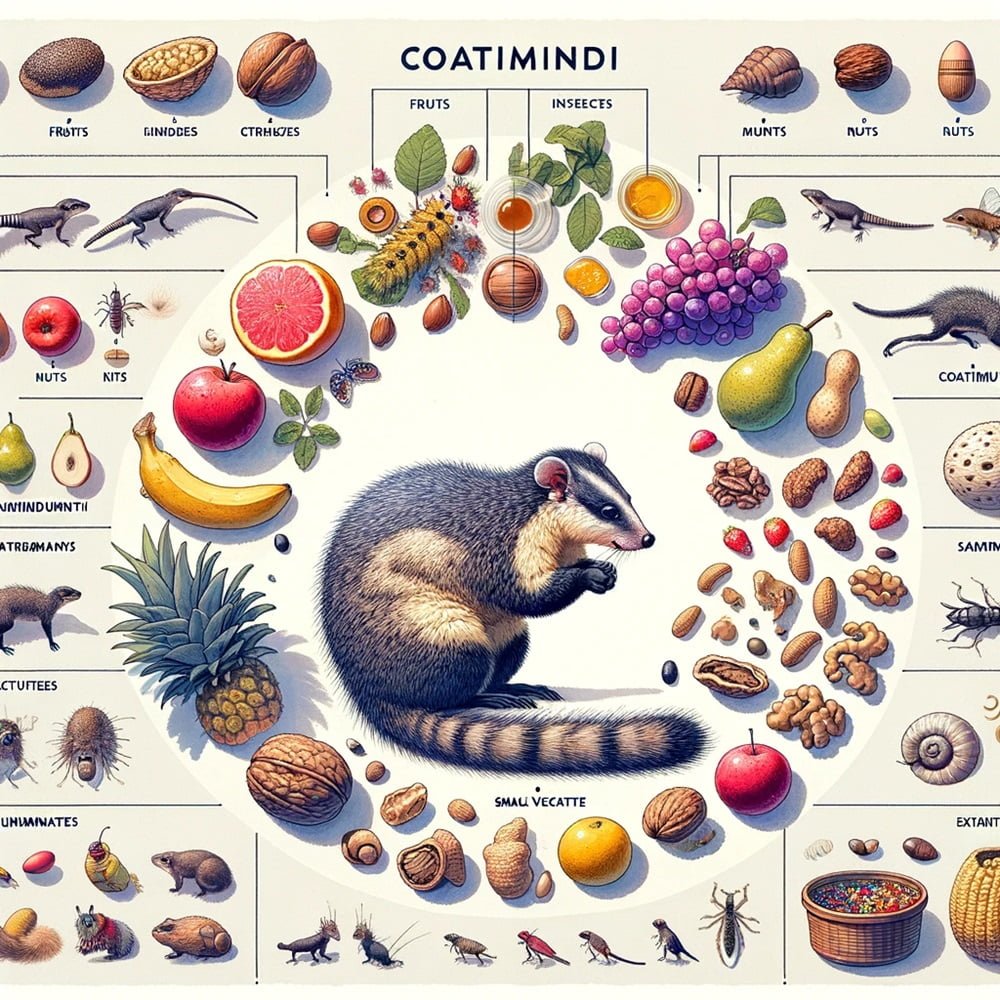
Omnivorous Appetite: Coatimundis aren’t picky eaters. Their diet includes a wide range of foods, making them omnivores.
Fruits and Veggies: They love munching on fruits like figs, bananas, and watermelon, along with various vegetables.
Protein Sources: Coatis also eat small animals—think insects, spiders, lizards, and even small mammals.
Eggs and More: Eggs, whether from birds or reptiles, are a Coati favorite. They’re skilled at raiding nests.
Nuts and seeds: These make up a part of their diet too, providing essential nutrients.
Interesting Note: The Coatimundi’s diverse diet reflects its adaptability to different habitats and food availability, showcasing its survival skills in the wild.
Colors of the Coatimundi

Basic Hues: The most common color of a Coatimundi’s fur is a variation of brown or tan. This earthy tone helps them blend into their natural surroundings.
Facial Markings: Their faces are adorned with distinctive markings, usually in shades of white or light tan, contrasting with darker fur around their eyes and snout.
Underside Fur: The fur on their underbelly often shows a lighter color, ranging from cream to a soft grey.
Tail Rings: Coatimundis’ tails are notable for their ring patterns—alternating bands of darker and lighter fur, adding to their unique appearance.
Age-Related Changes: As they age, Coatimundis can experience changes in fur color, often becoming lighter or showing more pronounced grey tones.
Did you know? The Coatimundi’s fur not only adds to their visual appeal but also serves practical purposes, like camouflage and temperature regulation in their diverse habitats.
Sizes of Coatimundis
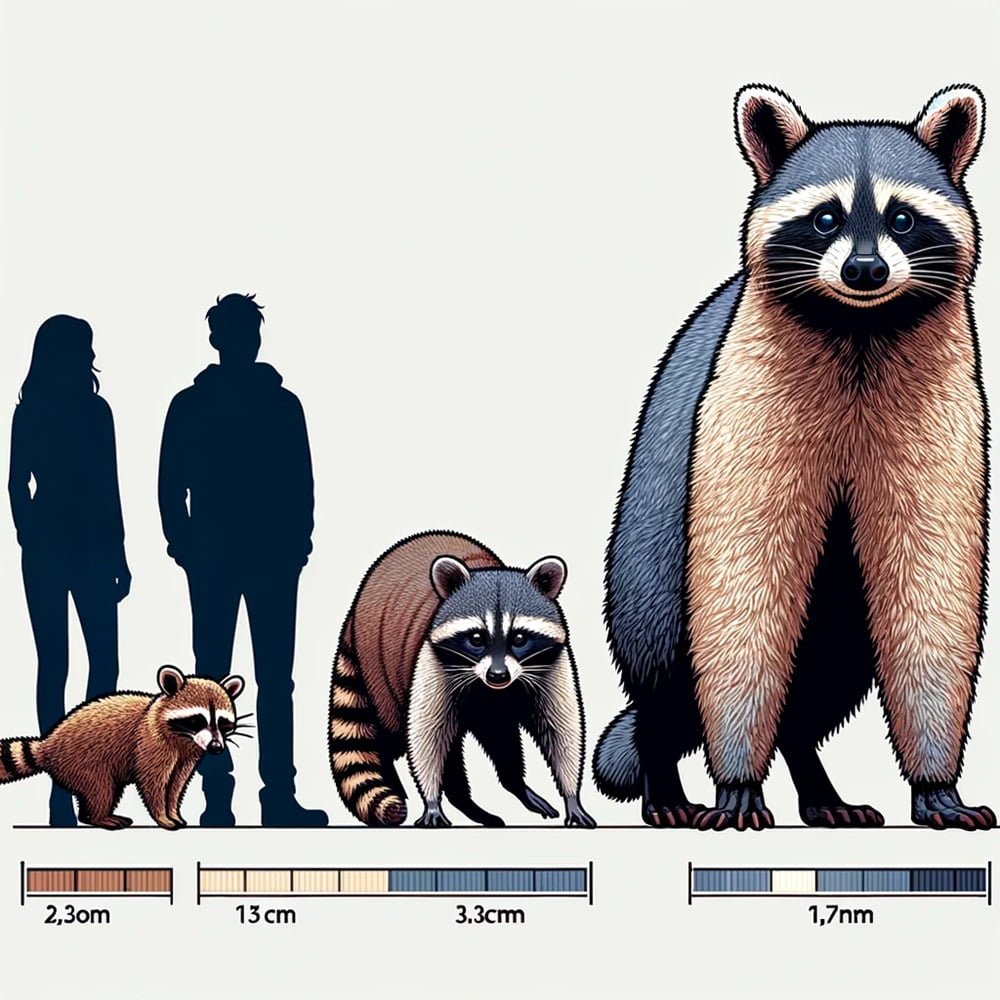
General Size: Coatimundis are medium-sized mammals, often compared in size to a small dog.
Body Length: An adult Coati typically measures around 41 to 67 centimeters (16 to 26 inches) in body length.
Tail Length: Their tails are almost as long as their bodies, adding another 32 to 69 centimeters (13 to 27 inches).
Weight Range: They weigh between 3 to 8 kilograms (7 to 18 pounds), with males usually being larger and heavier than females.
Growth Pattern: Young Coatis grow rapidly in their first few months, reaching near full size by the end of their first year.
Keeping a Coatimundi as a Pet
Legal Considerations: First, check local laws. Keeping a Coatimundi as a pet may be restricted or require special permits in some areas.
Space Requirements: Coatis are active and need ample space. A large, secure enclosure with climbing structures is essential.
Dietary Needs: They require a varied diet consisting of fruits, vegetables, proteins, and supplements to stay healthy.
Social Needs: Coatimundis are social animals. They need interaction and stimulation to prevent boredom and loneliness.
Veterinary Care: Regular check-ups with a vet experienced in exotic animals are crucial.
Training and Socialization: Early socialization and consistent, gentle training help in managing their sometimes unpredictable behavior.
Longevity Commitment: They can live up to 14 years or more, requiring a long-term commitment from their owners.
FAQs About Coatimundis
1: What exactly is a Coatimundi?
A Coatimundi, or Coati, is a member of the raccoon family, native to South and Central America.
2: Can Coatimundis be kept as pets?
Yes, but they require special care, a suitable environment, and in some places, a permit.
3: How long do Coatimundis live?
They typically live for about 7-8 years in the wild and can live longer in captivity with proper care.
4: What do Coatimundis eat?
They are omnivores and enjoy a diet of fruits, vegetables, insects, and small animals.
5: Are Coatimundis social animals?
Yes, especially females who live in groups. Males are more solitary.
6: How big do Coatimundis get?
They can grow to about 41 to 67 cm (16 to 26 inches) in length, plus a tail of similar length.
7: Is it difficult to care for a Coatimundi?
Caring for a Coati can be challenging due to their need for space, a specific diet, and social interaction.
8: Do Coatimundis get along with other pets?
This varies. Coatis can be unpredictable, and careful introduction and supervision are necessary.
9: How active are Coatimundis?
They are very active, curious animals and require a lot of mental and physical stimulation.
10: Are Coatimundis legal to own everywhere?
No, ownership laws vary by location. It’s important to check local regulations before considering a coati as a pet.
References and External Links
References
National Geographic Coatimundi Overview: An informative resource providing details on the natural history and behavior of Coatimundis Explore Here
Animal Diversity Web: Coatimundi: Offers scientific insights into the Coatimundi’s habitat, diet, and social structure. Read More
The Exotic Pet Handbook: A Comprehensive Guide to Caring for Exotic Pets, including Coatimundis Available in bookstores and libraries.
Wildlife Conservation Society: Provides information on the conservation status of Coatimundis and efforts to protect their habitats. Learn about Conservation
External Links
Exotic Pet Care and Training: Useful tips and guidelines for those considering a Coatimundi as a pet Visit Resource
Wildlife Rehabilitation Center: Information on rescuing and rehabilitating Coatimundis and other wildlife Get Involved
Pet Ownership Laws and Regulations: A site to check the legalities of owning exotic pets like Coatimundis in your area. Check Regulations