





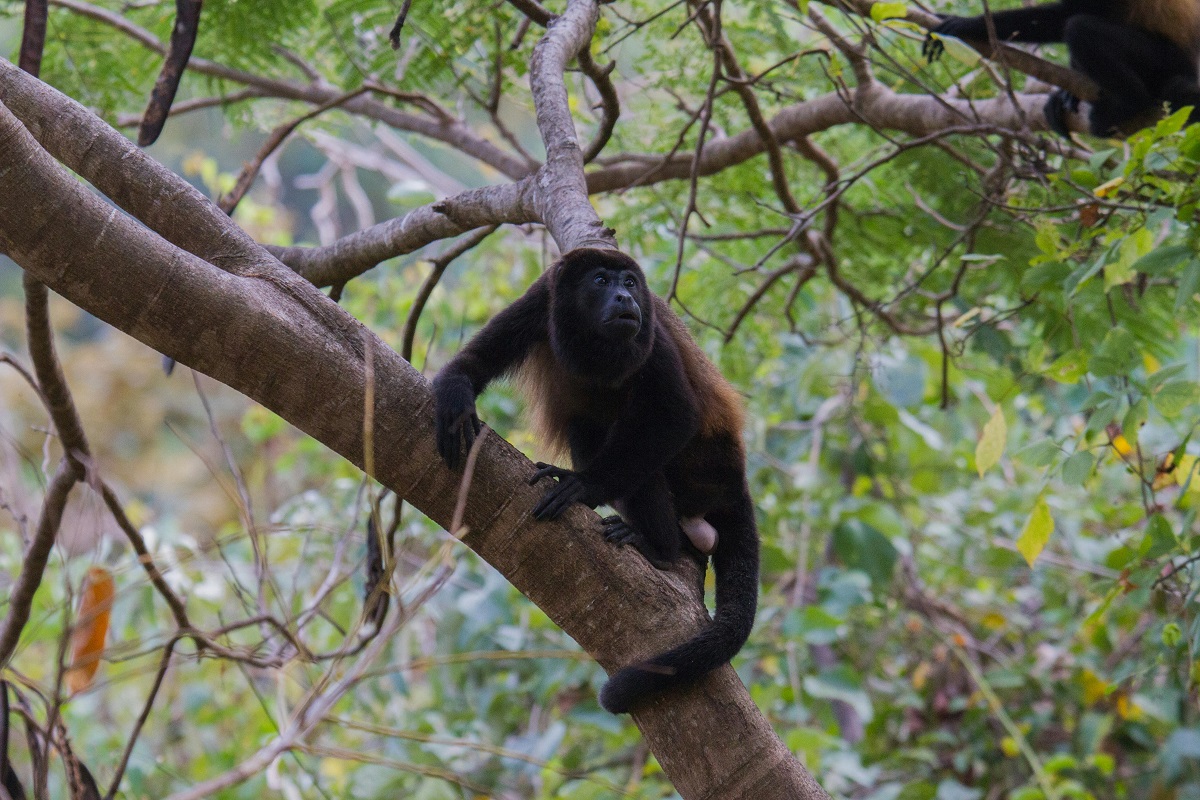
The howler monkey is one of the most fascinating creatures inhabiting the lush rainforests of Central and South America. Renowned for its incredibly loud, deep roar that can travel up to three miles through dense jungle, this remarkable primate has captured the attention of scientists and nature enthusiasts alike. Belonging to the New World monkey group, howler monkeys are unique for their vocal abilities and social behaviors, specialized diets, and important ecological role.
These medium-sized monkeys spend their entire lives high in the forest canopy, where they feed, sleep, and socialize among the treetops. Their thunderous calls, which serve as territorial markers and communication tools, are among the most distinctive sounds in the animal kingdom.
In this comprehensive article, we will explore various aspects of howler monkey biology and behavior, including:
The different species and their identifying features
Their preferred habitats and geographic distribution
Dietary habits and feeding behaviors
Social structures and daily activities
The science behind their legendary vocalizations
Reproductive cycles and lifespan
Major threats to their survival
Conservation efforts to protect these iconic primates
Types of Howler Monkeys
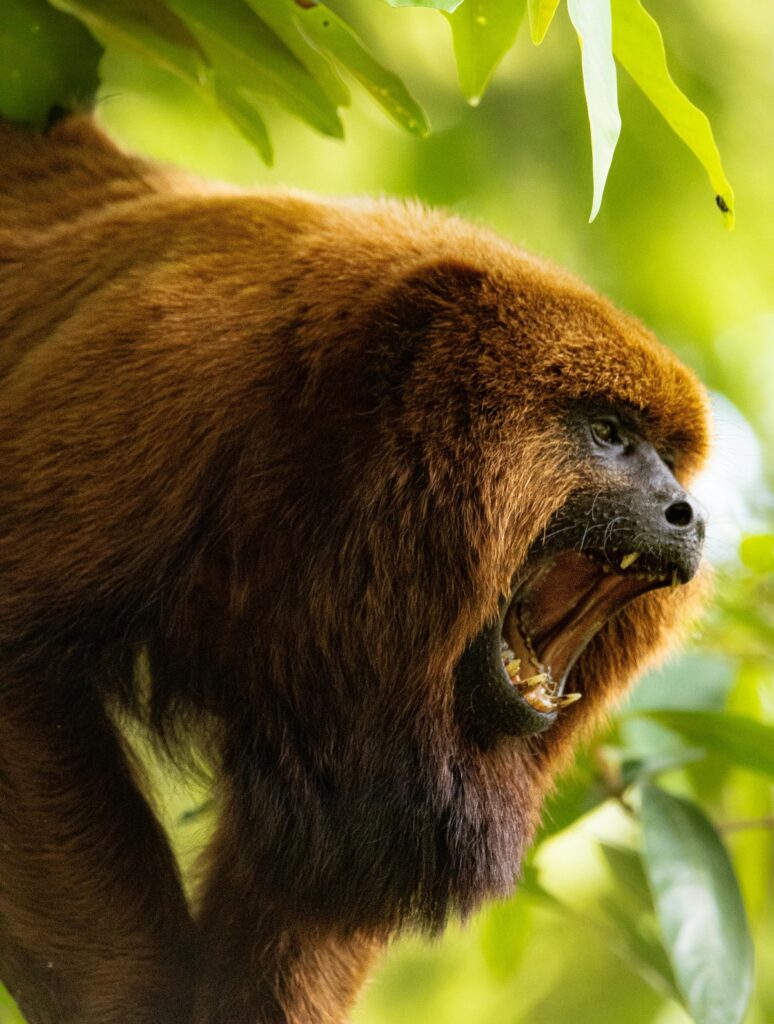
The howler monkey genus (Alouatta) comprises fifteen distinct species, each with unique physical characteristics and regional distributions. Among the most well-known species are:
Black Howler Monkey (Alouatta caraya) – Predominantly found in the forests of Argentina, Brazil, and Paraguay, this species exhibits striking sexual dimorphism. Males boast jet-black fur, while females and juveniles display golden-brown or olive-colored coats.
Mantled Howler Monkey (Alouatta palliata) – Inhabiting Central American rainforests from Mexico to Panama, these monkeys derive their name from the distinctive “mantle” of longer golden hairs framing their dark bodies.
Red Howler Monkey (Alouatta seniculus) – Distributed throughout northern South America, this species presents a rich reddish-brown coloration that provides excellent camouflage among the sun-dappled canopy.
Yucatán Howler Monkey (Alouatta pigra) – Native to the Yucatán Peninsula regions of Mexico, Guatemala, and Belize, these are among the largest howler species and are particularly vulnerable to habitat loss.
While these species vary in coloration and size (ranging from 56 to 92 cm in body length, excluding tails), all share common traits such as prehensile tails, specialized digestive systems for folivorous diets, and of course, their signature vocal abilities.
Habitat and Geographic Distribution
Howler monkeys are exclusively arboreal creatures, spending approximately 99% of their lives in the upper layers of tropical and subtropical forests. Their range extends from southern Mexico through Central America and into the northern regions of Argentina.
These primates show remarkable habitat flexibility, occupying:
Primary rainforests with continuous canopy cover
Secondary growth forests
Seasonally dry forests
Mangrove swamps
Mountain forests up to 2,500 meters elevation
Their distribution is largely determined by the availability of suitable food sources and intact forest corridors that allow for safe movement between feeding areas. Unlike some primate species, howlers rarely descend to the forest floor, as their entire survival strategy revolves around life in the trees.
Diet and Feeding Ecology
Howler monkeys are primarily folivorous, meaning leaves constitute about 50-75% of their diet. This dietary specialization sets them apart from most other New World monkeys, which tend to be frugivorous (fruit-eating). Their daily menu typically includes:
Young leaves (preferred for higher protein content and lower toxicity)
Mature leaves (consumed when preferred foods are scarce)
Fruits (particularly during seasons of abundance)
Flowers (an important seasonal food source)
Occasional insects (providing supplemental protein)
To process this fibrous, often toxic diet, howlers have evolved several adaptations:
Specialized digestive system featuring an enlarged colon and slow metabolism to extract maximum nutrients
Selective feeding behaviors that target the most nutritious plant parts
Microbial fermentation in their foregut to break down tough cellulose
Interestingly, howler monkeys obtain most of their water from morning dew on leaves and the moisture content of their food, rarely needing to drink from ground sources.
Social Structure and Behavior
Howler monkeys exhibit complex social dynamics within their troops, which typically consist of:
1-3 adult males (with one dominant individual)
5-10 adult females
Various juveniles and infants
The dominant male plays several crucial roles:
Leading daily movements to feeding sites
Protecting the group from predators and rival troops
Initiating territorial calls to warn off intruders
Unlike the highly active capuchin monkeys, howlers are remarkably sedentary creatures. Their low-energy diet results in behavioral adaptations:
- Spending 70-80% of daylight hours resting
- Moving only about 400-600 meters daily
- Engaging in minimal social grooming compared to other primates
This energy-conserving lifestyle allows them to thrive on their nutrient-poor leaf diet while minimizing unnecessary calorie expenditure.
The Science of Howler Monkey Vocalizations
The howler monkey’s legendary call represents one of nature’s most impressive acoustic phenomena. These vocalizations serve multiple functions:
Territorial demarcation (reducing physical confrontations between groups)
Group cohesion (maintaining contact in dense vegetation)
Mate attraction (demonstrating male fitness)
Predator deterrence (signaling group vigilance)
Several anatomical adaptations enable their extraordinary volume:
Hyoid bone modification – An enlarged, hollow bone in the throat acts as an acoustic resonator
Specialized larynx – Vocal folds are thicker and more elastic than in other primates
Resonating air sacs – These amplify sound like a built-in megaphone system
A typical howling session lasts 3-5 minutes and can reach 140 decibels – equivalent to a jet engine at takeoff. These calls are most frequent at dawn and dusk, creating the eerie “jungle chorus” familiar to rainforest visitors.
Reproductive Biology and Life Cycle
Howler monkeys follow a slow reproductive pattern typical of large-bodied primates:
Sexual maturity reached at 3-4 years for females, 5-7 years for males
Gestation period of 186 days (about 6 months)
Single offspring per birth (twins are extremely rare)
Interbirth interval of 16-24 months
Newborns weigh approximately 400-500 grams and exhibit strong clinging reflexes. Infant development proceeds through distinct phases:
0-3 months – Constant physical contact with mother
3-6 months – Beginning to explore nearby branches
6-12 months – Increasing independence but still nursing
12-18 months – Fully weaned and integrating into troop activities
In the wild, howler monkeys typically live 15-20 years, though some individuals in protected areas may reach 25 years. Their slow reproductive rate makes populations particularly vulnerable to environmental disturbances.
Amazing Howler Monkey Facts
Loudest Land Animal
Howler monkeys produce the loudest call of any land animal. Their deep, roaring howls can be heard up to 3 miles (5 km) away in dense forests.
Built-In Megaphone
Their powerful calls come from an enlarged hyoid bone in their throat, which acts like a natural sound amplifier.
Mostly Leaf-Eaters
Unlike many monkeys that prefer fruit, howlers eat mostly leaves (50-75% of their diet). They also consume fruits, flowers, and occasionally insects.
Slow-Moving Monkeys
Because their leafy diet is low in energy, howler monkeys are one of the least active primates, resting up to 80% of the day.
Strong Prehensile Tails
Their tails are as strong as an extra arm, helping them grip branches while feeding and moving through trees.
Males Are Louder Than Females
Only dominant males lead the howling sessions to defend territory and attract mates. Females and younger males rarely howl.
Dawn and Dusk Howlers
They are most vocal at sunrise and sunset, creating the famous “jungle chorus” heard in rainforests.
Live in Small Groups
Howler troops usually have 6-15 members, including 1-3 males, several females, and their young.
Slow Reproduction
Females give birth to only one baby every 2 years, making their populations vulnerable to threats.
Rarely Drink Water
They get most of their water from dew on leaves and the moisture in their food.