
Capuchin monkeys are small, intelligent, and social primates found in the forests of Central and South America. They are famous for their curiosity, cleverness, and playful nature. Many people recognize them from movies, TV shows, and even as helper animals for people with disabilities.
Breed Overview
| Feature | Details |
|---|---|
| Scientific Name | Cebus (Genus) & Sapajus (Genus) |
| Class | Mammalia |
| Order | Primates |
| Family | Cebidae |
| Habitat | Tropical and subtropical forests |
| Diet | Omnivorous (fruits, insects, small animals) |
| Lifespan | 25 years (wild), 40+ years (captivity) |
| Social Structure | Live in groups called troops |
| Notable Traits | Intelligent, tool-users, highly social |
Habitat and Distribution
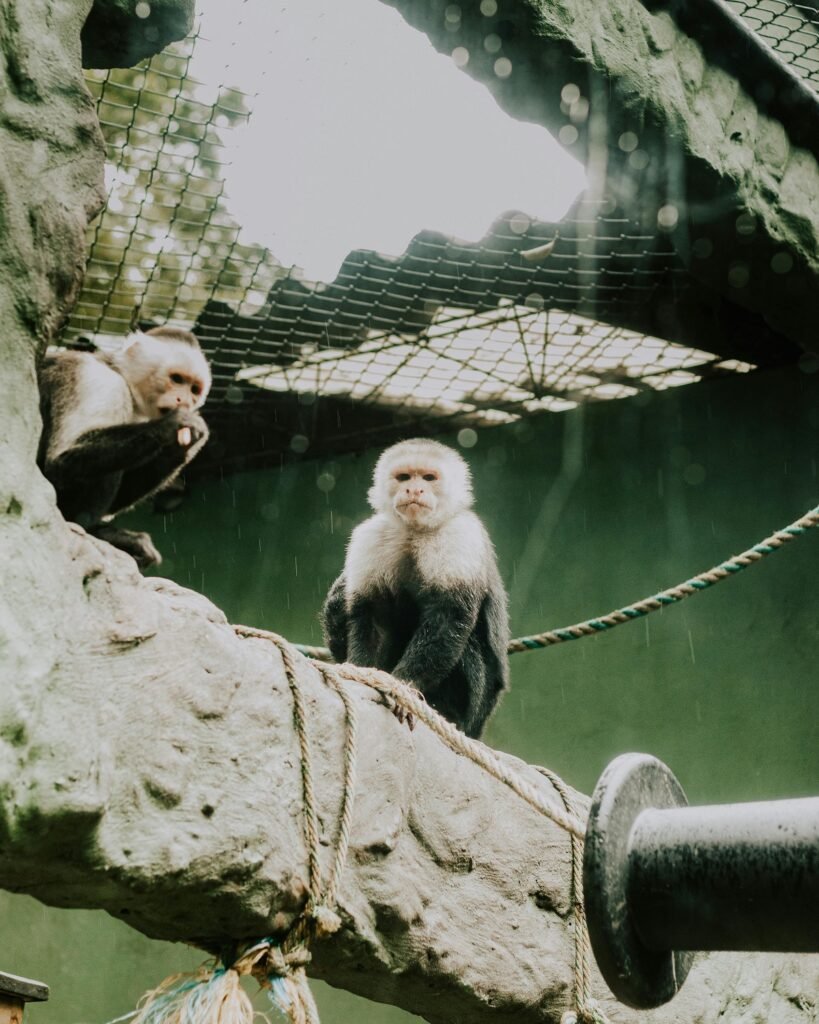
Capuchin monkeys live in tropical and subtropical forests in countries such as Brazil, Colombia, Venezuela, and Costa Rica. They prefer dense forests with plenty of trees and water sources. The monkeys spend most of their time in trees, jumping from branch to branch.
Capuchins are highly adaptable and can survive in different environments. They live in rainforests, dry forests, and even mangroves. This adaptability helps them avoid predators and find food easily.
Physical Appearance
These monkeys are small to medium-sized primates. They weigh between 3 to 9 pounds (1.5 to 4 kg) and grow up to 22 inches (55 cm) in length, excluding their tails. Their tails are almost as long as their bodies and help them balance while climbing trees.
They have round heads, expressive faces, and large eyes. Their fur is usually a mix of black, brown, white, and cream colors. One of the most well-known types is the white-faced capuchin, which has a white face and black body.
Diet and Feeding Habits
Capuchins are omnivorous, meaning they eat both plants and animals. Their diet includes:
- Fruits
- Nuts
- Seeds
- Leaves
- Insects
- Small birds and eggs
- Lizards and frogs
They have strong hands and fingers, which help them grab food easily. Capuchins are also known for washing their food before eating, which is a rare behavior in animals.
Social Behavior and Group Life
Capuchin monkeys are highly social animals. They live in groups called troops, which can have 10 to 40 members. Each troop has a leader, usually a dominant male, who makes decisions and protects the group.
These monkeys groom each other to strengthen their social bonds. Grooming helps remove dirt and parasites while building trust among group members. Capuchins also share food and protect each other from predators like eagles, snakes, and big cats.
Intelligence and Problem-Solving Skills
Capuchin monkeys are one of the smartest primates. They use tools, solve problems, and even plan for the future. Scientists have observed capuchins using sticks to dig out insects and rocks to break open nuts.
They have excellent memories and can remember the locations of food sources. In experiments, capuchins have shown the ability to learn sign language and follow complex commands.
Some capuchins have even been trained as helper animals for disabled people. They can turn lights on and off, pick up small objects, and even open doors.
Communication and Vocalization
Thesemonkeys use a variety of sounds, facial expressions, and body movements to communicate. They make different calls for different situations, such as:
Warning calls when a predator is nearby
Whistles and chirps to stay in touch with their group
Loud screams to show fear or aggression
They also use their tails and body posture to send messages. For example, a raised tail can mean alertness, while a relaxed posture shows calmness.
Reproduction and Family Life
These monkeys have a strong family structure. Females give birth to one baby at a time after a pregnancy of about five to six months. The baby clings to the mother’s back for the first few weeks and depends on her for food and protection.
Mothers take great care of their babies, feeding them and teaching them important survival skills. Other females in the group also help take care of the young. Males do not play a major role in raising babies, but they protect the group from danger.
Capuchins reach maturity at around four to five years old. In the wild, they can live up to 25 years, while in captivity, they can live over 40 years.
Capuchins and Humans
Capuchin monkeys have had a close relationship with humans for centuries. In the past, they were often kept as pets or trained to perform tricks. Some were used as service animals to help people with disabilities.
Unfortunately, capuchins are also hunted for the pet trade. Many are taken from the wild, which threatens their populations. In some areas, deforestation has also destroyed their natural habitat, making survival difficult.
Today, many organizations work to protect capuchin monkeys. Laws have been made to stop illegal hunting and trading. Conservation programs help protect their homes and ensure they have a future in the wild.
Fun Facts About Capuchin Monkeys
Capuchins got their name because their fur pattern looks like the hoods worn by Capuchin monks.
They can recognize themselves in mirrors, which shows self-awareness.
Capuchins love playing and are known to throw objects just for fun.
They are one of the few animals that use tools in the wild.
Some capuchins have been trained to help people with disabilities by performing simple tasks.
Conclusion
These monkeys are fascinating creatures. They are intelligent, social, and adaptable. They live in groups, use tools, and communicate in complex ways. Although they face threats from deforestation and illegal pet trade, conservation efforts are helping protect them.